4 citations
,
August 2025 in “Journal of the American Academy of Dermatology” Low-dose oral minoxidil does not cause tachycardia in hair loss patients.
4 citations
,
March 2022 in “Pharmaceutics” This review explores regenerative treatment options for non-scarring alopecia, with a focus on the potential of mesenchymal stem cells for hair regrowth, but it reports no new clinical results.
 4 citations
,
May 2008 in “Clinics in Dermatology”
4 citations
,
May 2008 in “Clinics in Dermatology” Skin problems can indicate different diseases inside the body.
 July 2026 in “Journal of the American Academy of Dermatology”
 GLP-1 and GLP-1/GIP agonists may increase the risk of hair loss.
September 2023 in “Journal of the American Academy of Dermatology” This study found evidence suggesting that androgenic alopecia may be associated with increased cardiovascular risk factors, but noted a lack of comprehensive research on scarring alopecias and cardiovascular disease.
 January 2019 in “SAGE Open Medical Case Reports”
 This paper reports a rare case where AL amyloidosis presented as isolated scalp alopecia, underscoring the importance of considering systemic amyloidosis in the differential diagnosis of alopecia.
 August 1998 in “Dermatologic Surgery”
 Dr. George A. Farber recommends using follicular unit transplantation for hair restoration because it gives a more natural look and has fewer problems compared to the older miniflap technique.
This report adds two cases of total ovarian pigmentation, with no associated symptoms or pathological findings, to the previously reported unilateral case.
 70 citations
,
July 2016 in “Aging”
70 citations
,
July 2016 in “Aging” This study suggests that dermal adipocytes might play a key role in skin aging due to their transformation into fibrotic structures in chronically photo-damaged skin.
35 citations
,
December 2020 in “International Journal of Molecular Sciences” This review examines the mixed evidence on mast cells as regulators of skin fibrosis and highlights existing gaps in the scientific understanding, reporting no new experimental results.
 27 citations
,
August 2014 in “Journal of Cosmetic and Laser Therapy”
27 citations
,
August 2014 in “Journal of Cosmetic and Laser Therapy” This study compared the microscopic treatment zones created by different fractional lasers and radiofrequency in swine skin, finding distinct patterns and damage levels for each technology.
 19 citations
,
January 2018 in “Scientific Reports”
19 citations
,
January 2018 in “Scientific Reports” This study provided the first proteome dataset for alopecia areata, revealing novel pathways in the disease mechanisms that may lead to new therapeutic targets.
 13 citations
,
January 2016 in “Burns & Trauma”
13 citations
,
January 2016 in “Burns & Trauma” This review discusses the effects of vacuum massage on skin structures and concludes that there is insufficient evidence for its efficacy in treating burn scars, suggesting more research is needed on its potential benefits and mechanisms.
 12 citations
,
June 2005 in “Journal of the European Academy of Dermatology and Venereology”
12 citations
,
June 2005 in “Journal of the European Academy of Dermatology and Venereology” This case report describes an instance of alopecia and severe seborrhoeic dermatitis potentially linked to the immune response from starting combination antiretroviral therapy for acute retroviral syndrome.
 3 citations
,
May 2010 in “Nursing Standard”
3 citations
,
May 2010 in “Nursing Standard” This article discusses autoimmune-associated alopecia areata, highlighting its psychological and social impact, but reports no new clinical findings.
 1 citations
,
April 2022 in “The Egyptian Journal of Hospital Medicine ”
1 citations
,
April 2022 in “The Egyptian Journal of Hospital Medicine ” This review evaluates laser therapy for alopecia areata, noting that fractional lasers facilitate hair growth and drug delivery, but reports no new clinical results.
 61 citations
,
March 2009 in “The Journal of the American Board of Family Medicine”
61 citations
,
March 2009 in “The Journal of the American Board of Family Medicine” This article reviews current diagnostic and treatment approaches for discoid lupus erythematosus, emphasizing the importance of early treatment and photoprotection, but reports no new clinical findings.
 56 citations
,
March 2010 in “Journal of Dermatology”
56 citations
,
March 2010 in “Journal of Dermatology” This review provides a synopsis of 53 cases of temporal triangular alopecia, noting its frequent detection in early childhood and potential association with congenital diseases, but it reports no new clinical findings.
 51 citations
,
January 2006 in “Wound Repair and Regeneration”
51 citations
,
January 2006 in “Wound Repair and Regeneration” This study found that MRL/MpJ mouse dorsal skin wounds heal with similar scar formation and collagen deposition as C57bl/6 and Balb/c mice.
 36 citations
,
January 2012 in “International Journal of Trichology”
36 citations
,
January 2012 in “International Journal of Trichology” This review discusses madarosis, its diverse causes, and suggests follicular unit transplantation as a useful treatment for scarring types, but reports no new clinical results.
 29 citations
,
September 2012 in “Birth Defects Research”
29 citations
,
September 2012 in “Birth Defects Research” This review discusses the developmental regulation of wound healing mechanisms in mammals, focusing on the role of the Wnt and TGF‐β signaling pathways, and reports no new clinical findings.
 26 citations
,
December 2016 in “Pharmacology & Therapeutics”
26 citations
,
December 2016 in “Pharmacology & Therapeutics” This review discusses the paracrine properties of cardiac stem cells and pericytes in regenerative medicine for ischaemic diseases and reports no new clinical results.
 23 citations
,
July 1982 in “International Journal of Dermatology”
23 citations
,
July 1982 in “International Journal of Dermatology” The review concludes that accurate diagnosis of different types of hair loss requires proper biopsy techniques and understanding the hair growth cycle and underlying causes.
 22 citations
,
September 2004 in “Journal of The European Academy of Dermatology and Venereology”
22 citations
,
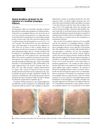
September 2004 in “Journal of The European Academy of Dermatology and Venereology” Bimatoprost can cause longer, thicker, darker eyelashes and eyebrows.
 20 citations
,
February 2019 in “Genes”
20 citations
,
February 2019 in “Genes” This study identifies a likely pathogenic homozygous missense variant in the AEBP1 gene in a patient with symptoms of classical Ehlers-Danlos syndrome, suggesting new perspectives for EDS classification and research.
 20 citations
,
March 1990 in “JAMA”
20 citations
,
March 1990 in “JAMA” This report from the National Registry of Drug-Induced Ocular Side Effects identifies 56 cases of alopecia associated with the use of topical ophthalmic β-blockers.
 19 citations
,
May 2021 in “Clinical, Cosmetic and Investigational Dermatology”
19 citations
,
May 2021 in “Clinical, Cosmetic and Investigational Dermatology” This review discusses the progress in research on topical formulations for treating alopecia, highlighting potential advantages of advanced formulation technologies but reporting no new clinical results.
 14 citations
,
August 2020 in “Dermatologic Therapy”
14 citations
,
August 2020 in “Dermatologic Therapy” This study reported that low-dose oral minoxidil is generally safe for treating various types of hair loss, though it may cause hypertrichosis and pedal edema, especially at higher doses.
 10 citations
,
July 2011 in “Wound Repair and Regeneration”
10 citations
,
July 2011 in “Wound Repair and Regeneration” This article proposes several potential approaches for scar prevention and therapy, including anti-transforming growth factor-β strategies and tissue-engineered skin, but reports no new clinical results.
 3 citations
,
September 2019 in “Journal of Orthodontics”
3 citations
,
September 2019 in “Journal of Orthodontics” In this study, a 13-year-old boy developed temporary pressure alopecia from wearing orthodontic headgear, which resolved after discontinuation, highlighting a rare side effect that can affect psychosocial wellbeing.