 October 2024 in “Tikrit Journal of Pure Science”
 This study found that the Geh gene responsible for lipase enzyme production was highly expressed in Staphylococcus aureus isolates from acne patients, implicating this enzyme in the infection's pathogenesis.
July 2024 in “Journal of Investigative Dermatology” ATR12-351 ointment safely delivers LEKTI protein to the skin, reducing enzyme activity in Netherton syndrome.
4 citations
,
January 2009 in “PubMed” In this study, researchers identified an autosomal dominant mutation (E402K) in exon 7 of the KRT86 gene as a cause of Monilethrix in a large family from Turkey.
 1 citations
,
November 2023 in “Journal of neurology”
1 citations
,
November 2023 in “Journal of neurology” This study reports a case of a patient with neuromyelitis optica spectrum disorders treated with eculizumab who developed fatal sepsis after insulin resistance emerged.
6 citations
,
December 2023 in “Journal of Molecular Cell Biology” In this study, Gsdma1/2/3 knockout mice showed reduced epidermal hyperplasia and inflammation when induced by PMA, which was attributed to decreased EGFR-Stat3/Akt signaling due to a decrease in related ligands.
March 2025 in “International Journal of Trichology” This case report describes a 38-year-old woman who experienced significant hair loss known as anagen effluvium after accidentally ingesting Gloriosa superba tubers, a plant commonly found in tropical regions with high colchicine content.
7 citations
,
October 2008 in “Arthritis Care & Research” This case report describes a 32-year-old woman with a history of undifferentiated connective tissue disease who presented with cardiogenic shock, and endomyocardial biopsy revealed giant cell myocarditis, possibly indicating an association with her autoimmune condition.
 9 citations
,
April 2006 in “American Journal of Pathology”
9 citations
,
April 2006 in “American Journal of Pathology” This study found that mutations in the Sgk3 gene cause defective hair follicle development and altered hair cycling in mice, with variable phenotypic outcomes depending on different dysfunction patterns of the SGK3 protein.
 36 citations
,
January 2018 in “Scientific reports”
36 citations
,
January 2018 in “Scientific reports” This study observed that dietary intake of glucoraphanin during juvenile and adolescent stages prevented cognitive deficits and abnormal gene expressions in the brain of adult offspring exposed to maternal immune activation, potentially implicating centrosome-related genes in the development of psychosis.
1 citations
,
September 2011 in “Journal of the American Geriatrics Society” This article presents a case of Werner syndrome complicated by idiopathic membranous nephropathy, suggesting a possible but unproven genetic link between the two conditions.
10 citations
,
January 1997 in “Dermatology” This case report details two siblings with trichothiodystrophy, identifying reduced hair sulfur content as essential for diagnosis despite varied symptoms complicating recognition.
 June 2025 in “Academic Medical Journal”
 This study suggests elevated homocysteine levels may serve as a biomarker for disease severity and vascular risk in cutaneous lupus erythematosus, indicating potential therapeutic benefits from B-vitamin supplementation and lifestyle changes.
September 2023 in “Journal of the American Academy of Dermatology” Dermatologists should consider alpha-gal syndrome in patients with unexplained chronic skin issues.
5 citations
,
February 2025 in “Cell Reports” In this study, inducible whole-body Acly-knockout mice revealed that ACLY is essential for skin homeostasis, as its deficiency led to increased sebum production and skin abnormalities, indicating a vital role for cytosolic acetyl-CoA synthesis in preserving skin barrier integrity and systemic lipid regulation.
7 citations
,
April 1992 in “Journal of steroid biochemistry and molecular biology/The Journal of steroid biochemistry and molecular biology” The authors concluded that plasma levels of 3α-diolG, ADTG, and DHTG in women with hyperandrogenic disorders primarily reflect adrenal androgen contributions rather than peripheral action, suggesting a potential index for treatment effectiveness.
 September 2024 in “Journal of Medicine and Life”
 In this study, researchers identified a recurrent nonsense mutation, c.409C>T (p.Arg137*), in the COL7A1 gene through whole exome sequencing in a family with autosomal recessive dystrophic epidermolysis bullosa, demonstrating the importance of this method for diagnosing genetically complex conditions.
 146 citations
,
May 2002 in “The American journal of pathology”
146 citations
,
May 2002 in “The American journal of pathology” This study found that cathepsin L deficiency in mice led to significant abnormalities in hair follicle development and cycling, including disrupted hair shaft outgrowth and premature hair growth phase entry.
October 2025 in “Figshare” This meta-analysis found that deuruxolitinib significantly improved hair regrowth and patient satisfaction in those with moderate to severe alopecia areata compared to placebo, though it was associated with manageable side effects such as elevated creatinine kinase levels, headaches, and acne, especially at higher doses.
5 citations
,
January 2011 in “Archives de Pédiatrie” This study illustrates the severe neonatal clinical presentation of Netherton syndrome, which can be fatal despite intensive care, highlighting a specific homozygous mutation (c.1431-12G > A) associated with lethal cases.
11 citations
,
January 1989 This case report describes two patients with trichothiodystrophy who exhibited a different pattern of hair protein composition changes, suggesting a subgroup of TTD characterized by partial loss of high-sulfur proteins without significant alteration in their amino acid composition.
 54 citations
,
November 2001 in “Urology”
54 citations
,
November 2001 in “Urology” This review discusses the association between androgen receptor CAG repeat polymorphism and several health conditions, including Kennedy’s disease and urologic disorders, without reporting new clinical results.
 15 citations
,
April 2016 in “Hormones”
15 citations
,
April 2016 in “Hormones” This review summarizes the clinical features and molecular causes of Primary Generalized Glucocorticoid Resistance, highlighting new findings from the characterization of mutations in the NR3C1 gene, but reports no new experimental results.
96 citations
,
December 2002 in “Experimental dermatology” This study found that NGAL expression in embryonic skin is spatio-temporally regulated and strongly induced in adult skin conditions with dysregulated differentiation, suggesting a role in epithelial differentiation pathways.
 July 2021 in “PARIPEX INDIAN JOURNAL OF RESEARCH”
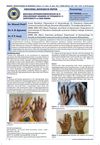
 This study highlighted knuckle hyperpigmentation as an early sign of vitamin B12 deficiency, indicating a potential link to megaloblastic anemia in the vegetarian population in India.
 8 citations
,
April 1965 in “Archives of biochemistry and biophysics”
8 citations
,
April 1965 in “Archives of biochemistry and biophysics” This study found that sheep wool follicles actively oxidize acetate and glucose, suggesting the involvement of the TCA cycle for compound synthesis and the potential role of the pentose phosphate pathway in ribose production for RNA and DNA.
21 citations
,
January 2000 in “Fetal Diagnosis and Therapy” This study found that trichothiodystrophy can be diagnosed prenatally in the second trimester using an endoscopically-guided fetal eyebrow biopsy, with sulfur content analysis being the most reliable test.
September 2022 in “Indian Journal of Paediatric Dermatology” This case report documents the first confirmed mutation-proved instance of Clouston syndrome in a large Chinese-Malaysian family, linked to the c.263C>T (A88V) mutation in the GJB6 gene, with no available treatment but highlighting the importance of genetic counseling.
 February 2010 in “Journal of The American Academy of Dermatology”
 This review examines microbial production and applications of gluconic acid, focusing on the enzymatic processes involved, and offers no new experimental results.
29 citations
,
January 1996 in “The Journal of Clinical Endocrinology & Metabolism” This study identified a compound heterozygous mutation in the 3 beta-HSD gene that confirmed inherited 3 beta-HSD deficiency in a Pakistani child with salt-wasting congenital adrenal hyperplasia.
 April 2023 in “The journal of investigative dermatology/Journal of investigative dermatology”
 This preliminary study of Alopecia Areata identified limited expression of certain metabolic transporters and enzymes in hair follicle immune cells, providing early insight into their unique energy needs.