 14 citations
,
May 2019 in “Journal of Maxillofacial and Oral Surgery”
14 citations
,
May 2019 in “Journal of Maxillofacial and Oral Surgery” This article explains the FUE technique for hair transplantation, its associated risks and complications, and outlines a protocol for maxillofacial surgeons, but reports no new clinical results.
 10 citations
,
July 2019 in “Facial Plastic Surgery Clinics of North America”
10 citations
,
July 2019 in “Facial Plastic Surgery Clinics of North America” This article describes refined techniques in facial hair transplantation for increasing demand in restoring eyebrow density in women and achieving fuller beards in men, without presenting new clinical results.
 8 citations
,
January 2015 in “Scars, burns & healing”
8 citations
,
January 2015 in “Scars, burns & healing” This review discusses surgical and non-surgical options for hair restoration in burn alopecia, highlighting follicular unit extraction and transplant as preferred methods but reports no new clinical findings.
 6 citations
,
October 2021 in “Indian Journal of Plastic Surgery”
6 citations
,
October 2021 in “Indian Journal of Plastic Surgery” In this study, eyebrow restoration using FUE-harvested single hair follicle grafts was explored, emphasizing the importance of donor hair selection, placement technique, and postoperative care in achieving optimal results, while highlighting challenges such as scarring and skin perfusion.
 6 citations
,
January 2019 in “Journal of Cutaneous and Aesthetic Surgery”
6 citations
,
January 2019 in “Journal of Cutaneous and Aesthetic Surgery” This study found that hair transplantation using follicular unit extraction can yield natural and aesthetically pleasing results in advanced grade baldness, with a majority of patients expressing satisfaction at 12 months.
 6 citations
,
May 2004 in “Facial Plastic Surgery Clinics of North America”
6 citations
,
May 2004 in “Facial Plastic Surgery Clinics of North America” This review discusses the advancements in surgical hair restoration over the past decade, focusing on optimizing follicular unit transplantation for better aesthetic results, but it reports no new clinical findings.
 5 citations
,
February 2019 in “Oral and Maxillofacial Surgery”
5 citations
,
February 2019 in “Oral and Maxillofacial Surgery” Hair loss can be reversed or even cured using advanced hair restoration techniques, with rare complications like swelling and bleeding.
4 citations
,
January 2019 in “Archives of clinical and medical case reports” Combining FUE hair transplantation with PRP improves hair density and patient satisfaction in scarring alopecia.
 4 citations
,
January 2005 in “Elsevier eBooks”
4 citations
,
January 2005 in “Elsevier eBooks” This article discusses the key considerations and techniques necessary for successful Follicular Unit Transplantation in hair restoration surgery and reports no new clinical results.
3 citations
,
October 2023 in “Plastic & Reconstructive Surgery Global Open” This study suggests that waiting for scarred tissue to mature and preparing the recipient area with nanofat can lead to better outcomes for hair transplantation in patients with eyebrow loss due to deep facial burns.
 3 citations
,
April 2020 in “Facial Plastic Surgery Clinics of North America”
3 citations
,
April 2020 in “Facial Plastic Surgery Clinics of North America” This review discusses the increasing demand for facial hair transplantation in hair restoration, noting its benefits and the natural-appearing results achieved through modern techniques, but it reports no new clinical results.
 2 citations
,
June 2012 in “Journal of Cosmetic Dermatology”
2 citations
,
June 2012 in “Journal of Cosmetic Dermatology” This article describes using hair transplantation as a novel method to improve the appearance of acne scars, but it reports no clinical results.
 1 citations
,
October 2018 in “European Journal of Plastic Surgery”
1 citations
,
October 2018 in “European Journal of Plastic Surgery” This study found that 2-hair follicular unit grafts were the most common grouping in hair transplant procedures, with frontal edema as the most frequent postoperative complication.
This source reports that modern hair transplant techniques, including follicular unit grafting, can create natural-looking results and are increasingly used beyond male pattern baldness to treat areas like eyebrows and scars, while even some controversial indications are being explored.
 1 citations
,
January 2015 in “Journal of Aesthetic & Reconstructive Surgery”
1 citations
,
January 2015 in “Journal of Aesthetic & Reconstructive Surgery” This review discusses techniques for harvesting follicular units, medical treatments for androgenetic alopecia, and potential future advancements in hair restoration therapy, but it reports no new clinical results.
 1 citations
,
January 2006 in “Dermatologic Surgery”
1 citations
,
January 2006 in “Dermatologic Surgery” The SAFE System may reduce hair transplant transection rates but has been critiqued for not being as minimally invasive as claimed.

This study reports that a novel eyelash transplantation method using chalazion forceps effectively thickens and enhances eyelashes by precisely placing transplanted hairs in a narrow recipient area, with approximately 85-92% of transplanted lashes expected to grow within 12 months.
November 2024 in “Stem Cell Research & Therapy” A new method improves the isolation of hair follicle cells for better hair growth research.
 June 2024 in “Journal of Dermatology & Cosmetology”
 This comparison study identified non-shaven FUT long hair (FUL) restoration as potentially offering more aesthetic benefits and fewer scars than FUE or conventional FUT for treating various types of alopecia.

This case report describes a transgender woman who achieved a soft, feminine hairline nine months post-hair transplant using follicles from both the occipital scalp and pubic area.
 June 2020 in “Journal of cosmetic medicine”
 This abstract reviews eyebrow transplantation techniques, highlighting that follicular unit extraction prevents scarring at the donor site, unlike strip harvesting, and reports no new clinical results.
 November 2018 in “Springer eBooks”
 The document concludes that hair transplant methods are often selected for provider convenience over patient benefit, highlighting the need for less invasive techniques and careful physician involvement for better results.

The researchers developed a new follicular unit extraction system with adjustable needle lengths and precise rotation speed, which they report as being superior to existing systems for non-incisional hair transplants.
 January 2018 in “Georg Thieme Verlag eBooks”
 Hair transplantation is a surgical procedure to move hair to bald areas, requires good donor hair, and results show in about a year.
 September 2017 in “Springer eBooks”
 FUE hair transplants have improved to give more natural results with less scarring and pain.

Modern hair restoration techniques can effectively treat hair loss and provide natural-looking results.
 January 2016 in “Springer eBooks”
 The document concludes that there are various causes and treatments for hair loss, with hair transplantation being a notable option.
 July 2013 in “Hair transplant forum international”
 This report describes the integration of follicular unit extraction (FUE) into a medical practice and notes a learning curve for both the physician and staff, but presents no clinical results.
 May 2013 in “Trends in Urology & Men's Health”
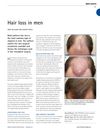
 This article reviews non‐surgical treatments and surgical techniques for male‐pattern hair loss and does not present new findings.
 December 2016 in “Journal of Dermatology and Dermatologic Surgery”
 In this study, the Instant Follicular Hair Unit Transplant technique demonstrated superior hair growth compared to conventional FUE in patients with androgenetic alopecia, although it requires a steeper learning curve for surgeons.