 2 citations
,
April 2022 in “Research Square (Research Square)”
2 citations
,
April 2022 in “Research Square (Research Square)” This study found that a 1% concentration of thyme oil was more effective at killing Demodex mites in vitro than higher concentrations of tea tree and sage oils, suggesting thyme oil may have therapeutic potential for ocular demodicosis.
 January 2025 in “Journal of Case Reports and Scientific Images”
 In this case report, a 30-year-old woman with scalp demodicosis experienced resolution of itching, hair shedding, and facial lesions after six weeks of topical metronidazole, highlighting the importance of early trichoscopic diagnosis and treatment for Demodex mite infestations.
 November 2023 in “International journal of biology, pharmacy and allied sciences”
 This source discusses various causes of hair loss, including conditions like alopecia areata and infections like ringworm, and notes that herbal formulations are gaining attention as potential treatments due to their minimal side effects compared to synthetic drugs.
 November 2023 in “Dermatology Research and Reports”
 This study reported that a 1% ivermectin topical cream for rosacea was stable over six months, showing no significant changes in key physical properties or microbial contamination, suggesting it may reduce chronic antibiotic use in rosacea treatment.
 November 2023 in “Curēus”
 In this case report, a 16-year-old African American girl with sebaceous filaments on her face was successfully treated with topical tretinoin, highlighting the importance of recognizing and treating this under-reported condition for improved appearance and quality of life.

This article discusses various causes and prevention methods for male pattern baldness but reports no new research findings.
 1 citations
,
May 2001 in “Proceedings of SPIE, the International Society for Optical Engineering/Proceedings of SPIE”
1 citations
,
May 2001 in “Proceedings of SPIE, the International Society for Optical Engineering/Proceedings of SPIE” This paper presents an RGB video microscopic system to monitor optical properties of hair shafts and follicles in vitro, but reports no new clinical results.
 January 2016 in “Elsevier eBooks”
 This chapter reviews trichoscopic criteria and diagnostic features for various hair and scalp conditions, emphasizing their utility in non-invasive diagnosis, but reports no new clinical results.
 1 citations
,
July 2024 in “Skin Research and Technology”
1 citations
,
July 2024 in “Skin Research and Technology” This study found that patients with androgenetic alopecia had thinner scalp and subcutaneous tissues, narrower and shorter hair follicles, a lower hair follicle count, and fewer color flow signals compared to healthy volunteers, as measured by 22 MHz ultrasound.
 26 citations
,
March 1986 in “Clinical and Experimental Dermatology”
26 citations
,
March 1986 in “Clinical and Experimental Dermatology” Scalp hair grows at 0.37 mm/day, forearm hair at 0.18 mm/day, and thigh hair at 0.30 mm/day, with no significant differences found in people with certain hair conditions.
1 citations
,
January 2022 in “Anais brasileiros de dermatologia/Anais Brasileiros de Dermatologia” In this study, authors reported that reflectance confocal microscopy may aid in diagnosing trichofolliculoma by identifying specific features correlated with histopathology that can be difficult to discern with other methods.
 129 citations
,
January 2009 in “International Journal of Trichology”
129 citations
,
January 2009 in “International Journal of Trichology” This study found that trichoscopy criteria can distinguish female androgenic alopecia from chronic telogen effluvium, with specific features achieving 98% diagnostic specificity.
 January 2021 in “International journal of dermatology, venereology and leprosy sciences”
 This study found that trichoscopy is a valuable diagnostic tool for identifying hair loss patterns in women and can help avoid scalp biopsies in unclear cases.
 January 2015 in “Springer eBooks”
 Understanding hair structure and growth is key for diagnosing hair diseases accurately.
 42 citations
,
October 2012 in “Dermatologic Clinics”
42 citations
,
October 2012 in “Dermatologic Clinics” This article reviews the use of trichoscopy for diagnosing common hair and scalp diseases and introduces a new classification for specific skin surface abnormalities, without presenting new clinical results.
 April 2019 in “Dermatology reports”
 This case study reported that scalp dermoscopy, or trichoscopy, provided a useful noninvasive method to evaluate and confirm hair regrowth in a child treated for tinea capitis.
 2 citations
,
July 2018 in “Elsevier eBooks”
2 citations
,
July 2018 in “Elsevier eBooks” This article discusses the uses and techniques of trichoscopy for hair and scalp disorders and reports no new clinical results.
July 2026 in “Dermatology Practical & Conceptual” This review assessed trichoscopic findings in folliculotropic mycosis fungoides of the scalp, reporting features like milky-red globules and distinct vascular patterns, but noted the predominance of small studies and the need for larger research to validate trichoscopy's diagnostic utility for this condition.
This pilot study found that Optical Coherence Tomography can non-invasively resolve hair follicle density and hair shaft and follicle diameters in patients at varying stages of hair loss.
 91 citations
,
January 2009 in “International Journal of Trichology”
91 citations
,
January 2009 in “International Journal of Trichology” This review discusses the advantages and limitations of various hair loss evaluation methods but reports no new results; it emphasizes the importance of cautious interpretation for these diagnostic tools.
1 citations
,
January 2012 in “CINECA IRIS Institutial research information system (University of Pisa)”  September 2025 in “Egyptian Journal of Dermatology and Venerology”
 This case study described the diagnosis of a trichofolliculoma in a 56-year-old woman, emphasizing its dermoscopic features and histological aspects that confirmed the tumor type, with no recurrence observed after excision.
 November 2024 in “Annals of PIMS-Shaheed Zulfiqar Ali Bhutto Medical University”
 This study concluded that trichoscopy is an effective, non-invasive tool for diagnosing telogen effluvium, with significant differences in trichoscopic findings between frontal and occipital scalp regions, aiding in distinguishing it from androgenetic alopecia for early diagnosis.
 May 2023 in “Experimental Dermatology”
 This study found that both reflectance confocal microscopy and optical coherence tomography can visualize detailed hair follicle abnormalities in various skin disorders, but larger, higher-quality studies are needed for clinical implementation.
 March 2021 in “CRC Press eBooks”
 This review discusses the importance of physical examinations in trichology, emphasizing their role in diagnosing conditions like alopecia and hair dystrophies, and reports no new clinical results.
 25 citations
,
June 2003 in “Journal of Investigative Dermatology Symposium Proceedings”
25 citations
,
June 2003 in “Journal of Investigative Dermatology Symposium Proceedings” This study found that among Japanese women with diffuse hair loss, decreased hair density without changes in vellus hair was the most common and distinct pattern observed, highlighting differences from previous observations in other populations.
 January 2012 in “Methods in pharmacology and toxicology”
 This review discusses the use of cultured hair follicles for studying hair growth regulation and reports the challenge of modeling the entire hair cycle in vitro.
This study measured the force required to pluck anagen and telogen hair from volunteers, suggesting that trichotillometry could assess hair strength in alopecia patients and evaluate treatment efficacy.
 5 citations
,
November 2012 in “Actas Dermo-Sifiliográficas”
5 citations
,
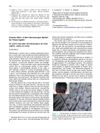
November 2012 in “Actas Dermo-Sifiliográficas” Comma hairs are a new sign for identifying scalp fungal infections.
 January 2025 in “International Journal of Scientific Research”
 This study found that female pattern hair loss was present in 12.5% of PCOS patients examined, with most cases in younger women, highlighting early detection and management importance.