 39 citations
,
July 2015 in “British Journal of Dermatology”
39 citations
,
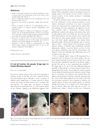
July 2015 in “British Journal of Dermatology” This article discusses the pseudo 'fringe sign' in frontal fibrosing alopecia, highlighting that it is not solely related to traction, and it reports no new clinical results.
 June 2017 in “Çocuk Enfeksiyon Dergisi/Journal of Pediatric Infection”
 This report describes two cases of urticarial id reaction linked to tinea capitis profunda, highlighting a potential new etiology for this rare condition.
2 citations
,
June 2010 in “Medicina de Familia SEMERGEN” The girl's "dandruff" was actually harmless hair casts, not a hygiene issue.
 4 citations
,
January 2017 in “Ciência Rural”
4 citations
,
January 2017 in “Ciência Rural” This case report highlights that equine multisystemic eosinophilic epitheliotropic disease should be considered in horses presenting with skin lesions and gastrointestinal symptoms, as illustrated by the progression in a 5-year-old horse despite treatment.
 5 citations
,
June 2022 in “Frontiers in veterinary science”
5 citations
,
June 2022 in “Frontiers in veterinary science” This review discusses the impact of sarcoptic mange on wombats and evaluates antiparasitic drugs like ivermectin, moxidectin, and fluralaner for treating the disease, but it presents no new clinical results.
June 2020 in “Comparative medicine” The study reported that Demodex musculi infestation was notably higher in immunodeficient mice, while infested immunocompetent mice, particularly the BALB/c strain, showed increased IgE levels and developed alopecia over time.
 19 citations
,
June 2007 in “Veterinary Dermatology”
19 citations
,
June 2007 in “Veterinary Dermatology” In this study, amitraz was found to be an effective and well-tolerated treatment for resolving sarcoptic mange in alpacas, demonstrating no relapse over a 10-month follow-up.
 91 citations
,
July 2004 in “BMJ. British medical journal”
91 citations
,
July 2004 in “BMJ. British medical journal” This review covers the epidemiology, clinical features, and treatment of four common skin infections in children, reporting no new experimental findings.
 41 citations
,
September 2007 in “Pediatric emergency care”
41 citations
,
September 2007 in “Pediatric emergency care” This review discusses the challenges in diagnosing tinea capitis and highlights the need for laboratory confirmation and systemic treatment due to the limited effectiveness of topical antifungals; no new clinical results are presented.
9 citations
,
January 2004 in “Journal of dermatological treatment” This study reports that oral rifampicin effectively treated the pustular lesions of tufted hair folliculitis in a 47-year-old woman, with no relapses after one year.
44 citations
,
January 1957 in “Public Health Reports (1896-1970)” This study found that dermatophytes, which can cause ringworm, were isolated from 20% of animal hair specimens, indicating animals may play a role in spreading infections to humans.
 December 2023 in “Revista de la Facultad de Ciencias Médicas (Quito)”
 This case report describes a 15-year-old female whose initial systemic lupus erythematosus manifestations were fever and rash appearing separately, illustrating diagnostic challenges between SLE and infection.
37 citations
,
October 2010 in “JDDG Journal der Deutschen Dermatologischen Gesellschaft” This review discusses the unique pharmacokinetic limitations of terbinafine in children with tinea capitis and reports no new clinical results, highlighting the need for consideration of these factors in future studies.
 20 citations
,
February 1991 in “Archives of dermatology”
20 citations
,
February 1991 in “Archives of dermatology” In this study, researchers found that high-dose tryptophan ingestion before symptom onset may be linked to clinical features resembling eosinophilia-myalgia syndrome in patients with eosinophilic fasciitis.
This study found that topical applications of bergamot oil at 2.5% and 5% concentrations were more effective in treating Dermatophytosis in cattle and cats, leading to faster recovery compared to a 1.25% concentration.
 January 2026 in “International Journal of Veterinary Sciences and Animal Husbandry”
 This study reports that ivermectin-based therapy, combined with antibiotics, anti-inflammatory drugs, and supportive treatments, effectively led to clinical recovery within 10-21 days in six dogs with varying severity of demodicosis.
17 citations
,
February 1987 in “Journal of the American Academy of Dermatology” This study observed that daily selenium sulfide shampoos successfully removed fungal spores hidden beneath the hair cuticle in patients infected with ectothrix Microsporum canis.
 August 2024 in “Microscopy Research and Technique”
 This study described the structure of the hair brush on male Endoclita vietnamensis moths' legs, identifying characteristics such as specialized scales and a pheromone gland, which could facilitate the future development of pheromone-based pest control methods for eucalyptus pests in China.
 8 citations
,
January 2015 in “International journal of trichology”
8 citations
,
January 2015 in “International journal of trichology” In this case report, the authors describe complete recovery from acute diffuse and total alopecia linked to Borrelia infection after treatment with intravenous ceftriaxone and topical clobetasol foam.
5 citations
,
February 2016 in “Sultan Qaboos University medical journal” This case report describes a patient with a severe pruritic rash and hair loss in both axillary regions, with no fluorescence under a Wood's lamp and hair follicle-centred papules observed through dermoscopy.
This study found that neutrophils are crucial for initiating chronic itch in atopic dermatitis and suggest that targeting neutrophils may help alleviate symptoms in this condition.
 1 citations
,
May 2018 in “jurnal veteriner”
1 citations
,
May 2018 in “jurnal veteriner” This study concluded that among the three diagnostic techniques for detecting Demodex mites in dogs, the scraping technique provided the best diagnostic value.
 9 citations
,
January 2013 in “Acta dermato-venereologica”
9 citations
,
January 2013 in “Acta dermato-venereologica” The conclusion is that "trichoknesis" should be recognized as a separate condition from trichodynia, characterized by itching instead of pain.
 14 citations
,
November 1987 in “Journal of The American Academy of Dermatology”
14 citations
,
November 1987 in “Journal of The American Academy of Dermatology” A woman developed a severe skin reaction called toxic epidermal necrolysis after taking the antibiotic cephalexin.
14 citations
,
January 2014 in “Tropical Journal of Pharmaceutical Research” In this study, a hydroalcoholic extract of Urtica dioica L. showed potential for use as an adjunct topical treatment for tinea corporis in guinea pigs infected with Microsporum canis.
 38 citations
,
July 2010 in “Clinical, cosmetic and investigational dermatology”
38 citations
,
July 2010 in “Clinical, cosmetic and investigational dermatology” This review discusses systemic antifungal treatments for tinea capitis in children, noting that newer agents like terbinafine and itraconazole require shorter courses than the traditional griseofulvin, but may be more costly.
May 2022 in “Journal of the Egyptian Society of Parasitology” This study found that Demodex folliculorum mites were detected in 1.6% of acne patients, with a higher prevalence in adolescents and those with severe acne.
 January 2024 in “Editora In Vivo eBooks”
 This report describes a case of dermatophytosis, a zoonotic fungal infection common in tropical and temperate climates, affecting a female dog with alopecia on its neck and ear tip.
 November 2023 in “Jundishapur journal of health sciences”
 This case report describes three instances of severe tinea favosa transmitted by Trichophyton schoenleinii in Afghan immigrants in Iran, highlighting an emerging health concern due to its potential to re-emerge in the region among immigrant populations.