 39 citations
,
July 2015 in “British Journal of Dermatology”
39 citations
,
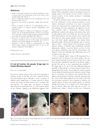
July 2015 in “British Journal of Dermatology” This article discusses the pseudo 'fringe sign' in frontal fibrosing alopecia, highlighting that it is not solely related to traction, and it reports no new clinical results.
 September 2024 in “Cermin Dunia Kedokteran”
 This research discusses Fahr syndrome, highlighting its association with abnormal brain calcifications and varied clinical symptoms in young to middle-aged adults. Diagnosis involves specific criteria and CT scans, but no specific treatment exists; therapy focuses on managing symptoms and underlying conditions.
August 2019 in “Journal of the American Academy of Dermatology” Frontal fibrosing alopecia may be caused by an autoimmune reaction and hormonal imbalance.
This study reported that prompt diagnosis and treatment with 5-alpha-reductase inhibitors and topical immunomodulators are key to mitigating the effects of frontal fibrosing alopecia and preventing permanent hair loss.
 January 2025 in “Indian Journal of Dermatology”
 This review discusses the various factors implicated in the etiology of frontal fibrosing alopecia and notes the need for effective treatments, reporting no new clinical findings.
April 2019 in “Journal of Investigative Dermatology” This study found that frontal fibrosing alopecia involves distinct molecular changes, such as downregulation of steroid and cholesterol pathways and upregulation of fibrotic and immune response genes, which may help guide treatment strategies.
1 citations
,
June 2025 in “Journal of Clinical Medicine” This study reported that frontal fibrosing alopecia predominantly affects postmenopausal women and identified potential risk factors like frequent β-blocker use and sunscreen application, indicating the need for further research.
 8 citations
,
October 2016 in “Actas Dermo-Sifiliográficas”
8 citations
,
October 2016 in “Actas Dermo-Sifiliográficas” This study found that men with frontal fibrosing alopecia exhibited more frequent facial papules, androgenetic alopecia, and body hair loss compared to women with the condition, and were generally older.
 July 2018 in “Elsevier eBooks”
 This review discusses the evolving understanding of frontal fibrosing alopecia as a generalized skin condition with diverse manifestations, and reports no new clinical results.
 September 2013 in “Hair transplant forum international”
 This abstract describes frontal fibrosing alopecia, a type of cicatricial alopecia identified in post-menopausal women, and reports no new clinical findings.
7 citations
,
July 2021 in “The Journal of Dermatology” This study in Asian females found that higher use of moisturizers and sunscreen among FFA patients may reflect appearance concerns rather than indicating a direct link to the disease mechanism.
 November 2023 in “Indian Journal of Dermatology”
 This study from North-East India analyzed 21 cases of frontal fibrosing alopecia, noting a high prevalence in post-menopausal women and distinct histological features such as perifollicular lymphocytic infiltrate and hydropic degeneration.
1 citations
,
August 2018 in “Journal of the American Academy of Dermatology” A young woman developed facial bumps before hair loss, which is unusual for her condition.
December 2016 in “Anales del sistema sanitario de Navarra” This case study reports successful treatment of frontal fibrosing alopecia with daily 2.5mg finasteride in a 77-year-old woman.
 July 2024 in “Iranian journal of pathology”
 This study described the clinicopathological features of patients with frontal fibrosing alopecia who underwent skin biopsies.
September 2023 in “Journal of the American Academy of Dermatology” This meta-analysis found a significant positive association between frontal fibrosing alopecia and both sunscreen and moisturizer use, with the moisturizer association significant only in males.
 1 citations
,
October 2008 in “Expert Review of Dermatology”
1 citations
,
October 2008 in “Expert Review of Dermatology” This review discusses frontal fibrosing alopecia, noting its frequent misdiagnosis and highlighting the need for larger studies to better understand its epidemiology, causes, and treatment options; it reports no new clinical findings.
 3 citations
,
February 2022 in “Dermatology practical & conceptual”
3 citations
,
February 2022 in “Dermatology practical & conceptual” This study found that trichoscopy is an effective noninvasive technique for diagnosing frontal fibrosing alopecia, confirming its valuable role alongside traditional histopathological examination.
 33 citations
,
January 2015 in “Journal of Cosmetic Dermatology”
33 citations
,
January 2015 in “Journal of Cosmetic Dermatology” This study reports that familial frontal fibrosing alopecia was diagnosed earlier in premenopausal women compared to postmenopausal women, though long-term outcomes remain uncertain without a definitive treatment.
 5 citations
,
March 2014 in “Journal of The American Academy of Dermatology”
5 citations
,
March 2014 in “Journal of The American Academy of Dermatology” The study suggests hormonal factors may play a role in Frontal Fibrosing Alopecia and that treatments like oral antiandrogens and steroids could be beneficial.
 24 citations
,
September 2015 in “JAAD case reports”
24 citations
,
September 2015 in “JAAD case reports” This case report describes a patient with frontal fibrosing alopecia experiencing significant hair regrowth and reversal of cutaneous atrophy after treatment with the 5α-reductase inhibitor finasteride.
 July 2015 in “Journal of the Dermatology Nurses’ Association”
 This review covers the clinical presentation and challenges in treating frontal fibrosing alopecia in postmenopausal women and concludes that more research is needed to understand its etiology and develop effective treatments.
October 2024 in “Benha Journal of Applied Sciences” This study of fifty female patients with frontal fibrosing alopecia in Egypt found that it is a complex condition with no definitive treatment, as it often co-occurs with lichen planus and thyroid issues.
1 citations
,
May 2024 in “Skin Appendage Disorders” In this study, researchers analyzed trichoscopy findings in black patients with FFA to aid in precise diagnosis and treatment, highlighting the importance of understanding disease characteristics to improve hair care in this group.
September 2023 in “Journal of the American Academy of Dermatology” This study examined the application of new clinical guidelines for diagnosing frontal fibrosing alopecia in 18 men, highlighting that current diagnostic criteria may often overlook early beard involvement and sideburn recession.
 23 citations
,
April 2021 in “Journal of Clinical Medicine”
23 citations
,
April 2021 in “Journal of Clinical Medicine” This review compiles existing data on frontal fibrosing alopecia and highlights the promise of 5-alpha reductase inhibitors as a treatment option, while noting the need for clarity on its cause and progression.
 1 citations
,
December 2017 in “Anais Brasileiros de Dermatologia”
1 citations
,
December 2017 in “Anais Brasileiros de Dermatologia” This article discusses the DOAJ, a comprehensive index of international open access journals, and emphasizes its role in providing free quality content online without presenting new research findings.
 2 citations
,
April 2017 in “Actas Dermo-Sifiliográficas”
2 citations
,
April 2017 in “Actas Dermo-Sifiliográficas” This review discusses the etiology, pathogenesis, clinical presentation, and treatment of frontal fibrosing alopecia, noting the lack of clinical trial data and limited observational treatment results.
12 citations
,
July 2020 in “Actas Dermo-Sifiliográficas” This study found that facial papules and rosacea in patients with frontal fibrosing alopecia were linked to a greater need for oral treatment, with most cases involving postmenopausal women.
 17 citations
,
January 2015 in “International Journal of Trichology”
17 citations
,
January 2015 in “International Journal of Trichology” This case report suggests that frontal fibrosing alopecia with nail involvement may be associated with lichen planus and improved with oral dutasteride due to an inflammatory reaction related to androgenetic alopecia.