6 citations
,
June 2021 in “The journal of investigative dermatology/Journal of investigative dermatology” This study observed that the SREBF1 mutation c.1669C>T (p.Arg557Cys) may act as a recurrent hotspot mutation associated with both hereditary mucoepithelial dysplasia and autosomal-dominant ichthyosis follicularis with atrichia and photophobia syndrome, suggesting they may be on the same clinical spectrum.
 April 2023 in “The journal of investigative dermatology/Journal of investigative dermatology”
 This study found that deleting Ube2n in adult mouse skin leads to inflammation and other skin changes, and identifies IRAK1/4 as potential treatment targets for inflammatory skin disorders.
 November 2023 in “The journal of investigative dermatology/Journal of investigative dermatology”
 This study suggests that hemoglobin α expression in the epidermis is induced by oxidative stress and may function as an antioxidant, contributing to skin barrier function.
December 2021 in “Figshare” This study suggests that BBS7 is crucial for maintaining Sonic hedgehog signaling activity, which is important for periodontal ligament homeostasis under occlusal hypofunction conditions.
 10 citations
,
June 2005 in “The journal of investigative dermatology/Journal of investigative dermatology”
10 citations
,
June 2005 in “The journal of investigative dermatology/Journal of investigative dermatology” This study identified FP-1 as a highly specific extracellular matrix protein in follicular papilla cells, which may play a role in hair growth regulation during specific hair cycle phases.
2 citations
,
April 2008 in “PubMed” This study identified the c.1204G to A (p.E402K) mutation in the hHB6 gene as a cause of monilethrix in a Chinese family, highlighting the gene's role in the condition.
 February 2009 in “Journal of The American Academy of Dermatology”
 The document concludes that detailed clinical descriptions of seven family cases help understand dominant dystrophic epidermolysis bullosa's symptoms and inheritance.
 16 citations
,
January 2005 in “The International Journal of Developmental Biology”
16 citations
,
January 2005 in “The International Journal of Developmental Biology” This study found that Hex gene expression patterns in chick embryo dorsal skin during feather bud development suggest a significant role in initiating feather morphogenesis.
 1 citations
,
May 2023 in “European Journal of Human Genetics”
1 citations
,
May 2023 in “European Journal of Human Genetics” This study observed that numerical chromosomal aberrations were more common in men with severe male factor infertility and azoospermia compared to those with other sperm quality issues, while chromosomal translocations were significantly associated with oligoasthenozoospermia, highlighting important genetic counseling considerations.
 January 2026 in “MDPI (MDPI AG)”
 This study revealed that heterozygous mice with the hairy ear mutation exhibited significant gene expression changes related to hair growth, such as upregulation of hair keratin and keratin-associated proteins, shedding light on the Hoxc gene cluster's role in this phenotype.
 21 citations
,
November 2009 in “Dermatologic Clinics”
21 citations
,
November 2009 in “Dermatologic Clinics” This review discusses hair abnormalities in various epidermolysis bullosa subtypes and reports no new clinical findings.
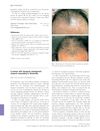
June 2005 in “Journal of Investigative Dermatology” A bull with a gene mutation was asymptomatic, synthetic retinoids cause hair loss, and new therapeutic targets were identified for skin diseases.
 17 citations
,
October 2006 in “Molecular and Cellular Endocrinology”
17 citations
,
October 2006 in “Molecular and Cellular Endocrinology” This study found that the L457(3.43)R mutation in the human luteinizing hormone receptor increases phosphodiesterase activity, reducing hormonal response despite elevated basal cAMP levels.
41 citations
,
February 2005 in “Experimental Cell Research” This study suggests that the MAEG protein may facilitate epithelial–mesenchymal interactions during hair follicle development by binding to RGD-binding integrins like α8β1.
 September 2024 in “Genes”
 This study found that overexpressing CRABP1 in dermal papilla cells promotes their proliferation and influences key genes in the Wnt/β-catenin signaling pathway, which may offer insights into mechanisms controlling hair follicle development.
 September 2016 in “Journal of Dermatological Science”
 This study reports a case of GGCX syndrome in a 55-year-old Japanese male, characterized by PXE-like symptoms and coagulation deficiency, with an unreported phenotype of possible spinocerebellar degeneration.
 13 citations
,
February 2007 in “British Journal of Dermatology”
13 citations
,
February 2007 in “British Journal of Dermatology” EF and PXE not closely related.
31 citations
,
October 1992 in “PubMed” This study demonstrated immunological cross-reactivity between mycobacterial heat-shock protein 65 and human epidermal cytokeratin 1/2, suggesting that this cross-reactive epitope might play a role in skin diseases.
 6 citations
,
December 2020 in “Biological & Pharmaceutical Bulletin”
6 citations
,
December 2020 in “Biological & Pharmaceutical Bulletin” This study found that certain fatty acids and triterpenoid-glycosides from Eclipta prostrata L. leaves exhibit potent inhibitory effects on the protein tyrosine phosphatase 1B enzyme, suggesting potential anti-diabetic and anti-obesity benefits.
 28 citations
,
February 2012 in “PLoS ONE”
28 citations
,
February 2012 in “PLoS ONE” In this study, researchers identified a novel congenital skin disorder in Chesapeake Bay retrievers, linked to a plakophilin-1 deficiency due to a genetic mutation, marking the first known occurrence in an animal species.
 27 citations
,
October 2011 in “British Journal of Dermatology”
27 citations
,
October 2011 in “British Journal of Dermatology” This study builds on previous findings by associating female pattern hair loss with gene polymorphisms related to oestrogen activity, suggesting oestrogen's role in the condition.
83 citations
,
October 2016 in “Stem Cells and Development” This study found that epidermal growth factor significantly enhances the proliferation of hair follicle-derived mesenchymal stem cells through the EGFR/ERK and AKT pathways, without involving the STAT3 pathway.
7 citations
,
April 2004 in “International Journal of Dermatology” This report describes a case of epidermolytic hyperkeratosis in a newborn and her mother, both possessing a specific KRT1 gene mutation known to cause this skin disorder.
8 citations
,
August 1987 in “The Journal of Dermatology” This study reports that the monoclonal antibody BKN-1 specifically stained basal cell epithelioma cells and certain normal skin structures, indicating a similarity in keratin expression between the tumor and follicular epithelium below the isthmus portion.
10 citations
,
January 2003 in “Dermatology” This study describes a Japanese family with monilethrix and found no clear genotype/phenotype correlation in cases with the E413K mutation in hHb6.
35 citations
,
April 1998 in “PubMed” This study found that activating the erbB-2 oncogene in transgenic mice led to severe skin abnormalities and fatal defects, indicating erbB-2's significant role in skin and hair follicle development.
 1 citations
,
November 2017 in “Expert opinion on orphan drugs”
1 citations
,
November 2017 in “Expert opinion on orphan drugs” This review discusses the genetic basis of ectodermal dysplasia, highlighting that identification of gene pathologies enhances diagnosis and supports prenatal DNA testing, but it reports no new clinical results.
26 citations
,
June 2004 in “Clinical Genetics” This study describes a case of epidermolysis bullosa simplex where maternal somatic and germline mosaicism was identified, highlighting the significance for genetic counseling in sporadic cases.
December 2021 in “Figshare” This study found that BBS7 downregulation in occlusal hypofunctional PDL affects Sonic hedgehog signaling activity, impacting PDL homeostasis.
 15 citations
,
March 2014 in “Biochimica and biophysica acta. Molecular and cell biology of lipids”
15 citations
,
March 2014 in “Biochimica and biophysica acta. Molecular and cell biology of lipids” This review discusses the role of acyl-CoA binding protein (ACBP) in the epidermal barrier, noting that its disruption in mice is linked to skin and fur abnormalities; it reports no new clinical results.