7 citations
,
July 2022 in “Plastic & Reconstructive Surgery” This study describes a management approach for scalp electrical injuries, emphasizing thorough debridement as key to successful reconstruction outcomes.
September 2025 in “Scientific periodicals of Ukraine” This study observed that follicular unit extraction combined with direct hair implantation successfully restored hair in a patient with multifocal post-burn alopecia, achieving nearly natural growth density and patient satisfaction.
 150 citations
,
April 1999 in “Dermatologic Clinics”
150 citations
,
April 1999 in “Dermatologic Clinics” This article reviews the biological and physical principles of laser hair removal and reports that current laser systems do not consistently achieve permanent hair follicle destruction across treated areas.
6 citations
,
November 2001 in “Der Hautarzt” This article reviews new developments in hypertrichosis treatments and reports no new clinical results; permanent depilation by photothermolysis and eflornithine cream are highlighted as promising options.
 1 citations
,
November 2020 in “Journal of Cosmetic Dermatology”
1 citations
,
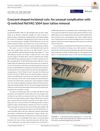
November 2020 in “Journal of Cosmetic Dermatology” This letter to the editor discusses an unusual complication, crescent-shaped incisional cuts, observed with Q-switched Nd:YAG 1064 laser tattoo removal and reports no new clinical results.
3 citations
,
October 2023 in “Plastic & Reconstructive Surgery Global Open” This study suggests that waiting for scarred tissue to mature and preparing the recipient area with nanofat can lead to better outcomes for hair transplantation in patients with eyebrow loss due to deep facial burns.
 15 citations
,
October 2006 in “Journal of the American Academy of Dermatology”
15 citations
,
October 2006 in “Journal of the American Academy of Dermatology” This case report describes subcutaneous emphysema in a patient's forearm as a rare complication of liquid nitrogen spray used on hypertrophic actinic keratosis, resolving spontaneously within a day.
January 2026 in “SSRN Electronic Journal” 51 citations
,
October 2002 in “Archives of dermatology” This case study of a patient with dissecting cellulitis of the scalp found that multiple medications, including isotretinoin, achieved only modest improvement, and symptoms returned after treatments were stopped.
1 citations
,
December 2018 in “LA Referencia (Red Federada de Repositorios Institucionales de Publicaciones Científicas)” This study found that combining electrotherapy with aromatherapy led to increased hair shaft thickness in men with androgenetic alopecia, although no changes in the scalp were observed.
7 citations
,
August 2024 in “Skin Research and Technology” The study's findings are unreliable due to retraction.
3 citations
,
March 1956 in “PubMed” This study discusses a surgical skin planing procedure using new technology and freezing agent that is reported to be a safe, effective treatment for cutaneous defects like pitted acne scars.
 February 2026 in “Cureus”
 In this case report, a 38-year-old woman experienced progressive lightening of a blue-green eyebrow tattoo treated with a QS ruby laser, but eyebrow hair density reduction was noted as a potential adverse effect.
4 citations
,
September 2021 in “Sensors” In this study, LED therapy for eyebrow loss in older females with frontal fibrosing alopecia significantly increased eyebrow hair count after 10 treatments and maintained improvement at 6 months, indicating it could be a promising and well-tolerated treatment option.
32 citations
,
March 2006 in “PubMed” This article reviews treatment options for unwanted facial hair in women, noting that eflornithine 13.9% cream reduces hair growth rate and can be combined with other methods.
 45 citations
,
June 2004 in “Lasers in Medical Science”
45 citations
,
June 2004 in “Lasers in Medical Science” This study found that non-coherent intense pulsed light (IPL) treatment significantly reduced hair growth by about 80% in patients with skin type III-V without causing side effects.
7 citations
,
January 2003 in “Journal of cosmetic and laser therapy” This study concluded that the Spa Touch system effectively retards hair regrowth, functioning like a "light razor" for quick and cost-effective epilation.
1 citations
,
December 2023 in “Skin Research and Technology” This study reported successful repigmentation of perioral vitiligo using upper hair follicle transplantation combined with a 308 nm excimer laser, without undesirable hair growth in the treated areas, offering a potential approach for treating vitiligo cases unresponsive to traditional melanocyte transplantation.
 1 citations
,
April 2018 in “Lasers in Surgery and Medicine”
1 citations
,
April 2018 in “Lasers in Surgery and Medicine” This review summarizes late-breaking abstracts from the American Society for Laser Medicine and Surgery, 2018, and reports no new clinical findings.
 2 citations
,
March 2019 in “Lasers in surgery and medicine”
2 citations
,
March 2019 in “Lasers in surgery and medicine” This study found that human hair follicles demonstrated a dose-dependent response to light in an ex vivo photoepilation model, which could predict the clinical efficacy and permanency of light-based hair removal devices.
 February 2024 in “Curēus”
 This case report describes an 83-year-old man who developed focal neurotoxicity, including paralysis and pain, in the area treated with topical 5-fluorouracil cream for actinic keratoses, suggesting a potential neurotoxic risk associated with the drug, especially in those with a specific genetic deficiency.
 1 citations
,
April 2023 in “Canadian journal of ophthalmology”
1 citations
,
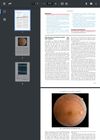
April 2023 in “Canadian journal of ophthalmology” This case report highlights the risk of retinal injuries from laser epilation, emphasizing the importance of practitioner training and protective eyewear to prevent irreversible vision damage.
52 citations
,
February 2009 in “Journal of the American Academy of Dermatology” This case study identified erosive pustular dermatosis of the scalp following methylaminolaevulinate photodynamic therapy, noting improvement with steroid treatment and partial resolution of atrophy after three months.
8 citations
,
January 2023 in “Skin Research and Technology” This study found that treatment with fractional 1064 nm picosecond Nd:YAG laser effectively reduced post-acne erythema in adult Chinese patients without causing scarring or pigmentation issues, though some experienced temporary erythema, oedema, pruritus, and acne eruptions.
 27 citations
,
August 2014 in “Journal of Cosmetic and Laser Therapy”
27 citations
,
August 2014 in “Journal of Cosmetic and Laser Therapy” This study compared the microscopic treatment zones created by different fractional lasers and radiofrequency in swine skin, finding distinct patterns and damage levels for each technology.
4 citations
,
December 2014 in “Dermatologica sinica/Zhōnghuá pífūkē yīxué zázhì” In this study, the 308-nm excimer lamp was reported to be a safe alternative treatment for alopecia areata, with a 41.1% overall response rate and a 50% response rate in severe cases.
198 citations
,
September 2007 in “Clinics in Dermatology” Radiofrequency devices effectively tighten skin without surgery.
 8 citations
,
December 2008 in “Clinical and Experimental Dermatology”
8 citations
,
December 2008 in “Clinical and Experimental Dermatology” This article reports on a case where treatment-resistant giant unilateral Bowen’s disease of the scalp responded to radiotherapy, but provides no further clinical details or results.
78 citations
,
January 2013 in “Brachytherapy” This study found that high-dose-rate electronic brachytherapy was effective for treating nonmelanoma skin cancer, with no recurrences and good to excellent cosmetic results at 1 year or more.
68 citations
,
January 2012 in “Lasers in surgery and medicine” This study found that combining microdermabrasion, a topical regimen, and low-fluence QS Nd:YAG laser treatment effectively cleared melasma in women, with 81% of participants achieving over 75% clearance and minimal side effects.