 1 citations
,
January 2015 in “Indian journal of dermatology, venereology, and leprology”
1 citations
,
January 2015 in “Indian journal of dermatology, venereology, and leprology” A woman's scalp infection caused by a fungus led to permanent hair loss and was hard to treat but responded to a specific antifungal.
 22 citations
,
January 2009 in “Medical mycology”
22 citations
,
January 2009 in “Medical mycology” In this case report, researchers identified Arthroderma vanbreuseghemii as the cause of a familial fungal infection, which was successfully treated with itraconazole and topical terbinafine cream.
 March 2026 in “Open MIND”
 Early treatment of scalp infections can prevent permanent hair loss.
 12 citations
,
June 2012 in “Revista da Sociedade Brasileira de Medicina Tropical”
12 citations
,
June 2012 in “Revista da Sociedade Brasileira de Medicina Tropical” This case study reported a rare infection by Trichosporon inkin, causing white piedra in a family in Southern Brazil, emphasizing the importance of molecular tools for precise identification.
 4 citations
,
March 2006 in “Journal of dermatology”
4 citations
,
March 2006 in “Journal of dermatology” This report describes a rare case of Trichophyton violaceum infection with conidia formation in a young boy, likely contracted in Dalian, China, and documents a method for visualizing conidia formation.
 January 2018 in “Springer eBooks”
 Terbinafine is the most effective medicine for fungal nail infections, especially for diabetics and those with weak immune systems.
 August 2025 in “Bioscientia Medicina Journal of Biomedicine and Translational Research”
 In this case study, a 3-year-old with tinea capitis achieved complete resolution following treatment, highlighting hair salons as potential indirect transmission sites for infection and emphasizing trichoscopy's diagnostic value when traditional signs like Wood’s lamp fluorescence are missing.
 December 2023 in “Indian Journal of Canine Practice”
 In this case report, a 3-year-old beagle with recurrent skin lesions and alopecia due to a methicillin-resistant Staphylococcus aureus infection showed significant improvement within 10 days and complete resolution after a 28-day treatment with oral linezolid, alongside fungal infection management.
 2 citations
,
May 2009 in “Medicine”
2 citations
,
May 2009 in “Medicine” This review discusses skin appendages like hair and nails as indicators of local and systemic pathologies, emphasizing conditions such as inflammatory diseases and infections, but reports no new clinical findings.
 April 2014 in “Jurnal Biomedik : JBM”
 This case report diagnosed an 8-year-old girl with trachyonychia and secondary onychomycosis, finding that spontaneous improvement is common, making specific therapy often unnecessary despite treatment challenges with associated fungal infections.
 August 2023 in “Authorea (Authorea)”
 This article highlights that tinea capitis, a fungal scalp infection primarily seen in children, is often misdiagnosed in adults, especially postmenopausal women and immunocompromised individuals, leading to unnecessary treatments and potential permanent hair loss if not correctly identified and treated.
 February 2024 in “Medical mycology case reports”
 This study reported the presence of dermatophyte macroconidia directly in clinical samples from a 3-year-old boy with tinea capitis, marking the first time this has been documented. The infection, caused by Microsporum ferrugineum, was successfully treated with systemic itraconazole and topical ketoconazole shampoo.
 7 citations
,
July 2019 in “The Journal of Dermatology”
7 citations
,
July 2019 in “The Journal of Dermatology” This case report describes an 18-year-old male with kerion celsi from Trichophyton tonsurans infection whose condition improved with terbinafine treatment, and highlights that although IL-17A expression increased in skin lesions, it was associated with disrupted antimicrobial peptide expression and severe inflammation, causing tissue damage.
 October 2022 in “The Journal of Family Practice”
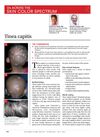
 This article describes cases of tinea capitis in young Black and Latina children, highlighting the condition's diverse presentations such as erythema, scaling, and subtle signs like comma hairs, but reports no new clinical results.
 37 citations
,
August 1991 in “International Journal of Dermatology”
37 citations
,
August 1991 in “International Journal of Dermatology” This study reported a predominance of adult patients, mostly women, with Trichophyton violaceum tinea capitis in southern Taiwan, noting a bimodal age distribution and questioning whether this represents a new trend.
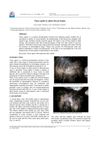
This report presents the first known case of tinea capitis caused by Microsporum canis in an adult female in the authors' locality, responsive to oral fluconazole treatment.
 89 citations
,
May 1999 in “Pediatric Dermatology”
89 citations
,
May 1999 in “Pediatric Dermatology” This article reviews the treatment options for tinea capitis, suggesting that itraconazole, terbinafine, and fluconazole are effective and safe alternatives to griseofulvin but reports no new clinical results.

In this expert consensus, the authors aimed to address the challenges of diagnosing and treating uncommon dermatophytoses due to their distinct characteristics and lack of standardized protocols, by providing scientific guidance on their epidemiology, clinical features, diagnosis, and treatment.
 3 citations
,
September 2020 in “Case reports in dermatological medicine”
3 citations
,
September 2020 in “Case reports in dermatological medicine” This case report described a misdiagnosed kerion in a 10-year-old child initially treated as a bacterial abscess, leading to unnecessary surgery and residual scarring alopecia.
 January 2025 in “International Journal of Advanced Biochemistry Research”
 This study found that in dogs with dermatological disorders, fungal dermatitis was diagnosed in 20.77% of cases, with Microsporum spp. being the most common fungal pathogen, emphasizing the need for thorough diagnostic approaches including clinical, microscopic, and cultural assessments.
 35 citations
,
January 1996 in “Dermatologic clinics”
35 citations
,
January 1996 in “Dermatologic clinics” This article reviews tinea capitis as a common infectious scalp condition in children, reporting no new findings.
 December 2014 in “Berkala Ilmu Kesehatan Kulit dan Kelamin”
 This case report describes successful treatment of a four-year-old boy with kerion-type tinea capitis caused by T. mentagrophytes using griseofulvin, erythromycin, wet dressing, and ketokonazole shampoo, with improvement after 8 weeks.
 24 citations
,
January 2011 in “International Journal of Trichology”
24 citations
,
January 2011 in “International Journal of Trichology” This review highlights the light microscopic features of various infectious and non-infectious hair conditions and reports no new clinical results.
 October 2019 in “Asian Journal of Research in Animal and Veterinary Sciences”
 This review discusses dermatophytosis in equines, caused primarily by T. equinum, noting its global prevalence and highlighting diagnostic methods; it reports no new clinical results.
 143 citations
,
October 2008 in “Journal of The American Academy of Dermatology”
143 citations
,
October 2008 in “Journal of The American Academy of Dermatology” This study found that comma hairs are a distinctive feature of tinea capitis caused by Microsporum canis, distinguishing it from alopecia areata, which is characterized by exclamation mark hairs.
 8 citations
,
January 2007 in “Mycoses”
8 citations
,
January 2007 in “Mycoses” This case report describes a 36-year-old Senegalese man with tinea capitis caused by Trichophyton soudanense, a dermatophyte more frequently encountered in Europe due to immigration.
 3 citations
,
April 2021 in “Berkala ilmu kedokteran/Journal of the medical sciences”
3 citations
,
April 2021 in “Berkala ilmu kedokteran/Journal of the medical sciences” This report describes a case of tinea capitis caused by Epidermophyton floccosum, highlighting its unusual ability to perforate hair and act as an etiological agent for the condition.
July 2024 in “Indian Dermatology Online Journal” In this case study, a 45-year-old immunocompetent woman with tinea capitis exhibited an unusual presentation of the infection with a scaly plaque and hair loss, which responded well to treatment with itraconazole.
 61 citations
,
October 2005 in “The journal of investigative dermatology. Symposium proceedings/The Journal of investigative dermatology symposium proceedings”
61 citations
,
October 2005 in “The journal of investigative dermatology. Symposium proceedings/The Journal of investigative dermatology symposium proceedings” This review discusses scalp skin disorders, their overlapping symptoms, diagnostic techniques, and treatment strategies, emphasizing the importance of accurate differential diagnosis, but reports no new clinical results.
 2 citations
,
December 2007 in “Expert Review of Dermatology”
2 citations
,
December 2007 in “Expert Review of Dermatology” This article reviews current understanding of the causes and treatments of three common hair growth disorders in children but reports no new results.