
This review discusses various skin-related conditions affecting hair and nails, highlighting associations with systemic pathologies but reports no new clinical findings.
 55 citations
,
May 2014 in “Journal of feline medicine and surgery”
55 citations
,
May 2014 in “Journal of feline medicine and surgery” This review discusses feline dermatophytosis and emphasizes the importance of early detection and appropriate treatment, but it reports no new clinical results.
 28 citations
,
March 2010 in “Clinics in dermatology”
28 citations
,
March 2010 in “Clinics in dermatology” This review details historical advancements in understanding and treating superficial fungal infections, with notable milestones in identifying causative agents and developing effective treatments, but it reports no new findings.
 20 citations
,
July 1990 in “Pediatrics in Review”
20 citations
,
July 1990 in “Pediatrics in Review” This piece explains that 90% to 95% of pediatric alopecia cases are due to four main causes: alopecia areata, telogen effluvium, tinea capitis, and trichotillomania, with diagnosis typically confirmed through careful examination.
 7 citations
,
December 2008 in “Expert Review of Dermatology”
7 citations
,
December 2008 in “Expert Review of Dermatology” This article reviews hair and nail disorders in children, emphasizing their prevalence, congenital and acquired origins, and the diagnostic challenges compared to treatment, but reports no new clinical results.
 7 citations
,
November 2000 in “Clinics in Dermatology”
7 citations
,
November 2000 in “Clinics in Dermatology” In this study, pediatric patients with overt polyautoimmunity frequently had systemic lupus erythematosus as an index disease, with clustering patterns revealing familial influence on autoimmune disease aggregation.
 February 2026 in “International Journal of Research in Dermatology”
 In this report, two adult cases of tinea capitis with unusual symptoms like pustules and non-scarring alopecia were diagnosed based on clinical and pathological findings, and successfully treated with oral Griseofulvin and topical luliconazole cream.
December 2025 in “Antibiotics” In this systematic review, researchers found that Tinea capitis in individuals aged 65 or older is frequently misdiagnosed, primarily affects women, and often presents with inflammatory symptoms; systemic antifungal therapy led to clinical cure in 91.2% of cases.
 January 2025 in “International Journal of Pharmacognosy and Life Science”
 In this review, researchers highlighted the potential benefits of using herbal remedies, such as Aloe vera, Bhringraj, Neem, Tea tree oil, Amla, and Hibiscus, for treating various hair problems like dandruff, scalp infections, and premature greying, suggesting natural alternatives to traditional hair treatments.
 August 2024 in “Indian Journal of Animal Research”
 In this study, dermatophytosis in cattle around Parbhani was found to have a prevalence of 17.2%, with Clove oil treatment showing the quickest recovery in 7 days.
 April 2019 in “Journal of Medical Science And clinical Research”
 This study observed that grey patch is the most common variant of tinea capitis in northeastern India, with T. violaceum being the predominant fungal isolate.
 January 2019 in “Open access journal of mycology & mycological sciences”
 This article discusses tinea capitis, highlighting its causes, symptoms, diagnostic methods, and the importance of selecting treatment based on the causal agent for effective outcomes; it reports no new clinical results.
 35 citations
,
January 1993 in “International Journal of Dermatology”
35 citations
,
January 1993 in “International Journal of Dermatology” In this study, most hair disorders among HIV-1 positive patients were associated with low helper T cell counts, with papulosquamous conditions like seborrheic dermatitis and psoriasis being the most common.
 12 citations
,
March 2010 in “Revista iberoamericana de micología”
12 citations
,
March 2010 in “Revista iberoamericana de micología” This case report describes a Persian cat with dermatophytic pseudomycetoma that initially responded to griseofulvin treatment and surgical excision, but the condition relapsed, ultimately leading to the cat's death.
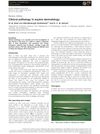 1 citations
,
June 2016 in “Equine Veterinary Education”
1 citations
,
June 2016 in “Equine Veterinary Education” This article discusses various diagnostic techniques for investigating equine skin diseases and reports no new clinical results.
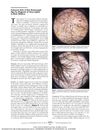 108 citations
,
March 2011 in “Archives of Dermatology”
108 citations
,
March 2011 in “Archives of Dermatology” Corkscrew hair may be a new sign for quickly diagnosing scalp fungus in black children.
 3 citations
,
October 1982 in “Postgraduate Medicine”
3 citations
,
October 1982 in “Postgraduate Medicine” This article discusses objective methods for assessing hair loss and notes that most types of hair loss can regrow without treatment, but effective treatments for pattern or senescent alopecia remain unavailable.
 65 citations
,
January 2005 in “American journal of clinical dermatology”
65 citations
,
January 2005 in “American journal of clinical dermatology” This article reviews the diagnosis and treatment of tinea capitis in children, noting that newer antifungal agents can offer effective systemic therapy alongside supportive topical treatments; it reports no new clinical findings.
 20 citations
,
July 2008 in “Dermatologic Therapy”
20 citations
,
July 2008 in “Dermatologic Therapy” This review discusses various nonfollicular scalp conditions causing secondary scarring or permanent alopecia and highlights the importance of specific diagnoses and treatments but reports no new results.
 7 citations
,
May 2012 in “Actas Dermo-Sifiliográficas”
7 citations
,
May 2012 in “Actas Dermo-Sifiliográficas” This review discusses the historical and current epidemiological trends of tinea capitis in Spain and warns about a potential resurgence due to increased anthropophilic species if not properly managed; it reports no new clinical data.
1 citations
,
May 2017 in “InTech eBooks” This review discusses various scalp infections, infestations, and neoplasms but reports no new clinical findings; the authors emphasize the diversity of diseases from different origins.
 June 2008 in “Springer eBooks”
 The document concludes that permanent hair loss conditions are complex, require early specific treatments, and "secondary permanent alopecias" might be a more accurate term than "secondary cicatricial alopecia."
1 citations
,
June 2022 in “International Journal of Infectious Diseases” This case report identifies a 13-year-old boy with disseminated tinea incognito, emphasizing the importance of considering fungal infections when red and scaly lesions persist despite corticosteroid treatment.
 May 2022 in “International journal of infectious diseases”
 In this case study, a 70-year-old woman with generalized favus caused by Trichophyton schoenleinii achieved a clinical and mycological cure after a one-month terbinafine treatment.
 June 2024 in “ACTA SCIENTIAE VETERINARIAE”
 This study reported a case of equine ringworm infection in a 2-year-old horse caused by Nannizzia gypsea, confirmed through culture and SYBR-Green real-time PCR techniques, demonstrating that qPCR allows specific detection of dermatophytes more rapidly than conventional methods.
13 citations
,
December 2012 in “Medical mycology case reports” In this case report, an atypical form of tinea favosa in an 11-year-old girl was initially misdiagnosed, highlighting the importance of mycological examination for accurate diagnosis, especially when diffuse scalp scaling is present.
 2 citations
,
January 2019 in “Indian Dermatology Online Journal”
2 citations
,
January 2019 in “Indian Dermatology Online Journal” This paper summarizes the foundation and proceedings of the first International Congress of SAARCUM, which addressed the growing issue of antifungal therapy failures in South Asia but reports no new research findings.
1 citations
,
January 2024 in “Journal of clinical medicine” This literature review highlights the changing epidemiology of tinea capitis due to global migration and underscores the importance of early recognition and treatment of atypical variants in immunocompetent children to minimize prolonged systemic antifungal therapy and prevent adverse events, especially regarding liver health.
4 citations
,
December 2024 in “Life” In this literature review, researchers found that dermoscopic presentations of pediatric skin conditions often differ between children with skin of color and Caucasian children, with variations influenced by racial backgrounds.
November 2024 in “The Journal of Dermatology” This study observed that in children with persistent kerion, ingrown hairs could be identified with a dermatoscope and their removal often improved the condition, suggesting that ingrown hairs might be an aggravating factor in the persistence of this fungal infection.