 27 citations
,
October 2017 in “British Journal of Dermatology”
27 citations
,
October 2017 in “British Journal of Dermatology” Patients with GATA2 deficiency show early skin symptoms that help diagnose the condition.
23 citations
,
July 2016 in “JAMA Ophthalmology” This study observed that CDH3-related congenital hypotrichosis with juvenile macular dystrophy presents with childhood-onset progressive chorioretinal atrophy and universally thin and sparse scalp hair.
7 citations
,
January 2020 in “Dermatology online journal” In this case report, adult-onset porokeratotic eccrine ostial and dermal duct nevus improved with topical tazarotene treatment, as evidenced by dermatoscopic images.
 1 citations
,
December 2020 in “Acta dermato-venereologica”
1 citations
,
December 2020 in “Acta dermato-venereologica” Some scalp sores are linked to different inherited skin conditions.
 28 citations
,
August 2001 in “Journal of cutaneous medicine and surgery”
28 citations
,
August 2001 in “Journal of cutaneous medicine and surgery” This review discusses the increased incidence of dermatological conditions in individuals with Down's syndrome and explores potential links to immunological deficiencies, but reports no new clinical findings.
8 citations
,
October 2024 in “Developmental Cell” 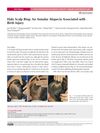 2 citations
,
January 2023 in “Annals of Dermatology”
2 citations
,
January 2023 in “Annals of Dermatology” A hairless patch on a boy's scalp from birth injury improved with minoxidil treatment.
 111 citations
,
January 2007 in “Seminars in cell & developmental biology”
111 citations
,
January 2007 in “Seminars in cell & developmental biology” This article reviews the similarities in early development processes of hair follicles, teeth, and mammary glands and reports no new experimental findings.
7 citations
,
November 1997 in “Reproduction Fertility and Development” In this study, subcutaneous injections of murine epidermal growth factor in marsupial pouch young inhibited the formation of hair follicles and associated structures, altering normal follicle development.
1 citations
,
August 2024 in “Pediatric Dermatology” In this report, researchers describe an unusual case of congenital pili multigemini, a hair follicle disorder, presenting on the eyebrow of a female infant, highlighting its rarity and atypical location.
43 citations
,
September 2001 in “Annals of Neurology” This study found that somatic mosaic mutations in the doublecortin gene may cause subcortical band heterotopia in male patients, and molecular analysis using hair roots is a useful detection method.
81 citations
,
September 2009 in “Birth defects research” This review discusses the mechanisms behind hair patterning during mouse embryonic development and reports no new experimental findings.
 May 2022 in “Experimental dermatology”
 In this study, hair shafts from trichothiodystrophy patients with ERCC2 mutations revealed abnormal cuticle structures and protein imbalances compared to normal hair shafts.
3 citations
,
March 1966 in “Archives of Dermatology” This study found that nevoid basal cell carcinomas originate in the epidermis and the upper part of the hair follicle, showing similarities to nonnevoid basal cell carcinomas.
11 citations
,
March 2004 in “Journal of Comparative Pathology” Norfolk Terriers have a genetic skin defect causing scaling and blisters due to a keratin issue.

In this case report, researchers diagnosed a 12-year-old girl with a nevus sebaceus of Jadassohn, characterized by a yellowish-pink plaque on the scalp and a genetic variant, following previous misdiagnosis as alopecia areata.
 July 2018 in “Kidney international”
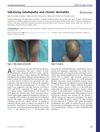
 This case study describes a 9-year-old girl with a homozygous EGFR gene mutation, presenting with tubulopathy and chronic dermatitis, whose ongoing symptoms and management offer insights into this rare genetic condition.
3 citations
,
December 2013 in “Balkan Journal of Medical Genetics” This case report highlights the use of microarray analysis to identify cryptic chromosomal rearrangements in a young woman with intellectual disability and multiple congenital anomalies.
 February 2010 in “Journal of The American Academy of Dermatology”
 Surgery on a baby with a skin disorder improved eyelid position and eye health.
 August 2018 in “Journal of The American Academy of Dermatology”
 Older men's scalp damage increases with age and sun exposure, a baby girl in the Philippines has Schimmelpenning syndrome, and thyroid screening is advised for children with hair loss and certain risk factors.
August 2025 in “Dermatopathology” This study identified 96 cases of pilomatricomas linked to genetic syndromes, including a novel association with Apert syndrome, highlighting that these tumors often manifest as the first indication of underlying conditions in pediatric patients.
1 citations
,
September 2022 in “European Journal of Dermatology” This study identified a novel splice-site variant of the LAMB3 gene that may cause junctional epidermolysis bullosa, suggesting gene sequencing is essential for accurate diagnosis.
 57 citations
,
March 2011 in “Pediatric Dermatology”
57 citations
,
March 2011 in “Pediatric Dermatology” In this study, skin manifestations were observed in 48% of children with primary immunodeficiency disorders, often providing crucial diagnostic clues for early identification of these conditions.
 April 2018 in “Journal of Investigative Dermatology”
 This article proposes a new classification system for cutaneous adnexal cysts based on their origin in the folliculo-sebaceous unit and sweat glands, aiming to clarify their categorization and origins.
 23 citations
,
January 2015 in “Journal of The American Academy of Dermatology”
23 citations
,
January 2015 in “Journal of The American Academy of Dermatology” This study found that patients with myotonic dystrophy type 1 had higher numbers of nevi, dysplastic nevi, melanomas, and pilomatrixomas compared to age- and sex-matched controls.
 1 citations
,
June 2022 in “Chinese medical journal/Chinese Medical Journal”
1 citations
,
June 2022 in “Chinese medical journal/Chinese Medical Journal” This study identified two novel mutations in the CDH3 gene causing HJMD in a Chinese patient, expanding the genetic and phenotypic understanding of the disorder.
 21 citations
,
November 2009 in “Dermatologic Clinics”
21 citations
,
November 2009 in “Dermatologic Clinics” This review discusses hair abnormalities in various epidermolysis bullosa subtypes and reports no new clinical findings.
35 citations
,
May 2006 in “Journal of Investigative Dermatology” Monilethrix involves multiple genes affecting hair structure, including DSG4 mutations.
5 citations
,
January 1993 in “PubMed” In this study, retinoic acid treatments induced glandular and feather formation in embryos by altering positional values and activating specific retinoic acid nuclear receptor gene expression.
This article reviews the history and characteristics of the rare nude phenotype SCID, primarily distinguished by severe T cell immunodeficiency and notable skin and hair abnormalities, but reports no new clinical findings.