24 citations
,
August 2019 in “Journal of the American Academy of Dermatology” Teledermatology reduces unnecessary in-person visits and improves care.
 1 citations
,
November 2021 in “World Family Medicine Journal /Middle East Journal of Family Medicine”
1 citations
,
November 2021 in “World Family Medicine Journal /Middle East Journal of Family Medicine” In this study, clinicians in Riyadh, Saudi Arabia, most commonly reported using a blended consultation model, which combines elements from various approaches to enhance doctor-patient interactions.
 March 2001 in “Hair transplant forum international”
 This article discusses the author’s experience in hair transplant procedures and training at Bosley Medical but reports no new clinical results.
January 1995 in “Expert Systems with Applications” 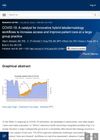 7 citations
,
April 2021 in “Journal of The American Academy of Dermatology”
7 citations
,
April 2021 in “Journal of The American Academy of Dermatology” This study found that the implementation of the SAVe teledermatology model increased access to dermatologic care during COVID-19, reducing referral wait times significantly compared to in-person visits.
February 2018 in “The journal of sexual medicine” This study reviewed tele-consultations in a tertiary referral sexual medicine practice and found that some patients utilize photo-augmented telemedicine for inquiries about diagnoses, prescribed treatments, or results.
 November 2010 in “Value in Health”
 Using a call center to collect data in a trial for eye disease in diabetics led to high response rates and very little missing information.
 1 citations
,
March 2004 in “Clinical Medicine”
1 citations
,
March 2004 in “Clinical Medicine” Learn how to avoid mistakes in consultant evaluations.
 November 2017 in “British Journal of Dermatology”
 The electronic version of the Dermatology Life Quality Index is as effective as the paper version, with most patients preferring it.
 April 2023 in “JMIR. Journal of medical internet research/Journal of medical internet research”
 This study found that pharmacists using the EVInews database for self-medication information achieved significantly higher quality scores compared to those using other web-based sources.
January 2012 in “International Society of Hair Restoration Surgery” This abstract describes an online consultation case and provides no new research findings.
 1 citations
,
April 2017 in “Journal of Investigative Dermatology”
1 citations
,
April 2017 in “Journal of Investigative Dermatology” This study found that teledermatology significantly reduced wait times and increased appointment availability for uninsured Latino immigrants, effectively triaging 70% of cases without in-person visits.
14 citations
,
September 2020 in “Journal of the American Academy of Dermatology” Electrical impedance spectroscopy improves biopsy accuracy and efficiency for skin lesions.
September 2017 in “Scientific Repository (Petra Christian University)” This project developed an SMS-based e-voting application using Gammu and PHP, aiming to facilitate an accurate, quick, and transparent voting process for student elections.

Online tools are effective and cost-efficient for recruiting dermatology research participants, especially among younger people.

This study suggests that accessing information at the point of care has become a crucial clinical skill, viewed as a communication skill by patients, which can enhance trust and involvement through effective communication and transparency during consultations.
September 2024 in “Journal of the American Academy of Dermatology” Teledermatology can effectively treat certain skin conditions with topical treatments, reducing the need for in-person visits.
 April 2016 in “Journal of The American Academy of Dermatology”
 Online medical education helps doctors make better clinical decisions and increases their knowledge in treating fungal nail infections.
 January 2014 in “Jaypee Brothers Medical Publishers (P) Ltd. eBooks”
 Consultants guide and advise on hair restoration procedures.
No results were reported in this guideline paper, which was authored by the Task Force for Guidelines for Virtual Consultations of the ISHRS to provide suggestions on effectively offering virtual consultations in hair restoration practice.
April 2024 in “JEADV Clinical Practice” This study suggests that establishing international consensus guidelines for including concealed or sensitive sites in routine forensic examinations is crucial to clarify clinician responsibilities, guide patient expectations, and reduce potential medicolegal issues.
 November 2019 in “Nepal Medical College journal”
 This study found that nearly a quarter of patients in a general dermatology outpatient department sought cosmetic consultations, primarily females and young employed adults from higher socio-economic backgrounds.
January 2026 in “Internal Medicine Journal” This study emphasizes the need for a formal evaluation of direct-to-consumer telemedicine services in Australia to ensure safety, privacy, and ethical standards while maintaining high-quality healthcare.
 April 2018 in “Journal of Investigative Dermatology”
 This study found that combining CelluTome system and RCM is a safe and effective protocol for evaluating wound healing responses in patients with epidermolysis bullosa.
 21 citations
,
July 2018 in “The Journal of Sexual Medicine”
21 citations
,
July 2018 in “The Journal of Sexual Medicine” This article updates the process of care model for evaluating erectile dysfunction, emphasizing comprehensive evaluation and a combination of pharmacotherapy and counseling tailored to patient dynamics.
 March 2023 in “Trends in Telemedicine & E-health”
 Medical questionnaires could modernize healthcare by improving access and efficiency but need guidelines to ensure quality care.
 April 2016 in “Journal of The American Academy of Dermatology”
 This study found that patients with androgenetic alopecia had higher symptom-related quality of life impairment than those with alopecia areata, with specific influences from age, disease duration, and severity.
January 2026 in “Updates in clinical dermatology”  33 citations
,
November 2014 in “Military Medicine”
33 citations
,
November 2014 in “Military Medicine” This retrospective review of the U.S. military's teledermatology program from 2004 to 2012 found that timely consultations helped avoid unnecessary medical evacuations and facilitated necessary ones for service members and coalition partners.
August 2011 in “BIO-PROTOCOL” This protocol paper details methods for live imaging and analysis of dividing germline stem cells in C. elegans and reports no new research findings.