1 citations
,
March 2017 in “Semina Ciências Agrárias” This case report describes a Dogo Argentino dog with M. nanum infection, likely from hunting wild boar, that responded well to itraconazole and topical miconazole treatment.
 March 2026 in “Journal of Sustainable Veterinary and Allied Sciences”
 In this case report, a 5-year-old female German shepherd diagnosed with canine babesiosis and ehrlichiosis fully recovered after receiving parenteral treatment for these infections and topical therapy for dermatitis at the University of Ilorin's Veterinary Teaching Hospital.
2 citations
,
January 2002 in “PubMed” This article discusses dermatophytosis, focusing on the identification and clinical importance of various dermatophyte infections, but it reports no new results; the author emphasizes the value of direct examination for diagnosis.
January 2016 in “Elsevier eBooks” This article discusses dermatophycosis, a fungal infection affecting various animals, and outlines its transmission, diagnosis, treatment, and prevention methods, but reports no new research findings.
4 citations
,
April 2024 in “Animals” This study reported allergic dermatitis in Brazilian donkeys linked to Culicoides insect bites, characterized by severe itching and skin lesions. The potential treatment with copaiba oil and multivitamin emulsion was explored, revealing its promise for managing this condition.
 November 2023 in “International Journal of Infectious Diseases”
 In this case study, dermoscopy successfully visualized head lice and their eggs on a 19-year-old girl's scalp, aiding in the diagnosis of pediculosis capitis, which was then treated with sulfur ointment and hair shaving.
 January 2026 in “International Journal of Advanced Biochemistry Research”
 Among calves under one year in Uttarakhand, India, this study found that dermatophytosis prevalence was influenced by age, sex, breed, and season, with the highest rates in 4-6 month-olds, females, HF crossbreds, and during winter.
24 citations
,
September 2007 in “Veterinary Dermatology” This report documented the first known case of Malassezia slooffiae-associated dermatitis identified in a goat through diagnostic work-up, including histology and DNA sequencing.
 September 2024 in “The Indian Veterinary Journal”
 This case report describes a three-month-old male Labrador pup with dermatophytosis, diagnosed through clinical signs and a Woods lamp test, which successfully recovered from the infection with a four-week treatment regimen involving topical and oral therapies.
 24 citations
,
July 1998 in “Journal of the South African Veterinary Association”
24 citations
,
July 1998 in “Journal of the South African Veterinary Association” In this study, persistent ringworm infections in dairy calves appeared resistant to standard topical treatments and showed a potential risk of spreading to human attendants.
 May 2025 in “International Journal For Multidisciplinary Research”
 In this study, veterinary examinations of 150 domestic canines and felines revealed that M. canis was the predominant dermatophyte, affecting 9 cats and 9 dogs, with dogs showing more severe lesions and higher neutrophil counts in the cytological analysis.
10 citations
,
May 1991 in “Journal of the American Academy of Dermatology”  October 2023 in “Jurnal Ilmu Kesehatan Hewan”
 This report describes the successful treatment of dermatophytosis due to Trychophyton spp. in a 2-month-old kitten using ketoconazole cream, fish oil, multivitamin syrup, and sulfur soap, resulting in significant improvement in the skin condition after four weeks.
 February 2024 in “Medical mycology case reports”
 This study reported the presence of dermatophyte macroconidia directly in clinical samples from a 3-year-old boy with tinea capitis, marking the first time this has been documented. The infection, caused by Microsporum ferrugineum, was successfully treated with systemic itraconazole and topical ketoconazole shampoo.
September 2011 in “Archives of dermatology” The child was diagnosed with cutaneous leishmaniasis.
 13 citations
,
October 2021 in “Anais Brasileiros de Dermatologia”
13 citations
,
October 2021 in “Anais Brasileiros de Dermatologia” This article discusses how dermoscopy, particularly "entomodermoscopy," aids in diagnosing skin infestations and infectious dermatoses, enhancing clinical evaluations, and monitoring treatment efficacy for conditions like scabies, pediculosis, myiasis, and tungiasis.
 December 2014 in “Bangladesh Journal of Veterinary Medicine”
 In this study, mixed lice infestations and their associated skin changes were observed in the Egyptian lesser blind mole rat, marking the first report of such findings in this species.
 November 2025 in “Zenodo (CERN European Organization for Nuclear Research)”
 This study highlights that dermatophytosis, a common fungal skin infection in cats, caused by Microsporum and Trichophyton species, typically resolves on its own but may be more severe in immunocompromised individuals and young animals.
9 citations
,
January 1975 in “Munich Personal RePEc Archive (Ludwig Maximilian University of Munich)” This report describes a case of Rothmund-Thomson type congenital poikiloderma, noting minor skin changes, hair loss, and slightly elevated lysine and cystine in the urine.
 January 2025 in “Journal of the European Academy of Dermatology and Venereology”
 This study highlights that Trichophyton mentagrophytes genotype VII, primarily transmitted sexually among men who have sex with men, has established itself in Europe, necessitating awareness and surveillance to prevent its spread.
 22 citations
,
January 2009 in “Medical mycology”
22 citations
,
January 2009 in “Medical mycology” In this case report, researchers identified Arthroderma vanbreuseghemii as the cause of a familial fungal infection, which was successfully treated with itraconazole and topical terbinafine cream.
5 citations
,
November 2010 in “Veterinary Record” Treatment with oral terbinafine and topical enilconazole was successful in resolving a Trichophyton dermatophytosis outbreak in L'Hoest's monkeys, with complete mycological cure achieved after eight weeks.
 29 citations
,
June 2005 in “Journal of Zoo and Wildlife Medicine”
29 citations
,
June 2005 in “Journal of Zoo and Wildlife Medicine” This study concluded that coat damage in captive rhesus macaques is unlikely caused by parasitic, bacterial, or mycotic infections but may be linked to environmental or behavioral factors affecting hair growth.
20 citations
,
October 2005 in “Archives of Dermatological Research” January 2015 in “Lume (Universidade Federal do Rio Grande do Sul)” This literature review addresses generalized juvenile demodicosis in dogs, describing a case in a 10-month-old Dachshund where corticosteroid treatment worsened the condition, leading to severe pyoderma, intense itching, and widespread hair loss; it reports no new clinical findings.
28 citations
,
January 1999 in “Dermatology” This case report describes a dermatophytic granuloma caused by Microsporum canis in a heart-lung transplant recipient, emphasizing the need for systemic antifungal treatment in such deep infections.
 February 2013 in “Archives of Disease in Childhood: Education & Practice”
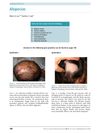
 Different types of alopecia in children require specific diagnoses and treatments.
 November 2025 in “Zenodo (CERN European Organization for Nuclear Research)”
 This study observed that dermatophytosis, primarily caused by fungi like M. canis, is the most common fungal skin infection in cats, often resolving spontaneously except in young or immunocompromised animals.
2 citations
,
January 2006 in “Indian Journal of Veterinary Pathology” In this study of sheep across various breeds and ages, researchers found that Trichophyton mentagrophytes caused severe dermatophytosis, especially affecting young Shahbadi sheep during winter, leading to notable anemia and skin lesions.
 October 2019 in “Asian Journal of Research in Animal and Veterinary Sciences”
 This review discusses dermatophytosis in equines, caused primarily by T. equinum, noting its global prevalence and highlighting diagnostic methods; it reports no new clinical results.