2 citations
,
September 2024 in “Journal of the American Academy of Dermatology” Deuruxolitinib is generally safe for treating alopecia areata.
4 citations
,
September 2025 in “Journal of the American Academy of Dermatology” The trial helped find the best dose of deuruxolitinib for treating alopecia areata.
18 citations
,
July 2024 in “Frontiers in Immunology” This review explores the complex relationships between ferroptosis, anastasis, and chemoresistance in cancer therapy, highlighting the potential of combining ferroptosis with immunotherapy to overcome resistance and improve personalized cancer treatments.
March 2026 in “Journal of the European Academy of Dermatology and Venereology” This study introduced and validated the VESALT, a visual extension of the Severity of Alopecia Tool, finding it offers improved reliability and user-friendliness over SALT by incorporating pattern recognition and broader coverage, including non-scalp regions, in assessing alopecia areata severity.
 4 citations
,
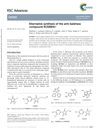
January 2014 in “RSC Advances”
4 citations
,
January 2014 in “RSC Advances” A new, less toxic and more efficient method to create the anti-baldness compound RU58841 was developed in 2014.
1 citations
,
December 2024 in “ACS Biomaterials Science & Engineering” The patches could quickly deliver epilepsy treatment and reduce seizures.
November 2025 in “Drug Delivery and Translational Research”  May 2017 in “Journal of The American Academy of Dermatology”
 An intact skin barrier is crucial to prevent infection in cases of tether-induced tenosynovitis.
13 citations
,
November 2005 in “Epilepsia” This study suggests that the anticonvulsant effects of deoxycorticosterone in young rats may be mediated by its metabolites and interactions with multiple receptors, including mineralocorticoid and progesterone receptors.
22 citations
,
September 1986 in “Journal of Investigative Dermatology” This study found that low-dose topical alpha-terthienyl combined with UVA radiation can induce cutaneous photosensitization in guinea pigs, suggesting a possible photochemotherapy approach for skin diseases like psoriasis.
 January 2019 in “Pediatric Oncall”
 This article reviews the use of valproate in epilepsy treatment and its side effects, noting that hair texture changes such as curly hair are a rarely reported effect, but reports no new clinical results.
2 citations
,
January 2017 in “Indian Dermatology Online Journal” This case report describes a rare instance of dermographic urticaria triggered by an 810 nm diode laser for hair removal, with symptoms managed effectively by pre-treatment with levocetirizine.
2 citations
,
September 2024 in “Asian Journal of Andrology” In a retrospective cohort of patients with steroid 5 α-reductase 2 deficiency, this study identified seven novel genetic variants in the SRD5A2 gene, expanding the variant database and contributing to improved diagnostic and therapeutic approaches for the condition.
 July 2021 in “International journal of dermatology, venereology and leprosy sciences”
 This study found that diphenylcyclopropenone (DPCP) was more effective and better tolerated than dinitrochlorobenzene (DNCB) in promoting hair regrowth in patients with alopecia areata.
2 citations
,
July 2019 in “PeerJ” This study found that the vitamin D receptor plays a crucial role in hair follicle development in cashmere goats by regulating signaling pathways in dermal papilla cells.
 1 citations
,
July 2020 in “International journal of radiology & radiation therapy”
1 citations
,
July 2020 in “International journal of radiology & radiation therapy” This study found that VMAT hair-sparing WBRT partially preserved scalp hair at four weeks post-treatment without compromising symptomatic disease control in the short term, but reduced hair loss did not improve quality of life.
 3 citations
,
January 2018 in “Postępy Dermatologii i Alergologii”
3 citations
,
January 2018 in “Postępy Dermatologii i Alergologii” This study suggests that SRD5A2 polymorphisms may increase the risk of acne in individuals with normal serum testosterone levels, particularly in the Chinese population.
16 citations
,
February 2005 in “British journal of dermatology/British journal of dermatology, Supplement” This study found that VDR deficiency in mice leads to various skin pathologies but does not affect the phenotype or function of Langerhans cells.
 January 2023 in “International Journal of Contemporary Pediatrics”
 This case study describes a 5-year-old boy with vitamin D dependent rickets type 2, motor delays, and alopecia totalis who showed improved biochemical parameters with calcium and calcitriol treatment.
47 citations
,
September 1995 in “British Journal of Dermatology” This review discusses the complication of vitiligo in patients undergoing diphencyprone sensitization therapy for alopecia universalis and reports no new clinical findings.
 June 2023 in “Research Square (Research Square)”
 In this study, utilizing a mixture of crushed sky fruit seeds and sodium salt for goat skin preservation led to a significant reduction in environmental impact, decreasing total dissolved solids by 59% and chloride content by 44%, while maintaining the physical quality of processed leather.
17 citations
,
January 1993 in “Dermatology” This report describes two cases of chronic arsenicism, one involving criminal poisoning by a sibling and the other associated with prolonged use of Fowler's solution.
5 citations
,
October 2001 in “British Journal of Ophthalmology” This abstract describes the initial success of intralesional cidofovir for SCC treatment and states that it has not shown systemic toxicity, but it does not report new clinical trial results.
29 citations
,
January 2003 in “KARGER eBooks” In this study, researchers concluded that hereditary 1,25-dihydroxyvitamin D-resistant rickets, characterized by specific mutations in the vitamin D receptor gene, may resolve metabolic abnormalities with age, though associated alopecia remains.
3 citations
,
November 2024 in “Electrochimica Acta” A new, quick method accurately detects minoxidil in drugs and cosmetics.
88 citations
,
August 1998 in “Carcinogenesis” This study found that overexpression of ornithine decarboxylase and activated Ha-ras together led to a high rate of tumor development in a mouse model without additional carcinogens.
January 2024 in “Specialty journal of Pharmacognosy Phytochemistry and Biotechnology” This study highlights that the evidence linking valproic acid to specific genetic variants is limited, unlike other antiseizure medications such as carbamazepine and phenytoin.
40 citations
,
September 2014 in “Journal of cosmetic and laser therapy” This case series found that combining ablative fractional resurfacing and acoustic pressure ultrasound with triamcinolone treatment led to complete recovery in patients with areata alopecia.
May 2026 in “ACS Catalysis” In this study, researchers using QM/MM simulations identified key molecular motions and residue interactions in the enzyme SRD5A2 that significantly influence its catalytic efficiency, demonstrating that specific residues play critical roles in stabilizing transition states and reducing activation barriers.
In this study, Norwegian researchers followed over 350 patients with porphyria cutanea tarda for an average of 7 years and found that 25% experienced biochemical relapse, suggesting the importance of routine follow-up for early detection and management.