3 citations
,
September 2024 in “Journal of the European Academy of Dermatology and Venereology” This article highlights both the opportunities and challenges of using big data in dermatology, noting potential benefits like improved diagnostics and public health monitoring, alongside challenges such as data quality and AI training disparities.
 26 citations
,
October 2023 in “Neuroscience Bulletin”
26 citations
,
October 2023 in “Neuroscience Bulletin” In this review, the authors discuss how understanding and co-regulating multiple signaling pathways could lead to effective regeneration of functional hair cells, highlighting current achievements and future approaches such as small molecule drugs and gene therapy for treating sensorineural hearing loss.
 11 citations
,
April 2018 in “Journal of Dermatology”
11 citations
,
April 2018 in “Journal of Dermatology” In a randomized study, men treated with dutasteride for androgenetic alopecia experienced sexual adverse events at twice the rate of those on placebo during 24 weeks, but these events were mild, moderate, and resolved after treatment.
 4 citations
,
November 2016 in “Pediatric Clinics of North America”
4 citations
,
November 2016 in “Pediatric Clinics of North America” This article discusses the diagnostic and therapeutic approach for immune-mediated central nervous system diseases but reports no new clinical findings.
 September 2023 in “Research Square (Research Square)”
 This study describes the development of a prototype clinical expert system that uses a belief rule-based inference methodology to improve the risk stratification and diagnosis of polycystic ovary syndrome by addressing uncertainties in clinical data and domain knowledge.
7 citations
,
April 2021 in “Journal of Bodywork and Movement Therapies” This editorial reviews the concept of central sensitization and central sensitivity syndromes, discussing their potential role linking various chronic conditions, but it reports no new clinical findings.
 June 2026 in “International Journal of Innovative Technologies in Social Science”
 In this narrative review, the authors highlighted that AI-supported electronic health record analysis could help recognize Polycystic Ovary Syndrome/Polyendocrine Metabolic Ovarian Syndrome earlier, but also warned that these systems might perpetuate historical biases if not properly validated and interpreted.
 August 2023 in “JAAD international”
 This study, conducted at Montefiore Medical Center, reports that central centrifugal cicatricial alopecia predominantly affects middle-aged Black or African American women, often presenting without symptoms, which may delay diagnosis and treatment. The study underscores the need for a specific ICD-10 code for better epidemiological studies.
 57 citations
,
July 2005 in “Clinics in Plastic Surgery”
57 citations
,
July 2005 in “Clinics in Plastic Surgery” Reconstruct lips with proper planning, templates, and revisions for appearance and function.
 31 citations
,
January 2014 in “International Journal of Trichology”
31 citations
,
January 2014 in “International Journal of Trichology” This review summarizes the anatomy and physiology of the arrector pili muscle and discusses its potential role in hair loss disorders, reporting no new clinical results.
 6 citations
,
January 2018 in “Elsevier eBooks”
6 citations
,
January 2018 in “Elsevier eBooks” This review outlines the current regulatory framework for cosmetics under the FD&C Act, highlighting that they are less strictly regulated than drugs, but notes potential future changes due to proposed legislations requiring stronger safety measures.
 3 citations
,
November 1999 in “Journal of Cutaneous Medicine and Surgery”
3 citations
,
November 1999 in “Journal of Cutaneous Medicine and Surgery” AGA is a genetic, hormonal hair loss treated with finasteride, minoxidil, and supplements, but new compounds are being developed.
 April 2019 in “Journal of Investigative Dermatology”
 This study reported that mSKPs and DMSCs share similarities in biological characteristics but exhibit distinct transcriptome profiles, with mSKPs being more immune-related and DMSCs more associated with differentiation and disease pathways.
 January 1983 in “Journal of the American Oil Chemists' Society”
 The U.S. soybean industry wanted government help due to foreign competition, while the jojoba industry was growing and expected to stabilize.
 January 2024 in “Journal of Pharmacognosy and Phytochemistry”
 This paper reviews the traditional use of Martynia annua in Indian medicine, detailing its reported effectiveness against a variety of conditions such as inflammation, epilepsy, and infections, and highlights its diverse pharmacological properties which warrant further clinical research.
 January 2009 in “Journal of the American Academy of Dermatology”
 This study reports on a patient whose symptoms, including trichoepitheliomas and clinical alopecia, may suggest a new syndrome possibly linked to myasthenia gravis.
March 2016 in “Journal of Pharmacological Sciences” This discussion reviews the shift in pharmaceutical strategy towards evidence-based and structure-guided drug development, highlighting ongoing challenges and efforts in computer-aided drug design without presenting new clinical results.
January 1995 in “Expert Systems with Applications”  27 citations
,
February 2009 in “Autoimmunity Reviews”
27 citations
,
February 2009 in “Autoimmunity Reviews” This study describes the development of the EUSCLE Core Set Questionnaire for cutaneous lupus erythematosus, designed to standardize data collection, facilitate epidemiological analysis, and guide diagnostic and therapeutic strategies across European centers.
7 citations
,
January 2017 in “Stem Cells International” This review categorizes current research on neural organogenesis and highlights potential future applications for treating central nervous system diseases, but reports no new clinical results.
3 citations
,
September 2024 in “Journal of the American Academy of Dermatology” Dermatology datasets need more diversity in skin tones and ethnic representation.
 April 2026 in “Journal of Pharmaceutical and BioTech Industry”
 This review highlights recent advances in personalized transdermal drug delivery systems, noting their potential for improved treatment efficacy and safety, but identifies significant challenges in clinical translation.
 13 citations
,
April 2023 in “Nature communications”
13 citations
,
April 2023 in “Nature communications” In this study, researchers used EHR data from two large PCORnet networks to identify a range of long COVID diagnoses, highlighting varying post-acute risks across populations in NYC and Florida.
August 2025 in “Stem Cells” This study developed a molecular systems architecture to map the complex interactions between mesenchymal stromal cells and their microenvironment, providing a framework for future predictive models that could enhance therapeutic strategies and reduce adverse effects.
January 2011 in “Rutgers University Community Repository (Rutgers University)” This study introduced a pre-formal ontology matching approach using 39 identified dimensions to integrate drug information, improving database normalization and supporting complex use cases.
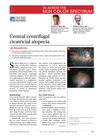 1 citations
,
April 2022 in “The Journal of Family Practice”
1 citations
,
April 2022 in “The Journal of Family Practice” This report describes early and late stages of central centrifugal cicatricial alopecia in two Black women, highlighting progression from a small to a large central patch of hair loss.
 158 citations
,
January 2015 in “Artificial Intelligence in Medicine”
158 citations
,
January 2015 in “Artificial Intelligence in Medicine” This study found that DrugNet, a network-based prioritization method, effectively improves drug repositioning tasks, achieving high performance in validation tests and clinical trial comparisons.
 38 citations
,
February 2006 in “British Journal of Clinical Pharmacology”
38 citations
,
February 2006 in “British Journal of Clinical Pharmacology” This study found that combining data from different databases provided a more comprehensive estimate of serious adverse drug reactions in a French university hospital, highlighting the limitations of current ADR reporting methods.
 5 citations
,
May 2018 in “Drug Safety”
5 citations
,
May 2018 in “Drug Safety” This study found that using electronic healthcare record data can provide valuable early insights into the clinical context of about half of the new safety signals evaluated within a regulatory environment.
 5 citations
,
June 2016 in “TURKDERM”
5 citations
,
June 2016 in “TURKDERM” This review discusses various dermatological scoring systems used to objectively assess disease severity and guide treatment decisions, reporting no new clinical results.