13 citations
,
February 2012 in “International Journal of Dermatology” This case report identifies a novel nonsense mutation in the CDH3 gene associated with hypotrichosis and juvenile macular dystrophy.
 November 2022 in “Journal of Investigative Dermatology”
 In this study, analysis of over 800 Iranian patients with epidermolysis bullosa identified 15 with pathogenic PLEC variants, highlighting a correlation between variant locations and phenotypic manifestations of plectinopathies.
 1 citations
,
March 2004 in “Journal of the American Academy of Dermatology”
1 citations
,
March 2004 in “Journal of the American Academy of Dermatology” This study reports a strong association between the MICA locus, specifically the MICA∗3-DR∗6-DQ6 haplotype, and Alopecia Areata in families.
53 citations
,
October 2003 in “Genetics” This study identified a mutation hotspot in the caracul (Ca) locus of mice, implicating the mK6irs1/Krt2-6g gene in hair formation and potentially human hair and skin diseases.
16 citations
,
April 2024 in “Proceedings of the National Academy of Sciences” This study found that selectively targeting HDAC4 and HDAC7 in mice can reduce Th17 cell-mediated intestinal inflammation, suggesting a potential treatment approach for Th17-related inflammatory diseases like ulcerative colitis.
April 2017 in “The journal of investigative dermatology/Journal of investigative dermatology” This case report identified a 6-month-old girl with congenital generalized hypertrichosis and gingival hyperplasia, where a de novo CNV on chromosome 17q24.2-24.3 was associated with reduced expression of ABCA5 and SOX9.
 51 citations
,
November 2011 in “British Journal of Dermatology”
51 citations
,
November 2011 in “British Journal of Dermatology” This study suggests that the HDAC9 gene is a third susceptibility gene for male-pattern baldness, with significant associations found in both German and Australian samples.
5 citations
,
March 2020 in “Thoracic Cancer” In this phase I study, CT-707, a new ALK inhibitor, showed a 77% response rate among Chinese patients with advanced ALK-rearranged non-small cell lung cancer, suggesting clinical effectiveness despite some adverse events like diarrhea and liver enzyme elevation.
33 citations
,
August 2000 in “Experimental Cell Research”  1 citations
,
January 2024 in “Wiadomości Lekarskie”
1 citations
,
January 2024 in “Wiadomości Lekarskie” This study evaluated a new computer-aided detection system for identifying Breast Arterial Calcification in mammograms, achieving 70% accuracy, but highlighted the need for a larger dataset to explore its relationship with cardiovascular diseases.
 June 2024 in “Journal of Clinical Oncology”
 This study observed that dalpiciclib is associated with fewer adverse events like diarrhea and hepatotoxicity compared to other CDK4/6 inhibitors, potentially offering better patient-perceived safety and quality of life.

This study found that CYP21A2 gene mutations are the most common cause of non-classic congenital adrenal hyperplasia, while CYP11B1 mutations are rare and may partially impair enzyme activity.
28 citations
,
September 2014 in “Journal of Veterinary Internal Medicine” This study found that the novel drug VDC-1101 showed a 45% objective response rate in treating canine cutaneous T-cell lymphoma, offering a potential treatment option for this challenging disease.
 1 citations
,
June 2018 in “International Journal of Dermatology”
1 citations
,
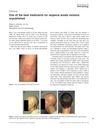
June 2018 in “International Journal of Dermatology” DNCB is highly effective for treating alopecia areata with minimal long-term side effects.
23 citations
,
January 2017 in “BMC Medical Genetics” This study presents the first reported Spanish case of Hypotrichosis with Juvenile Macular Dystrophy, identifying a new CDH3 mutation and highlighting the importance of clinical and genetic evaluation for accurate diagnosis.
 April 2016 in “Journal of Investigative Dermatology”
 This study suggests that lithocholic acid may enhance hair regeneration in alopecia by activating vitamin D receptors in human dermal papilla cells.
56 citations
,
September 2010 in “Veterinary pathology” This study found that certain C57BL/6 mouse substrains have a genetic vulnerability to skin lesions resembling central centrifugal cicatrical alopecia in humans, potentially worsened by high vitamin A levels.
April 2024 in “Journal of the American Academy of Dermatology” Diagnosing and treating CCCA requires understanding multiple causes and using various diagnostic tools.
November 2020 in “UNC Libraries” In this study, researchers identified seven new genetic loci associated with prostate cancer susceptibility through a multi-stage genome-wide association study.
1 citations
,
May 2024 in “Journal of Dermatological Science” In this study, KC-AD-MSCs were found to increase COL7 deposition and anchoring fibril formation at the dermal-epidermal junction in a RDEB mouse model, suggesting potential for improving skin integrity in recessive dystrophic epidermolysis bullosa patients.
5 citations
,
January 2017 in “Arquivos Brasileiros de Oftalmologia” This report describes a novel mutation in the CDH3 gene in an 11-year-old Iranian boy with hypotrichosis and juvenile macular dystrophy, indicating a new genetic variant associated with the disorder.
9 citations
,
October 2020 in “Journal of the American Academy of Dermatology” Patients with central centrifugal cicatricial alopecia may have a higher risk of breast and colorectal cancer.
4 citations
,
December 2021 in “Journal of clinical laboratory analysis” This study identified a splicing-site deletion in the DCAF17 gene associated with Woodhouse-Sakati syndrome in a large consanguineous pedigree, leading to typical phenotypic features.
 4 citations
,
September 2019 in “Biomedical Papers/Biomedical Papers of the Faculty of Medicine of Palacký University, Olomouc Czech Republic”
4 citations
,
September 2019 in “Biomedical Papers/Biomedical Papers of the Faculty of Medicine of Palacký University, Olomouc Czech Republic” This study found that CD2 could be a potential new therapeutic target for treating patchy-type alopecia areata, suggesting the need for further research into its role.
November 2022 in “Journal of Investigative Dermatology” This study reported that an HS-associated NCSTN mutation in iPSC-derived skin organoids led to altered hair follicle stem cell differentiation and increased expression of proteins linked to HS inflammation.
 11 citations
,
September 2011 in “British Journal of Dermatology”
11 citations
,
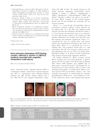
September 2011 in “British Journal of Dermatology” New ABCA12 gene mutations were linked to a skin condition with scaling and hair loss, and a treatment helped with hair loss in a related case.
17 citations
,
January 2010 in “PubMed” CD10 helps distinguish between basal cell carcinoma and benign hair follicle tumors.
 January 2026 in “Dermatology Online Journal”
 This case report highlights that CCCA can present with multifocal patchy hair loss in younger men of African descent, suggesting the need for careful evaluation when diagnosing atypical alopecia patterns.
 October 2007 in “Clinical Biochemistry”
 This study identified a new genotype, V281+I172N/V281L, linked to non-classical 21-hydroxylase deficiency, suggesting it should be considered in genetic panels for the condition.
4 citations
,
January 2017 in “Acta dermato-venereologica” A new EDA gene mutation was found in a Chinese family with a specific skin disorder.