
In this case study, researchers reported the first documented instance of malignant transformation of congenital triangular alopecia into basal cell carcinoma in a 48-year-old woman, underscoring the importance of assessing long-standing alopecic areas for malignancy.
8 citations
,
January 2014 in “Indian Dermatology Online Journal” This article presents a case of trichostasis spinulosa, a common but often unrecognized disorder, diagnosed through dermoscopic examination of black macules revealing bundled vellus hairs, with the patient declining treatment.
 January 2025 in “Journal of Clinical Medicine”
 In this study, outbreaks of tinea capitis caused by Trichophyton tonsurans were linked to hairdressing in Sardinian barbershops, with 10 young adult men developing the infection following haircuts; timely treatment is crucial to prevent complications like scarring alopecia.
 October 2012 in “CRC Press eBooks”
 This abstract describes various hair and nail changes associated with HIV infection, highlighting telogen effluvium and onychomycosis as common manifestations, while noting that treatment for onychomycosis does not differ between HIV-infected and non-infected individuals.
28 citations
,
January 1985 in “Journal of the American Academy of Dermatology” This report presents a case of pili torti in a young girl with citrullinemia, a novel association not previously documented.
8 citations
,
January 2013 in “Australasian journal of dermatology” This review examines trichodysplasia spinulosa, a rare virus-linked skin condition in immunosuppressed individuals, noting its clinical features and highlighting antiviral treatment efficacy, without new clinical results.
 20 citations
,
April 2011 in “British Journal of Dermatology”
20 citations
,
April 2011 in “British Journal of Dermatology” Reflectance confocal microscopy can tell apart white dots on the scalp as either sweat gland ducts or hair follicle openings.
 12 citations
,
October 2012 in “Anais Brasileiros De Dermatologia”
12 citations
,
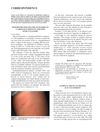
October 2012 in “Anais Brasileiros De Dermatologia” This study found that dermoscopy is an effective tool for diagnosing and monitoring androgenetic alopecia in women, as it helped identify common signs such as hair miniaturization and peripilar brown halo.
 21 citations
,
January 2005 in “Pediatric Dermatology”
21 citations
,
January 2005 in “Pediatric Dermatology” An 8-year-old girl with vitiligo developed extra hair growth on her knee after using tacrolimus ointment.
December 2024 in “Journal of Coloproctology” This study presents a case of a 67-year-old immunocompromised woman with ulcerated genital and perianal lesions diagnosed as herpesvirus-induced dermatovirosis, highlighting the importance of considering viral infections in differential diagnoses and the potential for resistance to typical antiviral treatments.
 August 2022 in “MEDICINUS”
 This case study reports a 22-year-old homosexual man coinfected with secondary syphilis, condyloma acuminata, and HIV, highlighting the coexistence and increased STI risks associated with HIV and HPV infection.
18 citations
,
December 2010 in “Transplantation Proceedings” This study reported that black hairy tongue can occur after allogeneic stem cell transplantation and may indicate cutaneous graft-versus-host disease, highlighting the need for histopathologic evaluation.
14 citations
,
July 2004 in “Australasian Journal of Dermatology” This case study describes a patient with rapidly progressing follicular mycosis fungoides, highlighting its unusual histology and challenges in diagnosing it against cutaneous B-cell lymphoma.
9 citations
,
February 2002 in “International Journal of Dermatology” This case study reports that a combination of PUVA therapy and oral methyl prednisolone initially improved symptoms of a woman's cutaneous T-cell lymphoma but required ongoing treatment due to recurrence.
 April 2012 in “Journal of the American Academy of Dermatology”
 Dermoscopy can help diagnose tinea capitis in children by looking for comma hairs, black dots, and broken hairs with white bands.
 3 citations
,
January 2017 in “Journal of Pakistan Association of Dermatology”
3 citations
,
January 2017 in “Journal of Pakistan Association of Dermatology” This study observed that tinea capitis is prevalent among school children in Karachi, with T. violaceum as the most common organism and asymptomatic carriers possibly facilitating its spread.
 4 citations
,
July 1996 in “Annals of Internal Medicine”
4 citations
,
July 1996 in “Annals of Internal Medicine” This article discusses a report on reversible alopecia associated with fluconazole therapy and mentions other possible causes of hair loss but presents no new findings.
 8 citations
,
April 2015 in “British Journal of Dermatology”
8 citations
,
April 2015 in “British Journal of Dermatology” This report describes two cases of white piedra caused by Trichosporon inkin in a northern climate, detailing clinical findings and diagnosis without presenting new experimental results.
 July 2025 in “Veterinarski arhiv”
 In this study, researchers found that 32.5% of stray cats in Bogor, Indonesia, tested positive for dermatophyte infections, specifically Microsporum canis, highlighting the potential zoonotic risk these cats pose.
December 2024 in “Veterinary Dermatology” This case report identified cutaneous epitheliotropic T-cell lymphoma in a 3-year-old male sugar glider after skin biopsies, highlighting the need for thorough diagnostic evaluations in exotic pets.
 September 2023 in “Cosmoderma”
 This abstract describes a rare case of a young Kashmiri woman with neglected scarring alopecia due to favus, a type of tinea capitis more commonly observed in Kashmiri children.
 54 citations
,
October 2019 in “Australian Journal of General Practice”
54 citations
,
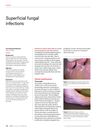
October 2019 in “Australian Journal of General Practice” This article provides an updated overview of the diagnosis and management of tinea infections but reports no new clinical findings.
February 2023 in “Journal of Cutaneous Pathology” This case report describes an adult female with concurrent mycosis fungoides and papillary dermal elastolysis, highlighting the importance of considering rare presentations in differential diagnoses.
 January 2007 in “Revista del Centro Dermatológico Pascua”
 This case report describes a 2-year-old boy diagnosed with trichothiodystrophy, characterized by fragile hair, intellectual damage, diminished fertility, and short stature.
 June 2025 in “ARSHI Veterinary Letters”
 In this case study, a 5-month-old cat with dermatophytosis caused by Microsporum canis showed resolution of skin symptoms and hair regrowth after receiving topical antifungal shampoo and systemic itraconazole treatment for two weeks.
January 2024 in “Biomedicines” This review discussed the cutaneous manifestations of APECED, highlighting chronic mucocutaneous candidiasis, alopecia areata, and vitiligo, while emphasizing the importance of early detection and monitoring for accurate diagnosis and patient care in various populations.
 7 citations
,
January 2011 in “Veterinary Pathology”
7 citations
,
January 2011 in “Veterinary Pathology” In this case report, a 9-year-old horse was diagnosed with alopecia areata contributing to Malassezia dermatitis, involving lymphocyte infiltration and symptoms consistent with yeast presence.
31 citations
,
October 1992 in “Archives of Dermatology” This article presents a case study of a 25-year-old man with persistent scalp nodules and abscesses with patchy alopecia, unaffected by a course of oral tetracycline.
September 2011 in “Archives of dermatology” The child was diagnosed with cutaneous leishmaniasis.
 October 2025 in “Indian Dermatology Online Journal”
 In this case report, an elderly woman was diagnosed with tinea capitis and eyebrow involvement, which was initially misdiagnosed as alopecia areata, illustrating the importance of trichoscopy in correctly identifying this infection even in uncommon sites like the eyebrow.