Trichorrhexis nodosa causes hair to break easily, often affecting young to middle-aged black women.
 January 2012 in “Else Kröner-Fresenius Symposia”
 This symposium reported that DNA damage accumulation in aging stem cells affects genome integrity, highlighting novel mechanisms like Bmi1's role in DNA repair and the involvement of BATF in lymphoid differentiation.
 35 citations
,
September 2017 in “PubMed”
35 citations
,
September 2017 in “PubMed” This article reviews different types of alopecia, their diagnosis, and treatment options available in a family physician's practice, but it reports no new research findings.
 37 citations
,
May 2016 in “JAAD case reports”
37 citations
,
May 2016 in “JAAD case reports” This abstract describes monilethrix, an autosomal dominant genodermatosis with symptoms like hair fragility and keratosis pilaris, and does not report new experimental results.
 1 citations
,
November 2024 in “Archives of Dermatological Research”
1 citations
,
November 2024 in “Archives of Dermatological Research” The authors discuss that hair loss affecting the occipital scalp is understudied and may be caused by factors like movement irritation and clothing occlusion; this lack of data can lead to missed diagnoses and inadequate treatment.
 1 citations
,
January 2019 in “Springer eBooks”
1 citations
,
January 2019 in “Springer eBooks” Hidradenitis Suppurativa is a chronic skin condition best treated early with surgery for better outcomes and less recurrence.
 1 citations
,
July 2018 in “Elsevier eBooks”
1 citations
,
July 2018 in “Elsevier eBooks” This article reviews the role of trichoscopy in diagnosing hair weathering conditions like trichorrhexis nodosa and trichoptilosis and suggests treatment by avoiding harmful chemical and physical factors, but it provides no new research findings.
 122 citations
,
April 1995 in “Journal of Cutaneous Pathology”
122 citations
,
April 1995 in “Journal of Cutaneous Pathology” The document describes how to tell different types of non-scarring hair loss apart by looking at hair and scalp tissue under a microscope.
 73 citations
,
March 2009 in “Seminars in Cutaneous Medicine and Surgery”
73 citations
,
March 2009 in “Seminars in Cutaneous Medicine and Surgery” This article reviews various diagnostic tools for hair disorders, describing methods ranging from invasive to noninvasive, but reports no new research findings or clinical results.
 53 citations
,
January 2007 in “Dermatology”
53 citations
,
January 2007 in “Dermatology” This study suggests that chemotherapy-induced anagen effluvium represents patterned hair loss, with most patients retaining hairlines, but patterns do not vary significantly by age, symptoms, or chemotherapy type.
 51 citations
,
January 2014 in “Pediatric Clinics of North America”
51 citations
,
January 2014 in “Pediatric Clinics of North America” This article examines various types of childhood alopecia and highlights the importance of identifying chronic conditions or those linked to underlying medical issues, but reports no new results.
 40 citations
,
May 2012 in “British Journal of Dermatology”
40 citations
,
May 2012 in “British Journal of Dermatology” This study reviewed scalp biopsies from African-American patients, identifying distinct features and diagnostic clues for scarring alopecia types such as traction alopecia and central centrifugal cicatricial alopecia.
 33 citations
,
April 2009 in “Journal of the American College of Certified Wound Specialists”
33 citations
,
April 2009 in “Journal of the American College of Certified Wound Specialists” This narrative review discusses the advantages of bidirectional barbed sutures in wound closure, such as faster placement and no need for knots, but reports no new clinical results.
 28 citations
,
August 2018 in “Dermatologic Clinics”
28 citations
,
August 2018 in “Dermatologic Clinics” This article discusses various aspects of trichoscopy for diagnosing hair and scalp disorders and reports no clinical results, offering guidance and highlighting pitfalls for better application of this tool by dermatologists.
 8 citations
,
August 2013 in “Pediatric Dermatology”
8 citations
,
August 2013 in “Pediatric Dermatology” This article reviews loose anagen hair syndrome, an inheritable hair disorder affecting children and sometimes adults, but does not report any new clinical results.
 8 citations
,
March 1979 in “International Journal of Dermatology”
8 citations
,
March 1979 in “International Journal of Dermatology” Dr. Vera H. Price's 1979 work emphasizes the importance of accurate diagnosis and personalized treatment for hair loss.
 6 citations
,
August 2012 in “The Journal of Pediatrics”
6 citations
,
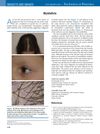
August 2012 in “The Journal of Pediatrics” This case report describes a 12-year-old girl diagnosed with monilethrix, characterized by fragile, beaded hair shafts, with no effective treatment currently available.
 1 citations
,
January 2017 in “Yonsei Medical Journal”
1 citations
,
January 2017 in “Yonsei Medical Journal” Hair is thinner near the scalp in acute hair shedding conditions.
 January 2026 in “Cosmoderma”
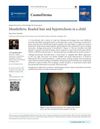
 In this clinical case study, a 9-year-old girl was diagnosed with monilethrix, a hereditary hair shaft disorder characterized by weak, beaded hair, with management focusing on minimizing hair trauma.
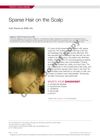
This case study describes a young girl with sparse, brittle scalp hair and multiple keratotic papules, but no systemic or familial abnormalities were found.
 November 2019 in “Harper's Textbook of Pediatric Dermatology”
 This review discusses potential causes of alopecia and hair overgrowth in pediatric patients, detailing diagnostic techniques and treatments, but presents no new research findings.
 February 2009 in “Journal of The American Academy of Dermatology”
 Fractional infrared technology is effective and safe for treating cervical laxity.
 February 2009 in “Journal of The American Academy of Dermatology”
 This pilot study found that fractional infrared technology improved skin laxity and thickness in the cervical area of four female patients without causing adverse effects.
 February 2009 in “Journal of The American Academy of Dermatology”
 This study found that fractional infrared technology may improve skin laxity and thickness in the cervical area without side effects in a small group of patients.
 February 2009 in “Journal of The American Academy of Dermatology”
 This study suggests that fractional infrared technology may effectively improve cervical skin laxity by enhancing dermal thickness without adverse effects in a small pilot group.
 688 citations
,
June 2007 in “Cell Stem Cell”
688 citations
,
June 2007 in “Cell Stem Cell” This study found that deleting the ATR gene in adult mice led to rapid onset of age-related traits such as hair graying and osteoporosis through reduced regenerative capacity.
 418 citations
,
September 2012 in “Nature”
418 citations
,
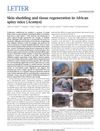
September 2012 in “Nature” This study reports the first instance of skin autotomy in mammals, specifically in African spiny mice, and suggests they may possess a greater regenerative capacity than previously understood, possibly offering insights for regenerative medicine.
 275 citations
,
March 1999 in “Journal of The American Academy of Dermatology”
275 citations
,
March 1999 in “Journal of The American Academy of Dermatology” This review elaborates on the skin side effects of chemotherapy and emphasizes identifying and managing both common and life-threatening skin reactions, without presenting new clinical findings.
 193 citations
,
January 2015 in “International journal of trichology”
193 citations
,
January 2015 in “International journal of trichology” This review examines hair cosmetics, including shampoos and conditioners, for their formulations and effects, but reports no new clinical findings; it emphasizes the importance of dermatologist knowledge in treating diverse hair conditions.
 76 citations
,
November 2010 in “Journal of The American Academy of Dermatology”
76 citations
,
November 2010 in “Journal of The American Academy of Dermatology” In this study, a photographic scale and questionnaire revealed that extensive central scalp hair loss was observed in 5.6% of African American women, with an association to a history of tinea capitis.