 February 2026 in “Pharmaceuticals”
 This study introduced the KRDQN predictive framework, which outperformed existing methods in predicting adverse drug reactions and provided interpretable insights into drug mechanisms, aiding pharmacovigilance and clinical decision-making.
5 citations
,
July 2023 in “Journal of Autonomous Intelligence” This study evaluates a framework using neural networks and machine learning techniques to classify and detect Alopecia Areata from hair images, aiming for accurate differentiation between healthy hair and the condition.
 April 2026 in “Beni-Suef University Journal of Basic and Applied Sciences”
 In this bibliometric analysis, researchers observed that precision medicine approaches, such as individualized interventions and biomarker-guided subtyping, are increasingly integrated into prediabetes research, highlighting shifts toward using multi-omics data and artificial intelligence for patient stratification and prevention strategies.
 March 2026 in “ArXiv.org”
 This review presents a comprehensive evaluation of medical reasoning using large language models, highlighting a significant gap between exam-level performance and true clinical decision-making accuracy.
April 2026 in “Therapeutic Advances in Drug Safety” This study developed a new clustering model to improve detection of drug-induced cognitive disorder risk signals, finding that it identified drugs with moderate risk signals, like Carbidopa/Levodopa, missed by traditional methods, enhancing clinical assessment comprehensiveness.
 June 2025 in “International Journal of Computational Intelligence Systems”
 This study introduces a novel computational model using fuzzy logic and multi-criteria decision-making techniques to create a triage system for androgenetic alopecia management, stratifying patients into seven severity levels and aiding in resource allocation and treatment planning.
 38 citations
,
January 2001 in “Neuroepidemiology”
38 citations
,
January 2001 in “Neuroepidemiology” This paper discusses the limitations of clinical trials in evaluating combination treatment regimens for Alzheimer's disease and ischemic stroke, highlighting the extensive resources required for such trials.
 September 2018 in “Value in Health”
 This study found that Cochrane systematic reviews on drug safety had higher methodological quality than non-Cochrane reviews, with the type of review and disease area affecting quality.
 24 citations
,
June 2012 in “BMC Research Notes”
24 citations
,
June 2012 in “BMC Research Notes” This study outlines the Human Gene Correlation Analysis tool, which classifies human genes by coexpression levels and identifies overrepresented annotation terms in correlated gene groups, with no new clinical results reported.
 38 citations
,
February 2006 in “British Journal of Clinical Pharmacology”
38 citations
,
February 2006 in “British Journal of Clinical Pharmacology” This study found that combining data from different databases provided a more comprehensive estimate of serious adverse drug reactions in a French university hospital, highlighting the limitations of current ADR reporting methods.
 August 2012 in “Journal of Evidence-Based Medicine”
 This article has no abstract available, so it presents no findings or conclusions.
January 2019 in “International journal of medical biochemistry/International journal of medical biochemistry :”  3 citations
,
August 2020 in “bioRxiv (Cold Spring Harbor Laboratory)”
3 citations
,
August 2020 in “bioRxiv (Cold Spring Harbor Laboratory)” This study found that the DNN-DTIs prediction model achieved high accuracy in predicting drug-target interactions, suggesting its potential application in drug repositioning and the discovery of new uses for existing drugs.
 7 citations
,
October 2017 in “Urologic Oncology: Seminars and Original Investigations”
7 citations
,
October 2017 in “Urologic Oncology: Seminars and Original Investigations” This meta-analysis found that male pattern baldness is associated with an increased risk of aggressive prostate cancer and benign prostatic hyperplasia.
 7 citations
,
January 2012
7 citations
,
January 2012 This study used artificial neural networks to predict hair loss by analyzing factors like gender and zinc deficiency, suggesting neural networks may effectively model hair loss prediction.
 November 2025 in “Scientific Reports”
 This study demonstrates that an AI-based grading framework using a novel area ratio metric improves the accuracy and consistency of male pattern hair loss classification, especially in advanced grades, compared to traditional methods.
 June 2024 in “World Journal of Management Science”
 This abstract describes Upubscience Publisher as a prominent publisher of over 40 open access, peer-reviewed journals across numerous academic fields, supported by an editorial team of leading researchers. Results are not reported in this description.
82 citations
,
September 2020 in “Briefings in Bioinformatics” This study identified shared genes and pathways in idiopathic pulmonary fibrosis patients with COVID-19, suggesting these may increase mortality and pointing to potential drug targets for treatment.
 July 2024 in “Journal of Education For Sustainable Innovation”
 This study analyzed word dynamics and keyword trends in androgenetic alopecia literature over a decade using natural language processing, revealing hidden patterns and linkages that could inform future research directions and policy decisions.
5 citations
,
March 2024 in “World Allergy Organization Journal” This study found a causal link between eight blood metabolites and allergic conjunctivitis, highlighting their potential role in predicting and preventing the condition.
January 2026 in “JDDG Journal der Deutschen Dermatologischen Gesellschaft” This study developed a deep-learning model that accurately diagnosed alopecia areata with an accuracy of 88.92% and distinguished its activity levels with an accuracy of 83.33%, highlighting the potential for artificial intelligence in improving the diagnosis and treatment of this autoimmune hair loss condition.
3 citations
,
September 2023 in “PeerJ Computer Science” This study introduced an innovative metric for assessing college students' mental health, incorporating temporal perception and a hybrid clustering algorithm, and found it achieved over 90% accuracy, outperforming existing methods in evaluating mental health during public health challenges.
May 2005 in “Comparative and Functional Genomics” This bibliography compiles recent publications on comparative and functional genomics across 16 sections and reports no new research findings.
 June 2024 in “ESMO Gastrointestinal Oncology”
 The BAYONET trial is a phase II study designed to assess the efficacy and safety of combining encorafenib, binimetinib, and cetuximab for patients with BRAF V600E-mutant metastatic colorectal cancer that is resistant to encorafenib plus cetuximab; results are not yet reported.
2 citations
,
November 2012 in “Archimer (Ifremer)” This study found that progression ads are more persuasive for individuals with a weak fresh start mindset, whereas before/after ads are more effective for those with a strong fresh start mindset.
2 citations
,
November 2024 This review discussed recent research on using machine learning to predict mental disorders, reporting that Adaboost could predict depression with 92.5% accuracy and 93.6% specificity, while other models like XGBoost and RNN were applied for post-stroke depression and EEG-based depression detection, respectively.
 1 citations
,
January 2019
1 citations
,
January 2019 This study explores the changes in biomedical knowledge over time using temporal and distributional concept representations from scientific literature, highlighting the importance of diachronic analysis in understanding evolving information.
51 citations
,
July 2023 in “American Journal of Clinical Dermatology” 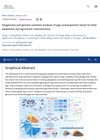
This research developed a pig graph pangenome assembly of 27 genomes, revealing the importance of structural variations in adaptation and breed-specific traits, with BTF3 identified as a key gene influencing intramuscular fat and meat quality.
June 2026 in “Health Science Reports” This study examined the genetic basis of alopecia areata by analyzing gene expression differences between patients and healthy controls, identifying critical pathways, hub genes, transcription factors, and miRNAs implicated in the disease, and suggesting potential targets for treatment.