 April 2023 in “Journal of Investigative Dermatology”
 This study found that inhibiting PI3 kinase in epidermal stem cells reduces YBX1 phosphorylation, thereby decreasing cellular senescence and enhancing wound healing and regeneration in adult-derived skin models.
 77 citations
,
April 2009 in “British Journal of Dermatology”
77 citations
,
April 2009 in “British Journal of Dermatology” In this study, genetic variation in the CYP19A1 gene, particularly the common rs4646 C allele, was associated with an increased risk of female pattern hair loss, especially in women under 40.
11 citations
,
February 1982 in “Mutation Research/Fundamental and Molecular Mechanisms of Mutagenesis” This study reports that treatment with X-rays or procarbazine induced dose-dependent mutations in melanocytes in mouse hair follicles, showing similar mutation rates to previous methods.
 260 citations
,
July 2010 in “Cell”
260 citations
,
July 2010 in “Cell” This study identifies mutations in the SRD5A3 gene as a cause of a new type of congenital disorder of glycosylation, impacting mental, ophthalmologic, and cerebellar functions.
3 citations
,
September 2013 in “Journal of the American Academy of Dermatology” This report details two patients with Hutchinson-Gilford Progeria syndrome who exhibited generalized shiny skin in infancy and had a novel mutation in the LMNA gene.
 1 citations
,
July 2024 in “Indian Journal of Case Reports”
1 citations
,
July 2024 in “Indian Journal of Case Reports” This article presents a case study of a 16-year-old male with GAPO syndrome, characterized by growth retardation, alopecia, pseudoanodontia, and optic atrophy, who sought dental treatment for missing teeth.
July 2016 in “Cancer research” This study found that mutant cells in hair follicles can be tolerated or eliminated by surrounding normal tissue, suggesting the potential for wild-type cells to counteract oncogenic mutations.
 April 2018 in “Journal of Investigative Dermatology”
 This study found that the protein p63 requires morphogenetic signals to regulate gene expression effectively during skin cell differentiation, highlighting its complex role in therapeutic reprogramming for conditions like epidermolysis bullosa.
2 citations
,
December 2013 in “Journal of dermatology” This letter reports a homozygous missense mutation in the LIPH gene causing autosomal recessive hypotrichosis simplex in a Chinese patient.
 111 citations
,
October 2008 in “Nature Genetics”
111 citations
,
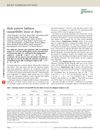
October 2008 in “Nature Genetics” In their study, Tim Spector and colleagues identified a new genetic association at chromosome 20p11.22 with male-pattern baldness, confirmed by the increased risk when combined with a known androgen receptor gene variant.
In this study, researchers discovered that the HrasG12V oncogenic mutation in murine skin epithelial cells initially promotes progenitor cell renewal but later leads to a balanced differentiation, stabilizing clone growth.
 11 citations
,
March 2013 in “Gene”
11 citations
,
March 2013 in “Gene” This study reported that the IL1A 4-bp indel polymorphism is associated with a reduced risk of alopecia areata in Chinese populations, possibly through miR-122 mediated regulation of IL-1α expression.
September 2019 in “Journal of Investigative Dermatology” CCCA in women of African ancestry may be caused by PADI3 gene mutations and intense hair grooming.
11 citations
,
March 2021 in “Molecular Carcinogenesis” This study found that deleting the transcription factor Twist1 in keratinocytes significantly reduced UVB-induced skin carcinogenesis in mice, suggesting a potential target for preventing cutaneous squamous cell carcinoma.
 12 citations
,
February 1998 in “Gene”
12 citations
,
February 1998 in “Gene” This study identified two high sulfur protein genes, B2E and B2F, in rats, which are expressed in hair cortical cells during anagen and contribute to hair fiber production.
299 citations
,
March 2001 in “Journal of Investigative Dermatology” This study found that specific genetic markers near the androgen receptor gene are significantly more common in men with male pattern baldness, suggesting a genetic component in its development.
January 2016 in “프로그램북(구 초록집)” This study found that the revised BASP classification for pattern hair loss, which addresses certain limitations of the original, could serve as an alternative option despite a decrease in clinical accuracy and ease of use.
 11 citations
,
March 2014 in “Journal of The European Academy of Dermatology and Venereology”
11 citations
,
March 2014 in “Journal of The European Academy of Dermatology and Venereology” In this study, researchers found that androgen receptor gene polymorphism is associated with higher androgenetic alopecia grades and PSA levels in men with benign prostatic hyperplasia, but not with prostate cancer.
 176 citations
,
June 2016 in “PLoS ONE”
176 citations
,
June 2016 in “PLoS ONE” In these initial clinical studies, NAP monotherapy showed significant reductions in HBsAg levels among patients with chronic HBV, suggesting potential as part of future combination therapies.
 1 citations
,
February 2009 in “Clinical Genetics”
1 citations
,
February 2009 in “Clinical Genetics” This study identified new genetic variants on chromosome 20p11 associated with male pattern baldness.
 42 citations
,
April 2009 in “Human Genetics”
42 citations
,
April 2009 in “Human Genetics” This study suggests that the AGA risk haplotype in Europeans was driven to high frequency by positive selection, likely associated with a variant in the EDA2R gene.
 39 citations
,
January 2019 in “Cells”
39 citations
,
January 2019 in “Cells” This review discusses the molecular mechanisms of Hutchinson-Gilford progeria syndrome and evaluates current research trends, available mouse models, and prospects for developing therapies, but reports no new clinical findings.
May 2017 in “The journal of immunology/The Journal of immunology” This study reported that patients with specific Foxn1 mutations exhibited severe T-cell lymphopenia without the hair and nail abnormalities usually associated with these mutations.
 January 2017 in “IMC Journal of Medical Science”
 This case report describes a 26-year-old man from Bangladesh diagnosed with autoimmune polyendocrine syndrome type 1, a rare endocrine disorder involving adrenocortical insufficiency, hypoparathyroidism, and mucocutaneous candidiasis.
January 1999 in “Journal of Investigative Dermatology” 25 citations
,
May 2004 in “Prenatal Diagnosis” This study suggests that prenatal genetic diagnosis of MELAS syndrome using amniotic cells may not reliably predict fetal outcomes due to phenotypic diversity observed in siblings with similar levels of mutant mtDNA.
 September 2019 in “The journal of investigative dermatology/Journal of investigative dermatology”
 This study identified a mutation in the CST6 gene linked to a rare syndrome with symptoms affecting hair and skin, revealing cystatin M/E's role in maintaining epidermal homeostasis and hair follicle development.
 4 citations
,
October 2011 in “International Journal of Dermatology”
4 citations
,
October 2011 in “International Journal of Dermatology” Bardet-Biedl syndrome may include under-recognized skin problems related to its metabolic disturbances.
 25 citations
,
November 2018 in “Cell reports”
25 citations
,
November 2018 in “Cell reports” This study found that the ablation of Esrp1 and Esrp2 disrupts epithelial tight junctions by affecting Arhgef11 isoform expressions, highlighting a potential mechanistic link between splicing alterations and epithelial barrier defects.
 23 citations
,
January 2014 in “International Journal of Biological Sciences”
23 citations
,
January 2014 in “International Journal of Biological Sciences” This study found that African American men with prostate cancer have higher rates of somatic and germline androgen receptor mutations than Caucasian American men, which may contribute to ethnic differences in disease progression and outcomes.