32 citations
,
September 2013 in “Breast cancer research” This study identified a specific SNP in the CACNB4 gene associated with a higher risk of chemotherapy-induced alopecia in breast cancer patients, which may help develop interventions to improve their quality of life.
3 citations
,
May 2018 in “The Indian Journal of Animal Sciences” This study suggests that the KAP 7 gene may serve as a potential molecular marker for genetic selection to improve staple length and greasy fleece weight in Rambouillet sheep.

This study demonstrated that de novo designed bifunctional proteins can target and degrade BCL-xL, leading to cell apoptosis, suggesting a new approach to targeted protein degradation therapy.
May 2026 in “Frontiers in Medicine” This study describes a patient with Rothmund–Thomson syndrome-like symptoms who displayed hair improvement after combination therapy, despite carrying an ANAPC1 gene variant of uncertain significance.

CaBP1 and CaBP2 are important for continuous hearing by preventing inactivation of calcium currents in ear cells, with CaBP2 also able to restore hearing when reintroduced.
10 citations
,
June 2021 in “Journal of Investigative Dermatology” GNPTAB gene is crucial for normal hair color in humans and mice.
 6 citations
,
March 2016 in “PLoS ONE”
6 citations
,
March 2016 in “PLoS ONE” This study characterized hair from a patient with a ribosomopathy and identified distinct differences, including reduced hair thickness and lipid content, compared to family members.
 11 citations
,
September 2011 in “British Journal of Dermatology”
11 citations
,
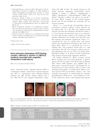
September 2011 in “British Journal of Dermatology” New ABCA12 gene mutations were linked to a skin condition with scaling and hair loss, and a treatment helped with hair loss in a related case.
![Influence of FHIT on Benzo[a]pyrene-Induced Tumors and Alopecia in Mice: Chemoprevention by Budesonide and N-Acetylcysteine](/images/assets/f8f56777-f891-4879-8c45-c87d6aa82563/small/35499.jpg) 24 citations
,
May 2006 in “Proceedings of the National Academy of Sciences of the United States of America”
24 citations
,
May 2006 in “Proceedings of the National Academy of Sciences of the United States of America” This study reported that heterozygosity for FHIT affects mice's susceptibility to spontaneous alopecia areata and to certain preneoplastic lesions induced by benzo[a]pyrene, but does not change how they respond to budesonide and N-acetyl-L-cysteine.
50 citations
,
July 2008 in “British Journal of Dermatology” 50 citations
,
February 2004 in “Genomics” This study identified a missense mutation in the rat Desmoglein 4 gene, causing abnormal hair shaft development in lanceolate hair mutant rats by disrupting a critical calcium binding site.
33 citations
,
September 2017 in “Journal of Investigative Dermatology” A mutation in the KRT25 gene causes woolly hair and hair loss.
 8 citations
,
January 2009 in “Journal of pediatric endocrinology & metabolism/Journal of pediatric endocrinology and metabolism”
8 citations
,
January 2009 in “Journal of pediatric endocrinology & metabolism/Journal of pediatric endocrinology and metabolism” This study reports a novel TRbeta gene mutation associated with resistance to thyroid hormone syndrome, which may contribute to various forms of alopecia in the affected family members.
1 citations
,
June 2025 in “Pigment Cell & Melanoma Research” This literature review reports that mutations in the SASH1 gene are linked to different pigmentation disorders, including dyschromatosis universalis hereditaria and lentiginosis. It further suggests SASH1's significant role in melanocyte processes and its potential as a target for developing treatments for these conditions.
43 citations
,
April 2010 in “Clinical genetics” This study identified four novel mutations in the C2orf37 gene among Woodhouse–Sakati syndrome patients, doubling known mutations, and found no significant link between isolated symptoms like deafness and dystonia and these mutations.
June 2005 in “Journal of Investigative Dermatology” A bull with a gene mutation was asymptomatic, synthetic retinoids cause hair loss, and new therapeutic targets were identified for skin diseases.
 3 citations
,
July 2023 in “The journal of investigative dermatology/Journal of investigative dermatology”
3 citations
,
July 2023 in “The journal of investigative dermatology/Journal of investigative dermatology” In this study, researchers found that K17−/− mice suffered more severe hair follicle damage but showed reduced epidermal inflammation after ionizing radiation, with K17's absence leading to aberrant cell cycle progression due to altered p53 genome binding and reduced B-Myb degradation.
 30 citations
,
July 2019 in “Endocrinology”
30 citations
,
July 2019 in “Endocrinology” This review discusses how the HSD3B1(1245C) genotype may impact androgen physiology and the progression of castration-resistant prostate cancer, and does not report new experimental results.
 42 citations
,
January 2017 in “Genes”
42 citations
,
January 2017 in “Genes” This study observed that genetic variation in the ovine KRTAP22-1 gene is linked to increased wool yield and decreased fiber curvature in sheep, indicating its potential use in breeding programs.
February 2024 in “Pediatric Dermatology” In this case report, the researchers identified pathogenic compound heterozygous mutations in a young girl with lipoid proteinosis, noting her relatively mild symptoms and recommending genetic testing for early diagnosis and management of this rare condition.
October 2020 in “Pediatrics in Review” This case report describes a newborn diagnosed with dominant dystrophic epidermolysis bullosa due to a COL7A1 mutation, following the presentation of blisters that healed without further complications.
12 citations
,
January 2000 in “Biochemical and Biophysical Research Communications” This study characterized the intron-exon organization of human keratin 15 and keratin 19 genes to aid future mutation detection analyses related to potential genetic disorders of keratinization.
 August 2012 in “Nature Cell Biology”
 In this study, researchers found that β-catenin directly promotes TERT expression in stem and cancer cells by interacting with the Tert promoter, illustrating a mechanistic link between tumorigenesis and pluripotency.
 24 citations
,
November 2008 in “Arquivos Brasileiros de Endocrinologia & Metabologia”
24 citations
,
November 2008 in “Arquivos Brasileiros de Endocrinologia & Metabologia” In this study, mutations in the vitamin D receptor were identified in Brazilian children with rickets and alopecia, leading to impaired receptor activation and reduced 24-hydroxylase expression.
38 citations
,
January 2014 in “Journal of Dermatological Science” This study found that Krtap11-1 may play an important role in keratin-bundle assembly in the hair cortex, influencing the physical properties of hair.
November 2025 in “Journal of Investigative Dermatology” KLHL24-mutant stem cells help understand skin and heart disease.
 10 citations
,
March 2015 in “Journal of dermatology”
10 citations
,
March 2015 in “Journal of dermatology” This case report describes a 12-year-old boy with severe skin scaling due to novel compound heterozygous null truncation mutations in the TGM1 gene, resulting in loss of transglutaminase 1 activity.
88 citations
,
March 2004 in “Journal of Investigative Dermatology”  November 2025 in “Molecular and Cellular Biomedical Sciences”
 This study found no significant association between the MMP-1 gene polymorphisms rs1799750 and androgenetic alopecia in the sample population.
40 citations
,
May 2005 in “Journal of Cell Science” In this study, transgenic mice expressing a truncated form of latent transforming growth factor-β-binding protein exhibited altered hair cycles due to increased active transforming growth factor-β, impacting keratinocyte proliferation and hair cycle phases.