 17 citations
,
August 1979 in “Journal of The American Academy of Dermatology”
17 citations
,
August 1979 in “Journal of The American Academy of Dermatology” This study found that a histochemical stain using 4-dimethyl-aminocinnamaldehyde effectively distinguishes between plucked anagen and telogen hairs by causing the root ends of anagen hairs to develop a red color.
 42 citations
,
April 2009 in “Human Genetics”
42 citations
,
April 2009 in “Human Genetics” This study suggests that the AGA risk haplotype in Europeans was driven to high frequency by positive selection, likely associated with a variant in the EDA2R gene.
11 citations
,
December 2024 in “Wound Repair and Regeneration” In this study, researchers created the WRAHPS Guidelines to standardize the reporting of preclinical wound healing studies, aiming to improve transparency, enable comparative analysis, and support the development of human clinical trials for wound healing disorders.
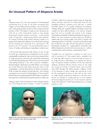 January 2014 in “International Journal of Trichology”
 A man had an unusual type of hair loss that didn't match known patterns and didn't improve with treatment.
November 2019 in “Journal of Vertebrate Biology” QIA-64 software can measure straight wire lengths accurately but needs improvement for curved wires and width measurements.
 2 citations
,
January 2017 in “Folia biologica”
2 citations
,
January 2017 in “Folia biologica” This study identified two single-nucleotide polymorphisms and three haplotypes in the KRTAP7-1 gene across yak, taurine, and zebu cattle, with the BOVIN-KRTAP7-1*A haplotype most prevalent.
 1 citations
,
February 2024 in “JEADV. Journal of the European Academy of Dermatology and Venereology/Journal of the European Academy of Dermatology and Venereology”
1 citations
,
February 2024 in “JEADV. Journal of the European Academy of Dermatology and Venereology/Journal of the European Academy of Dermatology and Venereology” In this research, the authors reported that long-term treatment with the JAK1/JAK2 inhibitor baricitinib effectively maintains hair regrowth in patients with severe alopecia areata and may gradually improve outcomes for partial responders over 104 weeks, without increasing side effect incidence.
July 2026 in “Journal of the American Academy of Dermatology” This study found that distinct hair fiber structures among blue fox, mink, and otter rabbit can be used to identify and differentiate these fur types.
 1 citations
,
March 2022 in “bioRxiv (Cold Spring Harbor Laboratory)”
1 citations
,
March 2022 in “bioRxiv (Cold Spring Harbor Laboratory)” This study examined wool traits in Angora rabbits using low-coverage whole genome sequencing, identifying six QTLs and a gene, FGF10, linked to fiber growth and diameter, suggesting a cost-effective approach for complex trait analysis in genomic breeding.
 184 citations
,
February 2015 in “EBioMedicine”
184 citations
,
February 2015 in “EBioMedicine” This study observed that baricitinib treatment led to significant improvement in a patient's alopecia areata symptoms and suggests further clinical trials to explore its potential as a treatment.
 3 citations
,
March 2023 in “JAAD case reports”
3 citations
,
March 2023 in “JAAD case reports” This study describes three cases where patients with recalcitrant alopecia areata achieved complete hair regrowth on the scalp after treatment with upadacitinib, suggesting it may be beneficial for similar cases, especially those with comorbid atopic dermatitis.
April 2017 in “The journal of investigative dermatology/Journal of investigative dermatology” This study found that topical Vorinostat induced significant hair regrowth in mice with alopecia areata, suggesting it as a potential repurposable treatment for the condition.
 4 citations
,
November 2021 in “Journal of Cosmetic Dermatology”
4 citations
,
November 2021 in “Journal of Cosmetic Dermatology” The researchers reported that QR678 Neo® combined with intralesional steroids significantly improved hair regrowth and patient satisfaction in treating alopecia areata compared to steroids alone.

In this study, a dual soft drug design strategy improved the AR antagonist candidate 39, showing potent AR antagonism and good safety in a mouse hair-growth model, with similar efficacy to pyrilutamide but faster response.
January 2000 in “Hair and its disorders: biology, pathology and management, 2000, ISBN 1853177997, págs. 137-152” 26 citations
,
January 2011 in “Open Journal of Genetics” In this study, researchers identified five unique sequences of the ovine KAP13-3 gene, with potential implications for wool traits due to observed amino acid changes.
This pilot study found that Optical Coherence Tomography can non-invasively resolve hair follicle density and hair shaft and follicle diameters in patients at varying stages of hair loss.

This case report highlights the successful treatment of a 37-year-old male with steroid-resistant beard alopecia areata using baricitinib, a JAK-1/2 inhibitor, over 9 months, resulting in reduced hair loss and improved hair density.
 November 2023 in “Dermatologica sinica/Zhōnghuá pífūkē yīxué zázhì”
 In this case report, upadacitinib was used to treat a 21-year-old female with severe alopecia areata, resulting in significant hair regrowth; however, rapid hair loss recurred soon after discontinuing the drug, illustrating its potential efficacy as well as the risk of relapse upon stopping treatment.
July 2026 in “Journal of the American Academy of Dermatology”  November 2023 in “Journal of Dermatological Science”
 A new computer tool quickly measures hair thickness differences in people with common types of hair loss.
2 citations
,
October 2000 in “Journal of Investigative Dermatology” AUC and APL are distinct conditions needing careful clinical assessment.
 4 citations
,
December 1962 in “European journal of endocrinology”
4 citations
,
December 1962 in “European journal of endocrinology” Alloxan diabetes, methylthiouracil, cortisone, and adrenaline affect how white mice hair follicles use glucose and cystine and their cell division.
![Discovery of (2S)-N-(6-Cyano-5-(Trifluoromethyl)Pyridin-3-Yl)-3-(6-(4-Cyanophenyl)-3,6-Diazabicyclo[3.1.1]Heptan-3-Yl)-2-Hydroxy-2-Methylpropanamide as a Highly Potent and Selective Topical Androgen Receptor Antagonist for Androgenetic Alopecia Treatment](/images/assets/693e7bf6-2325-4ddc-a20f-3470db9f4516/small/25627.jpg) December 2023 in “Journal of Medicinal Chemistry”
December 2023 in “Journal of Medicinal Chemistry” In this study, researchers identified compound 30a as a promising topical androgen receptor antagonist that promoted hair growth in mouse models of androgenetic alopecia without noticeable toxicity, suggesting its potential for treating this hair loss condition.
3 citations
,
March 2025 in “Science Advances” This study found that the unique crest feather formation in Polish chickens is driven by a 195-bp duplication in the HoxC10 gene region, which alters gene expression by modifying the genomic structure, suggesting a mechanism for diverse integumentary appendages in birds.
16 citations
,
May 2023 in “Journal of the American Statistical Association” This study applied a novel Cox regression subsampling method to massive datasets, demonstrated using UK-biobank colorectal cancer data, effectively reducing computation time and memory usage while building a risk-prediction model under certain conditions involving right-censored and potentially left-truncated data with rare events.
1 citations
,
September 2025 in “JAAD reviews.” This review discusses the condition alopecia areata and summarizes its available treatments, mentioning three recently approved Janus kinase inhibitors, but reports no new clinical results.
April 2017 in “The journal of investigative dermatology/Journal of investigative dermatology” In this study, distinct molecular mechanisms of action were identified for three drugs used in alopecia areata clinical trials, providing insights for precision medicine and treatment selection.
 17 citations
,
February 2019 in “Journal of steroid biochemistry and molecular biology/The Journal of steroid biochemistry and molecular biology”
17 citations
,
February 2019 in “Journal of steroid biochemistry and molecular biology/The Journal of steroid biochemistry and molecular biology” This study found that manipulating AKR1D1 expression in human liver cells effectively regulates glucocorticoid clearance and receptor activation, highlighting its role in liver-specific steroid hormone regulation.