This study on Antirrhinum trichomes found that stickiness in A. hispanicum is due to a recessive allele and mapped it to a specific region on Chromosome 1, while baldness in A. siculum likely involves a novel hairy allele.
26 citations
,
September 2009 in “Clinical genetics” This study identified four novel and one recurrent mutation in the AIRE gene among Arab families with APS1, suggesting these contribute to the disorder.
May 2025 in “Dermatology Reports” In this case study from King Fahad University Hospital, an 11-month-old Saudi boy with a history of short, non-growing hair was diagnosed with autosomal recessive woolly hair/hypotrichosis, attributed to a homozygous mutation in the LIPH gene.
 January 2026 in “Frontiers in Medicine”
 This review identified evidence gaps in NHIRD, emphasizing the lack of validated diagnostic criteria and the need for further research on ocular and systemic comorbidities associated with AA to enhance patient care and treatment strategies.
 June 2026 in “HAL (Le Centre pour la Communication Scientifique Directe)”
 This article presents the SH-1 molecule as a novel AR antagonist for androgenetic alopecia treatment, highlighting its tissue-specific action and potential for commercialization, but provides no new clinical results.
 33 citations
,
February 2016 in “Journal of Experimental Botany”
33 citations
,
February 2016 in “Journal of Experimental Botany” This study found that the receptor kinase RHS10 negatively regulates root hair growth in Arabidopsis thaliana by modulating growth duration and is associated with cell wall signal mediation, involving RNA catabolism and ROS accumulation.
109 citations
,
February 2018 in “CB/Current biology” This study concluded that the receptor-like kinase ERULUS, regulated by auxin, is crucial for modulating cell wall composition and pectin dynamics during root hair growth in Arabidopsis.
1 citations
,
October 2018 in “The American journal of gastroenterology” This case report describes a 29-year-old male with relapsing hepatitis A, a rare complication of acute hepatitis A virus infection, characterized by prolonged elevated liver chemistries and persistent HAV IgM, managed conservatively.
20 citations
,
October 2005 in “Archives of Dermatological Research”  January 2006 in “Advances in developmental biology”
 This review discusses the roles of the hairless (HR) protein as a corepressor, particularly its impact on RORα-mediated transcriptional repression, and reports no new experimental findings.
86 citations
,
December 2002 in “Tissue Antigens” In this study, researchers found that the AIRE G961C variant is a significant risk factor for severe alopecia areata and early-onset cases, particularly in patients with alopecia universalis.
20 citations
,
April 2014 in “Autoimmunity” In this study, TLR1 gene polymorphism rs4833095 was significantly associated with increased susceptibility to alopecia areata in the Korean population.
April 2023 in “Journal of Investigative Dermatology” This study found that intradermal injection of a specially designed RNA molecule, cp-asiAR, successfully reduced androgen receptor levels and promoted hair growth in a mouse model of androgenetic alopecia, while also improving hair follicle characteristics in ex vivo human scalp tissues without significant toxicity.
January 2026 in “Dermatologic Therapy” In this prospective study, ritlecitinib effectively reduced hair loss in patients with severe alopecia areata, with 43.3% of participants achieving a 20 or lower SALT score by week 24, and showed a good midterm safety profile.
 June 2022 in “C&EN global enterprise”
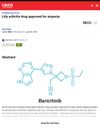
 This source notes that Olumiant (baricitinib), a rheumatoid arthritis drug by Eli Lilly and Company, has been approved as the first systemic treatment for severe alopecia areata.
1 citations
,
September 2020 in “Journal of dermatology” This study identified a novel mutation and confirmed a previous mutation in the LIPH gene in a woman with autosomal recessive woolly hair, expanding the mutation spectrum for this condition.
 27 citations
,
January 2005 in “American Journal of Clinical Dermatology”
27 citations
,
January 2005 in “American Journal of Clinical Dermatology” This pilot study found that azelaic acid treatment for patchy alopecia areata had similar hair regrowth results as anthralin, suggesting it may be an effective topical therapy.
1 citations
,
April 2017 in “Journal of Investigative Dermatology” Abatacept may help some people with alopecia areata regrow hair.
June 2026 in “JAAD Case Reports”  February 2025 in “American Journal of Biomedical Science & Research”
 This case report highlights two cases of alopecia areata in patients with celiac disease, noting the rare occurrence of one patient also having acquired hypertrichosis lanuginosa, which may be the first documented instance of this combination in the literature.
2 citations
,
January 2023 in “Skin Appendage Disorders” This review discusses the evaluation, diagnosis, and management of beard alopecia areata and reports no new clinical results, though it highlights recent treatment advances with janus kinase inhibitors.

This study reports that the newly optimized AR antagonist 39 demonstrated effective hair growth and safety in a mouse model of androgenetic alopecia, showing comparable efficacy to pyrilutamide with faster response and favorable pharmacokinetics, due to innovative structural design and dual metabolic inactivation strategy.
138 citations
,
March 2021 in “Journal of the American Academy of Dermatology” This study found that treatment with ritlecitinib or brepocitinib was effective in improving scalp hair loss for patients with alopecia areata over 24 weeks compared to placebo.
July 2022 in “Journal of Investigative Dermatology” Arg1+ macrophages may play a role in Alopecia Areata, offering new treatment targets.
 November 2025 in “Clinical Cosmetic and Investigational Dermatology”
 LIPH mutations cause woolly hair in some Chinese people.
 4 citations
,
December 2020 in “Mammalian genome”
4 citations
,
December 2020 in “Mammalian genome” This study found that pelage abnormalities in Harlequin mutant mice are linked to severe AIF deficiency and associated with altered expression of genes related to hair structure.
 February 2009 in “Journal of The American Academy of Dermatology”
 Certain immune system genes are linked to a higher risk of psoriasis and psoriatic arthritis, while others may offer protection.
 22 citations
,
November 2011 in “Journal of Analytical Toxicology”
22 citations
,
November 2011 in “Journal of Analytical Toxicology” This review discusses the relevance of human androgen receptor action in sports doping and examines the potential of cell-based biological assays for detecting androgenic anabolic steroid use, without presenting new research findings.
50 citations
,
December 2005 in “European Journal of Immunology” This study found that a specific mutation in the mouse RXRalpha gene significantly impacts immune responses and causes hair loss and skin cysts.
September 2025 in “International Society of Hair Restoration Surgery” This article discusses governance updates by the American Board of Hair Restoration Surgery to improve transparency and professionalism, but it reports no new research findings.