5 citations
,
May 1994 in “Facial plastic surgery clinics of North America” This article reviews the clinical characterization and potential treatments for androgenetic alopecia, highlighting minoxidil's efficacy in hair regrowth and noting the need for further genetic research; it reports no new clinical results.
 2 citations
,
March 2022 in “Portuguese Journal of Nephrology & Hypertension”
2 citations
,
March 2022 in “Portuguese Journal of Nephrology & Hypertension” This manuscript describes two case reports of preterm newborns with a rare homozygous mutation in the epidermal growth factor receptor, leading to severe health issues and early mortality despite supportive care.
February 2022 in “Authorea (Authorea)” This report presents a case of a seven-year-old girl with porokeratotic adnexal ostial nevus manifesting as hyperkeratotic verrucous papules on her left foot.
 4 citations
,
December 2012 in “Human Biology”
4 citations
,
December 2012 in “Human Biology” In this study, researchers found that two dominant haplotypes in the EDA2R/AR intergenic region have likely been shaped by demographic changes and selection during human evolution, particularly notable in African and non-African populations.
October 2006 in “Urology” The study found that different criteria led to different patient groups in the CombAT study compared to the MTOPS study.
January 2024 in “Biomarker Insights” This study found significant associations between PCOS susceptibility and specific genetic variants in the APOA5 and PLIN1 genes among Western Saudi women, identifying novel alleles and genotypes that may influence PCOS risk and related clinical characteristics.

This study found that overexpression of erythropoietin disrupted hair growth in mice by affecting dermal fat lipogenesis and lipolysis, leading to poor hair follicle development and truncal alopecia.
 December 2024 in “Journal of Cosmetic Dermatology”
 In this study, researchers performed the first integrated transcriptomic and proteomic analysis of scalp biopsies from male androgenetic alopecia patients, finding a significant association between PPAR signaling pathways and AGA, with ME1 identified as a key regulator in this process.
 July 2026 in “Zenodo (CERN European Organization for Nuclear Research)”
 In this study, in silico analysis identified Saponin Re and Emodin as promising candidates for topical treatment of androgenetic alopecia, with Biochanin A having the most favorable safety profile among the tested compounds.
August 2026 in “Ebers Papyrus” This study concluded that allele-specific PCR (AS-PCR) is more reliable than tetra-primer ARMS-PCR for genotyping the SNP rs1998076 due to better stability and interpretability.
78 citations
,
August 1996 in “The Journal of Clinical Endocrinology & Metabolism” This study reports that the same androgen receptor gene mutation within a family can lead to both complete and partial androgen insensitivity syndromes, suggesting that genetic defects alone may not predict clinical phenotype.
 1 citations
,
January 2001 in “American Journal of Kidney Diseases”
1 citations
,
January 2001 in “American Journal of Kidney Diseases” This report suggests that recombinant human erythropoietin use may be linked to alopecia in Southeast Asian women with chronic renal failure.
 3 citations
,
February 2020 in “The journal of gene medicine”
3 citations
,
February 2020 in “The journal of gene medicine” This study found a recurrent nonsense mutation in the HR gene linked to atrichia with papular lesions in two Kashmiri families, suggesting whole exome sequencing as an efficient method for diagnosis and genetic counseling.
April 2024 in “Institutional Repositories DataBase (IRDB)” This study identified 11 previously unreported ABCA12 variants associated with varying severities of autosomal recessive congenital ichthyoses and expanded the phenotype spectrum of ichthyosis linked to these variants.
June 2026 in “Value in Health”  1 citations
,
May 2021 in “BMC Proceedings”
1 citations
,
May 2021 in “BMC Proceedings” This study found that frequent attenders at Cork University Hospital's emergency department accounted for a disproportionate amount of visits and were more likely to require admission for further care.
 7 citations
,
March 2017 in “Medical Hypotheses”
7 citations
,
March 2017 in “Medical Hypotheses” This study suggests that dysfunctions and altered expression of aquaporins may play a role in PCOS-related disorders, potentially impacting folliculogenesis and integrating with the insulin-dependent hypothesis of PCOS pathogenesis.
 April 2016 in “Journal of The American Academy of Dermatology”
 Both atopy and eosinophilia are linked to more severe hair loss in people with alopecia areata.
 1 citations
,
September 2017
1 citations
,
September 2017 This study found that the combination of Stemoxydine® and Resveratrol improved hair density in women with Female Pattern Hair Loss.
9 citations
,
February 2002 in “PubMed” This study identified a novel mutation in the coproporphyrinogen oxidase gene, contributing to hereditary coproporphyria in a family, with decreased enzyme activity observed in the affected members.
May 2013 in “Optometry and Vision Science” This research reports that partial orthokeratology combined with daytime spectacle correction effectively slowed myopic progression in high myopes, with a 63% reduction in axial elongation compared to spectacle use alone.
 12 citations
,
December 2020 in “Archives animal breeding/Archiv für Tierzucht”
12 citations
,
December 2020 in “Archives animal breeding/Archiv für Tierzucht” This study found that EDA and EDAR are expressed throughout cashmere goat fetal development and play a critical role in hair follicle formation by influencing gene expression in fibroblasts and epithelial cells.
April 2021 in “Medical Science and Discovery” This study found that men with early androgenetic alopecia had higher levels of free testosterone, DHEAS, and LH, along with insulin resistance and higher homocysteine levels, suggesting they share risk profiles similar to PCOS in women.
 January 2022 in “Archiv für Tierzucht”
 This study found that EPHA4 and Ephrin A3 genes are differentially expressed during hair follicle development in fine-wool sheep, suggesting roles in follicle regeneration and density.
17 citations
,
December 2013 in “Journal of Investigative Dermatology Symposium Proceedings” The excimer laser may help hair regrow in alopecia areata patients.
 December 2023 in “bioRxiv (Cold Spring Harbor Laboratory)”
 This study found that AP-2α and AP-2β transcription factors are crucial for maintaining adult skin homeostasis, with their inactivation in keratinocytes leading to impaired differentiation, hair abnormalities, and inflammation, highlighting their key regulatory roles.
 March 2017 in “European Urology Supplements”
 This study found that variations in (CAG)n and (GGN)n polymorphisms in the androgen receptor gene appear to influence symptom severity in men with post-finasteride syndrome.
 11 citations
,
September 2011 in “British Journal of Dermatology”
11 citations
,
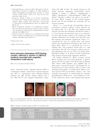
September 2011 in “British Journal of Dermatology” New ABCA12 gene mutations were linked to a skin condition with scaling and hair loss, and a treatment helped with hair loss in a related case.
 5 citations
,
July 2022 in “Orphanet journal of rare diseases”
5 citations
,
July 2022 in “Orphanet journal of rare diseases” This study found that RSPO1 mutations in patients with a 46XX disorder of sexual development contribute to impaired skin integrity and increased risk of squamous cell carcinoma in areas subject to friction.
 October 2024 in “Journal of the Endocrine Society”
 This study examined uncharacterized CYP21A2 gene variants related to non-classic congenital adrenal hyperplasia and found that several mutations reduce enzyme activity, which may help improve diagnostic and treatment strategies.