 September 2023 in “Journal of The American Academy of Dermatology”
 In this study, researchers evaluated how subjects perceive the effectiveness of three FDA-cleared photobiomodulation devices for home use in treating androgenetic alopecia, though specific outcomes or comparative effectiveness are not reported in the abstract.
75 citations
,
June 2007 in “Journal of Biological Chemistry” This study found that the combination of MT-DADMe-ImmA and MTA selectively induced apoptosis in head and neck squamous cell carcinoma cell lines FaDu and Cal27, but not in normal fibroblasts or MTAP-deficient breast cancer cells.
January 2014 in “生命科学(ISSN1934-7391)” A certain gene variation can affect protein production and is linked to male pattern baldness.
241 citations
,
March 2000 in “The Journal of Urology” This review discusses the concept of andropause, preferring the term "androgen decline in the aging male" (ADAM), and emphasizes the need for urologists to recognize its manifestations and manage its treatment, but reports no new clinical results.
September 2024 in “Pigment Cell & Melanoma Research” This study found that mitochondrial fusion regulator Opa1 is crucial for maintaining melanocyte stem cells during the hair follicle cycle in mice, with Opa1 deficiency leading to impaired SCF-KIT signaling, reduced melanocyte populations, and early hair graying.
 19 citations
,
November 2018 in “Nutrients”
19 citations
,
November 2018 in “Nutrients” This study reports that polyphenols from Annurca apples may safely promote hair growth and protect against chemotherapy-induced alopecia without interfering with chemotherapy regimens.
15 citations
,
February 2000 in “Journal of Cutaneous Pathology” This study suggests that the anchorage of the arrector pili muscle to the extracellular matrix is likely mediated by α5β1 integrin, with α1β1 integrin involved in muscle cell-cell adhesion.
 9 citations
,
February 2022 in “Dermatology and therapy”
9 citations
,
February 2022 in “Dermatology and therapy” This study found that daily use of an emollient PLUS containing ADE-G1 significantly reduced xerosis severity and improved quality of life in cancer patients, regardless of their initial xerosis severity or cancer treatment.
February 2026 in “Veterinary Dermatology” This study found that Pomeranians with Alopecia X had fewer follicles per group, more fragile hair, and distinct hair cycle stages compared to non-alopecic Pomeranians, highlighting coat-type differences significant for diagnosing the condition.
24 citations
,
July 1983 in “Journal of steroid biochemistry/Journal of Steroid Biochemistry” This article reviews the discovery and various physiological effects of cyproterone acetate, reporting its established indications for several androgen-driven conditions but providing no new clinical data.
2 citations
,
September 2025 in “Scientific Reports” This study found that women with polycystic ovary syndrome have a higher prevalence of autoimmune thyroid disease compared to those without the condition, highlighting the importance of screening for thyroid issues in this population.
February 2006 in “Journal of the American Academy of Dermatology”  2 citations
,
November 2020 in “Fertility Research and Practice”
2 citations
,
November 2020 in “Fertility Research and Practice” This study presents a new survey instrument that was cognitively tested for understanding menstrual cycle characteristics and androgen excess, including hirsutism, alopecia, and acne.
 August 2026 in “International Journal of Molecular Sciences”
 This study found that Atractylodes macrocephala Koidz. extract promotes anagen entry and hair regrowth by enhancing dermal papilla cell activity and supporting hair cycle progression in a mouse model.
 31 citations
,
January 2014 in “International Journal of Trichology”
31 citations
,
January 2014 in “International Journal of Trichology” This review summarizes the anatomy and physiology of the arrector pili muscle and discusses its potential role in hair loss disorders, reporting no new clinical results.
248 citations
,
September 2006 in “PLANT PHYSIOLOGY” This study observed that extracellular ATP is present in Medicago truncatula and correlates with regions of active cell growth, suggesting its integral role in plant development.
 16 citations
,
February 2010 in “Journal of the European Academy of Dermatology and Venereology”
16 citations
,
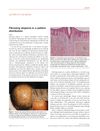
February 2010 in “Journal of the European Academy of Dermatology and Venereology” This article is a letter to the editor about fibrosing alopecia in a pattern distribution and reports no new research findings.
5 citations
,
January 2015 in “Case reports in medicine” In this case report, a novel missense mutation c.1360G>C (p.Ala454Pro) in the MBTPS2 gene was identified in a boy with typical IFAP syndrome and severe atopic features, although no phenotype/genotype correlation was established.
18 citations
,
May 2024 in “Pharmaceutics” This review discusses advances in drug delivery systems to enhance oleanolic acid's bioavailability and therapeutic potential but reports no new clinical results.
 July 2020 in “CRS 2020 Virtual Annual Meeting”
 This study found that the newly developed microarray patches for intradermal delivery of finasteride showed high drug content and significantly improved skin deposition compared to existing methods.
 November 2021 in “CRC Press eBooks”
 This article reviews the characteristics and presentation of fibrosing alopecia in a pattern distribution, a form of scarring alopecia similar to androgenetic alopecia and lichen planopilaris, but provides no new clinical findings.
 January 2026 in “Journal of Materials Chemistry B”
 In this study, researchers addressed the limitations of adenosine's practical application in treating inflammation, oxidative stress, and tissue repair due to its poor water solubility and low transdermal permeability. Results are not reported in the abstract.
 April 2025 in “Pakistan Journal of Health Sciences”
 This study demonstrated that weekly azathioprine pulse therapy was more effective than betamethasone oral mini-pulse in promoting hair regrowth in patients with moderate to severe alopecia areata.

The document listed various medical job opportunities with competitive benefits and living conditions.
 June 2026 in “Annals of Medicine and Surgery”
 This study highlights the approval of orforglipron under the FDA's National Priority Voucher program, emphasizing its significance as a convenient oral treatment option with beneficial effects on glycemic and lipid profiles for diabetes and obesity management.
January 2006 in “OpenCommons at University of Connecticut (University of Connecticut)” This study found that double transgenic Arabidopsis plants overexpressing both AVP1 and AtNHX1 showed improved salt tolerance and enhanced root hair and hypocotyl growth compared to single transgenic lines.
March 2003 in “Rosa P: A digital library for transportation research (United States Department of Transportation)” This article presents a toolkit created by the FTA to help transit agencies manage employees' use of medications that could impact public safety, but it reports no new results.
October 2025 in “Journal of Ethnopharmacology” Andrographolide from Andrographis paniculata promotes hair growth and could be a natural treatment for hair loss.
 January 2023 in “Methods in molecular biology”
 This article reviews methods for examining the localization and activity of ROP GTPase, cortical microtubule organization, and F-actin dynamics in plant cell models, but reports no new experimental results.
 November 2021 in “bioRxiv (Cold Spring Harbor Laboratory)”
 This study found that 4-aminopyridine, a potassium channel blocker, greatly improves skin wound healing by accelerating wound closure, enhancing tissue regeneration, and promoting hair follicle neogenesis.