30 citations
,
May 2019 in “Medicinal Research Reviews” This review discusses molecular and cellular strategies to improve muscle and skin regeneration and reduce scarring after cleft lip repair, offering potential benefits for function and aesthetics.
 January 2018 in “Springer eBooks”
 Congenital triangular alopecia is a harmless, non-spreading hair loss condition often seen in young children.
 July 2024 in “Dermatology Practical & Conceptual”
 This article discusses the diagnostic challenges between certain neonatal scalp conditions and highlights the potential of line-field confocal optical coherence tomography to provide detailed, non-invasive skin examination, without presenting new clinical findings.
 1 citations
,
January 2019 in “International Journal of Medical Reviews and Case Reports”
1 citations
,
January 2019 in “International Journal of Medical Reviews and Case Reports” This case report describes a 10-year-old girl with lamellar ichthyosis who showed marked improvement in scaling and skin stiffness after six weeks of treatment with emollient and supportive therapy.
 9 citations
,
May 2012 in “Journal of Craniofacial Surgery”
9 citations
,
May 2012 in “Journal of Craniofacial Surgery” This study reports that reconstructing perioral soft tissue defects with submental tissue resulted in satisfactory aesthetic outcomes and minimal donor-site morbidity.
4 citations
,
January 2017 in “PubMed” This report describes a rare case of acquired eyelash trichomegaly in a 16-year-old female with systemic lupus erythematosus, accompanied by diffuse hair loss and "lupus hairs" on the scalp.
 10 citations
,
May 2012 in “Journal of Craniofacial Surgery”
10 citations
,
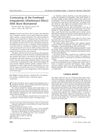
May 2012 in “Journal of Craniofacial Surgery” This case report describes a successful frontal region reconstruction using Cerament for a 50-year-old man, resulting in satisfactory forehead morphology and improved appearance four years post-surgery.
 85 citations
,
August 2015 in “Journal of Applied Genetics”
85 citations
,
August 2015 in “Journal of Applied Genetics” This review discusses recent insights into the molecular mechanisms of hypohidrotic ectodermal dysplasia linked to TNFα-related signaling pathway mutations but reports no new experimental results.
 February 2026 in “Orphanet Journal of Rare Diseases”
 This study identified pathogenic or likely pathogenic gene variants in 70.1% of Russian families affected by hypohidrotic ectodermal dysplasia, expanding knowledge of causative mutations.
 December 2023 in “International Journal of Research in Dermatology”
 This case report describes Halo Scalp Ring, a rare type of non-scarring alopecia in newborns, emphasizing the importance of proper diagnosis to avoid unnecessary tests and timely referral for potential hair restoration if scarring alopecia develops.
26 citations
,
January 2009 in “Annals of Dermatology” This case report describes two instances of rare linear alopecia on the occipital scalp, associated histologically with lupus erythematosus profundus, despite resembling alopecia areata clinically.
 3 citations
,
November 2020 in “Cleveland Clinic Journal of Medicine”
3 citations
,
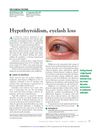
November 2020 in “Cleveland Clinic Journal of Medicine” Eyelash loss can be a sign of thyroid problems.
 15 citations
,
April 2007 in “Journal of child neurology”
15 citations
,
April 2007 in “Journal of child neurology” This case report describes an 11-month-old boy with Menkes disease, highlighting symptoms such as developmental delays and poor therapeutic response due to significant brain and vascular abnormalities.
November 2025 in “bioRxiv (Cold Spring Harbor Laboratory)” In this study, researchers engineered ventral skin organoids (vSkOs) with specific cellular compositions and signaling environments to generate human amnion-like tissues called Amnioids, offering new tools for studying human development and potential regenerative therapies.
 April 2025 in “Otorhinolaryngology Clinics - An International Journal”
 This case report highlights the critical role of preoperative histopathology in accurately diagnosing and treating ambiguous cutaneous lesions in the ear, nose, and throat area, emphasizing that reliance solely on clinical features can lead to misdiagnosis.
 11 citations
,
August 2004 in “Facial Plastic Surgery”
11 citations
,
August 2004 in “Facial Plastic Surgery” This review describes endoscopic techniques for rejuvenating the upper two-thirds of the face, highlighting their safety, reliability, and fewer complications compared to traditional open procedures, and reports no new clinical results.
November 2024 in “Journal of Investigative Dermatology” Scalp hair follicle cells help protect and heal skin in certain skin conditions.
November 2012 in “Annales de Dermatologie et de Vénéréologie” This report describes the first known pediatric cases of frontal fibrosing alopecia, a condition typically affecting postmenopausal women, highlighting its occurrence in children including female twins.
16 citations
,
July 2021 in “American Journal of Medical Genetics Part A” This study identified novel LSS mutations implicated in hypotrichosis simplex with or without neurodevelopmental abnormalities, highlighting the need for careful evaluation of synonymous mutations' potential pathogenic effects.
 August 2026 in “International Journal of Developmental Neuroscience”
 In this report, researchers describe a 13-month-old with neurodevelopmental disorder NEDESBA, confirming a TRAPPC4 gene mutation as the cause after excluding biotinidase deficiency, highlighting the importance of molecular testing for accurate diagnosis in overlapping metabolic and genetic conditions.
January 2026 in “Indian Journal of Paediatric Dermatology” In this case report, a 14-year-old boy was diagnosed with nevus comedonicus, a condition characterized by dilated follicular openings filled with keratin, presenting in a Blaschkoid pattern; treatment with topical tretinoin 0.1% cream was recommended.
June 2025 in “Dermatologic Surgery” This article reviews multiple noncutaneous manifestations of pityriasis rubra pilaris, such as subungual hyperkeratosis and hair loss, but reports no new clinical results.
July 2026 in “Indian Journal of Dermatology Venereology and Leprology” 17 citations
,
April 1997 in “American Journal of Dermatopathology” This report provides the first microscopic description of pachyonychia congenita-associated alopecia, identifying a combination of histological features that might be unique to this condition.
October 2025 in “OPAL (Open@LaTrobe) (La Trobe University)” In this case study, a 10-month-old minority infant from Xinjiang, China, with acrodermatitis enteropathy caused by an SLC39A4 gene mutation showed clinical improvement and increased zinc levels following zinc supplementation, highlighting the importance of early genetic testing and customized treatment in managing the disorder.
 4 citations
,
June 2014 in “The Journal of Dermatology”
4 citations
,
June 2014 in “The Journal of Dermatology” Elkonyxis, a rare nail condition, improved when patients stopped their nail-picking habits.
4 citations
,
April 2012 in “The journal of investigative dermatology/Journal of investigative dermatology” This study developed a mouse model lacking keratin 16 to replicate palmoplantar lesions, which may help uncover the molecular mechanisms driving these lesions in pachyonychia congenita and focal non-epidermolytic palmoplantar keratoderma.
22 citations
,
June 2020 in “iScience” This study found that disrupting Sox21 in developing teeth leads to severe enamel hypoplasia, regional osteoporosis, and abnormal hair formation, with impaired dental epithelial differentiation and regulation of hair follicle cell fate.
 24 citations
,
May 2019 in “PLOS genetics”
24 citations
,
May 2019 in “PLOS genetics” This study reports that compound heterozygous loss-of-function mutations in the HEPHL1 gene in a child were associated with abnormal hair and cognitive issues, linking altered ferroxidase activity to hair disorders.
10 citations
,
March 1997 in “Pediatric Dermatology” This case report describes a patient with trichothiodystrophy presenting with autism, mental retardation, and seizures, characterized by distinct hair abnormalities under microscopy.