5 citations
,
February 2023 in “Skin Health and Disease” In this study, the Swedish Hairdex-S was well-received by alopecia areata patients and demonstrated strong psychometric properties and consistency with the original version, supporting its use for patient quality of life evaluation and research.
1 citations
,
January 2026 in “International Journal of Dermatology” The BEARD Score helps assess beard hair loss in alopecia areata for better treatment.
 April 2021 in “Journal of Investigative Dermatology”
 This study suggests that rather than inhibiting IL-15, selectively stimulating IL-15Ra-mediated signaling could be beneficial for managing alopecia areata and possibly other inflammatory hair loss conditions, as IL-15 promoted hair growth and maintained immune privilege in human hair follicles.
 January 2025 in “ACS Applied Materials & Interfaces”
 In this study, a nanoparticle system codelivering diphenylcyclopropenone and rapamycin successfully induced immune tolerance and promoted hair regrowth in a mouse model of alopecia areata, offering a promising new therapeutic strategy for this autoimmune condition.
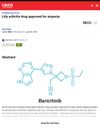 June 2022 in “C&EN global enterprise”
 This source notes that Olumiant (baricitinib), a rheumatoid arthritis drug by Eli Lilly and Company, has been approved as the first systemic treatment for severe alopecia areata.
January 2019 in “Prosiding Program Kreativitas Mahasiswa” This study found that a 15% Pisum sativum extract concentration in hair tonic showed the most effective hair growth, with a length of 14.51mm and weight of 0.16g.
 January 2025 in “Termometer Jurnal Ilmiah Ilmu Kesehatan dan Kedokteran”
 In this study, researchers tested a tea leaf ethanol extract (Camellia sinensis) hair tonic and found it increased average hair growth compared to positive and negative controls over 28 days, but exhibited some instability and inhomogeneity after accelerated testing.
 2 citations
,
September 2011 in “Pediatric Dermatology”
2 citations
,
September 2011 in “Pediatric Dermatology” This case report describes the first observed association between alopecia areata and Kawasaki disease in a 10-year-old boy, suggesting a possible link that merits further investigation.
 1 citations
,
December 2024 in “Dermatology and Therapy”
1 citations
,
December 2024 in “Dermatology and Therapy” This study found that the STRIAA scoring tool provides a rapid and highly reliable assessment of alopecia areata severity, showing a significant correlation with the traditional SALT score, thus enhancing clinical evaluation in patients with this condition.
 4 citations
,
November 2020 in “Journal of Investigative Dermatology Symposium Proceedings”
4 citations
,
November 2020 in “Journal of Investigative Dermatology Symposium Proceedings” The Brigham Eyebrow Tool for Alopecia is a simple and reliable way to measure eyebrow hair loss.