 September 2012 in “The Egyptian Journal of Histology”
 In this study, flutamide at therapeutic doses caused significant histological changes in the testes and epididymis of adult albino rats, reducing androgen receptor immunoreactivity and increasing estrogen receptor immunoreactivity.
6 citations
,
January 2024 in “International Journal of Dermatology” This study examined FAERS data and found an increasing trend in alopecia areata cases, with monoclonal antibodies most frequently linked to the condition.
April 2025 in “Australasian Journal of Dermatology” This report presents the first Australian case of familial frontal fibrosing alopecia involving a mother and daughter and seeks to differentiate clinical features between familial and sporadic cases.
 August 2002 in “Dermatologic Surgery”
 This study found that topical fluridil increased the anagen percentage in men with androgenetic alopecia without causing irritation or systemic side effects.
 15 citations
,
December 2017 in “Journal of The European Academy of Dermatology and Venereology”
15 citations
,
December 2017 in “Journal of The European Academy of Dermatology and Venereology” This letter discusses potential pathogenetic links among frontal fibrosing alopecia, androgenetic alopecia, and fibrosing alopecia in a pattern distribution and reports no new clinical findings.
6 citations
,
November 2020 in “JAAD Case Reports” This study identified overlapping genetic susceptibility loci in both alopecia areata and inflammatory bowel disease, specifically with Crohn's disease and ulcerative colitis.
 November 2023 in “Indian Dermatology Online Journal”
 This study found that tofacitinib was safe and effective for patients with severe or treatment-resistant alopecia areata, alopecia totalis, and alopecia universalis, resulting in significant hair regrowth for most participants.
 155 citations
,
September 2008 in “British journal of dermatology/British journal of dermatology, Supplement”
155 citations
,
September 2008 in “British journal of dermatology/British journal of dermatology, Supplement” This study observed that frontal fibrosing alopecia predominantly affects postmenopausal women, can be associated with lichen planus, and may lead to progressive hairline recession, though this progression is not consistent in all cases.
 30 citations
,
January 2020 in “Journal of The American Academy of Dermatology”
30 citations
,
January 2020 in “Journal of The American Academy of Dermatology” This review reports no new clinical results but discusses fibrosing alopecia in a pattern distribution as a distinct scarring alopecia with characteristics of both androgenetic alopecia and lichen planopilaris.
2 citations
,
January 2018 This article discusses diffuse alopecia areata, highlighting its autoimmune characteristics, more intense inflammation, and challenges in diagnosis, but presents no new clinical findings.
2 citations
,
May 2025 in “Diagnostics” This study found that ATR-FTIR spectroscopy combined with machine learning effectively differentiated alopecia areata patients from healthy controls with an AUC of 0.85, and also showed promise in predicting treatment response, particularly through alterations in the Amide I band.
 12 citations
,
March 2018 in “Anais brasileiros de dermatologia/Anais Brasileiros de Dermatologia”
12 citations
,
March 2018 in “Anais brasileiros de dermatologia/Anais Brasileiros de Dermatologia” This article describes a case of frontal fibrosing alopecia in a patient with chronic lichenoid lupus erythematosus and notes the lack of similar documented cases in existing literature.
 September 2021 in “CRC Press eBooks”
 This article discusses alopecia areata incognito, highlighting its diffuse hair loss pattern and favorable response to steroid treatment, but it reports no new clinical data.
 17 citations
,
January 2019 in “Dermatologic Therapy”
17 citations
,
January 2019 in “Dermatologic Therapy” The article in Dermatologic Therapy discusses clinical experiences with using tofacitinib to treat alopecia areata in 63 patients, but no specific results are reported in the abstract.
 April 2024 in “Clinical and experimental dermatology”
 This retrospective study evaluated the use of tofacitinib as an induction therapy for severe alopecia areata and found it promising and comparable to the standard oral mini-pulse treatment, though pulse steroids may be considered if tofacitinib response is inadequate.
2 citations
,
June 2021 in “Sultan Qaboos University medical journal” This case report presents three sisters with familial frontal fibrosing alopecia, making it the 25th documented familial case, with treatment results observed in one sister.
 42 citations
,
April 2011 in “Annals of Pharmacotherapy”
42 citations
,
April 2011 in “Annals of Pharmacotherapy” This study found that long-term flutamide treatment reduced hair loss in women with female pattern hair loss, but liver-related dropouts were minimized at a very low dose of 62.5 mg/day.
 July 2023 in “Journal of Ethnopharmacology”
 In this triple-blind, randomized clinical trial, researchers found that oral Amla syrup significantly increased the anagen-to-telogen hair ratio and satisfaction levels in women with Female Androgenetic Alopecia compared to placebo, suggesting its potential benefit for treating androgenic hair loss.
 8 citations
,
October 2019 in “International Journal of Dermatology”
8 citations
,
October 2019 in “International Journal of Dermatology” This study examined 56 Thai patients with frontal fibrosing alopecia, finding frontotemporal hairline recession and eyebrow loss were common, and reported better disease stabilization with combination treatments of topical corticosteroids with hydroxychloroquine or finasteride.
 139 citations
,
November 2016 in “Journal of the American Academy of Dermatology”
139 citations
,
November 2016 in “Journal of the American Academy of Dermatology” In this retrospective review, tofacitinib treatment was associated with clinically significant hair regrowth in most adolescent patients with alopecia areata, though limitations suggest further studies are needed to confirm these findings.
 July 2018 in “Elsevier eBooks”
 This review discusses the evolving understanding of frontal fibrosing alopecia as a generalized skin condition with diverse manifestations, and reports no new clinical results.
 11 citations
,
October 2018 in “Pediatric dermatology”
11 citations
,
October 2018 in “Pediatric dermatology” In this case report, the authors describe a child with treatment-resistant alopecia areata who successfully responded to leflunomide and anthralin, proposing this combination as a potentially cost-effective alternative for managing recalcitrant cases by possibly inhibiting the JAK/STAT pathway.
 2 citations
,
November 2021 in “ACG Case Reports Journal”
2 citations
,
November 2021 in “ACG Case Reports Journal” This case study reports that tofacitinib effectively treated alopecia areata in a patient with Crohn's disease and maintained her Crohn's disease management.
 41 citations
,
December 2015 in “JAMA Dermatology”
41 citations
,
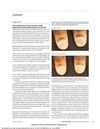
December 2015 in “JAMA Dermatology” Tofacitinib citrate improved nail dystrophy and pain in patients with alopecia universalis without causing side effects.
 November 2024 in “International Journal of Dermatology”
 This study found that line-field confocal optical coherence tomography correlates well with histopathological and dermoscopic findings in alopecia areata, suggesting it could be a useful diagnostic and monitoring tool for the condition.
 25 citations
,
March 2013 in “British Journal of Dermatology”
25 citations
,
March 2013 in “British Journal of Dermatology” Woman has discoid lupus, frontal fibrosing, and androgenetic alopecia.
 April 2023 in “Journal of Investigative Dermatology”
 This study suggests that linalool, a common allergen in personal care products, may contribute to frontal fibrosing alopecia pathogenesis by triggering immune responses and depleting hair follicle stem cells, especially in sensitized individuals.
 8 citations
,
October 2016 in “Actas Dermo-Sifiliográficas”
8 citations
,
October 2016 in “Actas Dermo-Sifiliográficas” This study found that men with frontal fibrosing alopecia exhibited more frequent facial papules, androgenetic alopecia, and body hair loss compared to women with the condition, and were generally older.
 13 citations
,
January 2019 in “Skin appendage disorders”
13 citations
,
January 2019 in “Skin appendage disorders” This study reported that fibrosing alopecia in a pattern distribution can occur in patients of color, with clinical and histopathological features allowing for an accurate differential diagnosis.
18 citations
,
June 2020 in “Dermatologic Therapy” In this study, FCO2 laser treatment showed significantly better improvement for alopecia areata compared to traditional intralesional corticosteroid injections, with no serious side effects or relapse observed.