 September 2011 in “Clinical Biochemistry”
 The demineralized bone matrix scaffold is better for cell attachment than the mineralized bone allograft.

This thesis found that desmoplakin mutations in cardiocutaneous syndrome are linked to dose-dependent disease severity and identified mechanisms by which KLHL24 mutations cause cardiomyopathy, with rescue experiments successfully preventing this phenotype in patient-derived heart tissues.
28 citations
,
November 2018 in “American Journal of Medical Genetics Part A” This report describes a neurometabolic disorder linked to gain-of-function variants in the ODC1 gene, characterized by developmental delay, ectodermal abnormalities, and notable facial and neuroimaging features.
This case report describes a novel mutation in the CDH3 gene in an 11-year-old Iranian boy with sparse scalp hair and macular dystrophy, leading to altered P-cadherin synthesis.
30 citations
,
August 2005 in “British journal of dermatology/British journal of dermatology, Supplement” This study identified a novel CDH3 mutation associated with sparse hair and pigmentary macular changes in two siblings with hypotrichosis but no visual symptoms.
This study found that the protein Formin 2 helps regulate cell-to-cell transport in thale cress by stabilizing actin filaments at plasmodesmata, with its absence leading to increased permeability and vulnerability to viral infections.
179 citations
,
June 2000 in “The American journal of pathology” This study reports that the asebia-2J mutation in mice affects sebaceous gland function and leads to hair follicle destruction, offering a model for human scarring alopecias.
65 citations
,
November 2013 in “The EMBO Journal” HDAC1 is crucial for skin development and preventing tumors.
18 citations
,
June 2018 in “Journal of Dental Research” This study found that during amelogenesis in Msx2 null mice, a dysfunctional enamel organ developed due to abnormal epithelial transformation and lacked proper enamel formation.
18 citations
,
June 2016 in “Clinical and Experimental Dermatology” This case study reports that an infant with maple syrup urine disease developed acrodermatitis dysmetabolica due to low isoleucine levels, and increasing the isoleucine dose improved the condition.
 74 citations
,
January 2006 in “The journal of investigative dermatology/Journal of investigative dermatology”
74 citations
,
January 2006 in “The journal of investigative dermatology/Journal of investigative dermatology” This study identified novel compound heterozygous mutations in the DSG4 gene in a Japanese patient with congenital hypotrichosis, suggesting overlap between localized autosomal recessive hypotrichosis and monilethrix.
 3 citations
,
August 2021 in “Research Square (Research Square)”
3 citations
,
August 2021 in “Research Square (Research Square)” This study found that increased mRNA expression of the Ectodysplasin-A2-Receptor, observed across multiple species and tissues, may exacerbate inflammation during aging, suggesting potential benefits of blocking EDA2R/EDA-A2 signaling.
1 citations
,
November 2025 in “Aging Cell” This review discusses the role of the ectodysplasin A2 receptor as a biomarker and driver of ageing related to inflammation, and its potential therapeutic implications, but reports no new clinical findings.
66 citations
,
March 2016 in “Nucleic Acids Research” This study found that Musashi-2 regulates mRNA targets to restrict epithelial cell migration, revealing a key function of Msi2 beyond its known role in promoting cell growth.
 5 citations
,
January 1998 in “Clinical and experimental dermatology”
5 citations
,
January 1998 in “Clinical and experimental dermatology” This article discusses the late presentation of myotonic dystrophy but reports no new clinical findings.
This study found that deleting the Mad2l1 gene in mice leads to rapid onset of acute lymphoblastic leukemia and liver cancer due to induced chromosomal instability.
23 citations
,
February 2025 in “Advanced Materials” This study found that a new autonomous, moisture-driven flexible electrogenerative dressing significantly accelerated chronic wound healing in a diabetic mouse model compared to the control group.
January 2022 in “SSRN Electronic Journal” In this case study, a neoadjuvant therapy combining gemcitabine and Disitamab Vedotin proved effective and safe for a muscle-invasive bladder cancer patient with severe renal insufficiency, who could not tolerate platinum-based treatments. The study suggests this regimen may be a viable alternative, pending further research.
 7 citations
,
March 2018 in “Asian-Australasian journal of animal sciences”
7 citations
,
March 2018 in “Asian-Australasian journal of animal sciences” This study observed that the OCIAD2 and DCN genes in Liaoning cashmere goats have opposite effects on hair growth by interacting with the TGF-β signaling pathway, influencing follicle morphogenesis and periodic changes.
4 citations
,
January 2023 in “Journal of Clinical Investigation” This study identified a recurrent mutation in the endothelin receptor type A associated with mandibulofacial dysostosis with alopecia, and proposed a mechanism involving increased ligand affinity due to structural changes.
 April 2019 in “Journal of Investigative Dermatology”
 This study identifies a mechanism where dsRNA activates TLR3 to induce RA production, promoting hair follicle regeneration in mice and suggesting a potential role in human tissue regeneration.
75 citations
,
June 2007 in “Journal of Biological Chemistry” This study found that the combination of MT-DADMe-ImmA and MTA selectively induced apoptosis in head and neck squamous cell carcinoma cell lines FaDu and Cal27, but not in normal fibroblasts or MTAP-deficient breast cancer cells.

In a case report, this study identified a new genetic variant in a six-year-old girl from Saudi Arabia with hypotrichosis and juvenile macular dystrophy, expanding the understanding of the genetic spectrum of this rare condition in the region.
 17 citations
,
August 2012 in “Journal of Medical Genetics”
17 citations
,
August 2012 in “Journal of Medical Genetics” This article reviews the genetic mutations associated with hypohidrotic ectodermal dysplasia and reports no new clinical results; the authors highlight the roles of EDA gene isoforms and related receptors.
 52 citations
,
November 2003 in “Journal of Investigative Dermatology”
52 citations
,
November 2003 in “Journal of Investigative Dermatology” In this study, mutations in the CDH3 gene were identified as the cause of hypotrichosis with juvenile macular dystrophy, and the researchers observed substantial phenotypic variability among affected individuals.
22 citations
,
June 2010 in “Experimental Dermatology” This study reported that patients with alopecia areata have reduced expression of the melanocortin receptor MC2R in their scalp tissues compared to normal scalp, indicating potential involvement in the condition's pathophysiology.
 1 citations
,
May 2020 in “Beilstein Journal of Organic Chemistry”
1 citations
,
May 2020 in “Beilstein Journal of Organic Chemistry” This study developed a novel smart deoxyribozyme-based fluorescent sensor that efficiently detects androgen receptor mRNA with high selectivity and can be adapted to target various nucleic acid sequences.
 January 2019 in “Current research in diabetes & obesity journal”
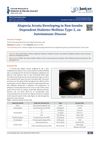
 A woman with type 2 diabetes developed alopecia areata, suggesting a link between the two autoimmune conditions.
29 citations
,
January 1996 in “The Journal of Clinical Endocrinology & Metabolism” This study identified a compound heterozygous mutation in the 3 beta-HSD gene that confirmed inherited 3 beta-HSD deficiency in a Pakistani child with salt-wasting congenital adrenal hyperplasia.
December 2021 in “OPAL (Open@LaTrobe) (La Trobe University)” This study found that knocking out the Hars2 gene in mouse cochlear hair cells led to mitochondrial dysfunction and ROS stress, resulting in progressive hearing loss and differential effects on inner and outer hair cells.