4 citations
,
July 2025 in “International Journal of Molecular Sciences” This review discusses Amphiregulin (AREG) as a potential target for treating fibrotic disorders and cancer, highlighting its role in disease progression and promising results in preclinical studies and early trials.
 April 2019 in “International research journal of pharmacy”
 This study found that a 50% ethanolic extract of Adiantum capillus had significant analgesic and anti-inflammatory effects in animals, particularly at the highest tested dose of 300 mg/kg.
70 citations
,
September 2017 in “Expert opinion on therapeutic patents” This review examines the patent literature on AKR1C3 inhibitors and suggests that although numerous potent inhibitors exist, further preclinical optimization is necessary before assessing their therapeutic potential in human diseases.
 26 citations
,
June 2018 in “The journal of immunology/The Journal of immunology”
26 citations
,
June 2018 in “The journal of immunology/The Journal of immunology” This study demonstrated that AIRE-deficient rats exhibit key symptoms of APECED, making them a relevant model for exploring potential treatments.
 6 citations
,
February 2016 in “British Journal of Dermatology”
6 citations
,
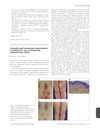
February 2016 in “British Journal of Dermatology” A woman with a drug allergy to anakinra was successfully desensitized, allowing her to continue treatment without allergic reactions.
2 citations
,
June 2025 in “Preprints.org” This review highlights the potential of amphiregulin as a therapeutic target, noting its role in both fibrotic and malignant diseases, and discusses promising early findings but reports no new clinical results.
1 citations
,
May 2024 in “International Journal of Molecular Sciences” This study suggests that targeting adenosine receptors could be an effective strategy for reducing inflammation in inflammatory skin disorders, with promising results observed in animal models.
 3 citations
,
June 1983 in “Archives of Dermatology”
3 citations
,
June 1983 in “Archives of Dermatology” This article discusses the effectiveness of adrenal cortex compounds E and F in treating connective tissue disorders like rheumatoid arthritis and lupus erythematosus, but it reports no new clinical results.
September 2018 in “The Journal of Urology” This review discusses FAERS data on 5-alpha reductase inhibitors and their potential implications for post-finasteride syndrome, but it does not report any new clinical results.
26 citations
,
September 2009 in “Clinical genetics” This study identified four novel and one recurrent mutation in the AIRE gene among Arab families with APS1, suggesting these contribute to the disorder.
May 2018 in “The Journal of Immunology” In this study, daily treatment with angiotensin (1-7) significantly reduced disease severity in a mouse model of Systemic Lupus Erythematosus, suggesting potential for Mas agonists in future therapies.
September 2025 in “Radboud University Press eBooks” This study investigated AHR signaling's role in skin biology and reported that novel AHR ligands may help restore keratinocyte function and reduce inflammation in skin diseases, suggesting their potential as therapeutic agents.
36 citations
,
July 2017 in “Journal of controlled release” In this study, a new formulation of all-trans retinoic acid bound to polyvinyl alcohol showed reduced skin inflammation and sustained drug release for up to six days compared to free ATRA in vitro and in vivo.
24 citations
,
February 2011 in “The American journal of pathology” This study found that AIRE, a usually nuclear protein, is expressed in the cytoplasm of human epidermal and follicular keratinocytes and associates with the intermediate filament protein cytokeratin 17, potentially impacting ectodermal abnormalities in APECED syndrome.
2 citations
,
July 2025 in “Scientific Reports” This study identified a novel Acinetobacter species, strain A1-4-2, with exceptional biodegradation abilities and low antibiotic resistance, found in diverse environments and potentially useful for ecological restoration by degrading organic pollutants.
1 citations
,
June 2016 in “Annals of the rheumatic diseases” In this study, researchers found that retinoids might improve lupus nephritis resistant to conventional treatments, but the sample size was too small for significant results, and side effects were noted.
 3 citations
,
August 2021 in “Research Square (Research Square)”
3 citations
,
August 2021 in “Research Square (Research Square)” This study found that increased mRNA expression of the Ectodysplasin-A2-Receptor, observed across multiple species and tissues, may exacerbate inflammation during aging, suggesting potential benefits of blocking EDA2R/EDA-A2 signaling.
This study reports on a new semantic annotation approach used to identify substances in MEDLINE abstracts responsible for adverse drug reactions, with promising performance shown by a prototype system.
 17 citations
,
April 2015 in “Tropical Journal of Pharmaceutical Research”
17 citations
,
April 2015 in “Tropical Journal of Pharmaceutical Research” This review highlights the traditional use and potential therapeutic activities of Asiasari Radix in drug discovery, but it reports no new clinical results.
1 citations
,
April 2025 in “Skin Health and Disease” This study is collecting real-world data to evaluate abrocitinib and conventional systemic treatments in moderate-to-severe atopic dermatitis across five European registers over a three-year period.
5 citations
,
May 2024 in “Journal of Allergy and Clinical Immunology Global” In this case study, a 29-year-old male with severe atopic dermatitis and alopecia universalis experienced an excellent response to treatment with upadacitinib, indicating it may be a promising option for similar patients.
August 2026 in “JAMA Dermatology” This study found that upadacitinib significantly improved hair regrowth compared to placebo in adults and adolescents with severe alopecia areata, and demonstrated a positive benefit-risk profile.
June 2026 in “Journal of Investigative Dermatology” Retinoic acids temporarily change skin stem cells to a slower cycle and more differentiated state.
August 2024 in “British Journal of Dermatology” The trial is ongoing, but researchers are evaluating the efficacy and safety of REZPEG, a potential new therapy for severe alopecia areata, which selectively expands regulatory T cells.
21 citations
,
May 2023 in “The Journal of Allergy and Clinical Immunology In Practice” 18 citations
,
January 2013 in “Evidence-based Complementary and Alternative Medicine” In this study, ALR was found to enhance both the proliferation and osteogenic differentiation of mouse bone marrow mesenchymal stem cells, potentially through specific signaling pathways.
 April 2024 in “JEADV clinical practice”
 This study reports a case where a patient with rheumatoid arthritis and alopecia areata saw significant improvement in both conditions after switching to daily upadacitinib treatment, specifically achieving complete hair regrowth within six months.
44 citations
,
May 1998 in “PubMed” In this study, a specific retinoic acid receptor antagonist caused severe craniofacial anomalies in mouse fetuses when administered early in pregnancy, but not limb anomalies, highlighting developmental stage-specific roles of retinoic acid.
6 citations
,
January 2025 in “RSC Medicinal Chemistry” This review discusses the signaling mechanisms of RAAS, the current drugs targeting RAAS, their limitations, and suggests innovative strategies for developing new therapeutics but reports no new results.
 6 citations
,
January 2011 in “Journal of pediatric endocrinology & metabolism/Journal of pediatric endocrinology and metabolism”
6 citations
,
January 2011 in “Journal of pediatric endocrinology & metabolism/Journal of pediatric endocrinology and metabolism” This report details the case of an 11-year-old girl with APECED syndrome carrying a unique homozygous mutation in the AIRE gene, the first of its kind documented.