 April 2026 in “American Journal of Dermatopathology”
 This study identified a new dermoscopic feature, plexiform erythema, in lichen planopilaris lesions, suggesting it may indicate active disease and the potential need for more aggressive treatment.
April 2026 in “Journal of Cosmetic Dermatology” This review highlights the potential of combining microneedling with exosome therapy in treating various dermatological conditions, but emphasizes the need for more evidence regarding its safety and effectiveness.
 December 2022 in “Exploratory animal and medical research”
 This study found that acral lick dermatitis in dogs has a higher prevalence in young male dogs, especially Labrador retrievers, during colder months, with psychogenic triggers being the most common cause.

This abstract discusses the classification of scarring alopecia, distinguishing it from secondary scarring alopecia and detailing its subtypes based on inflammation patterns and cells present during the disease's active phase, but reports no new clinical results.
 September 2023 in “Медицинский совет”
 In this study, patients using ALERANA® 5% topical spray and Serum BIO active complex for stress-induced nonscarring alopecia saw a 17% increase in hair amount within 3 months, and it was well tolerated.
1 citations
,
April 2022 in “Der Hautarzt” This paper discusses microsurgical autologous hair transplantation as a method to improve androgenetic and non-active scarring alopecias, emphasizing the importance of surgeon expertise and proper planning; no new clinical results are provided.
 66 citations
,
January 2010 in “Journal of The American Academy of Dermatology”
66 citations
,
January 2010 in “Journal of The American Academy of Dermatology” This study reported that mycophenolate mofetil was effective in reducing signs and symptoms of active lichen planopilaris in 83% of patients who had failed multiple prior treatments.
July 2026 in “Scholars Journal of Medical Case Reports” This case study reports a rare coexistence of alopecia areata and lichen planopilaris in a 37-year-old woman and highlights the importance of targeting active scalp areas for biopsy to appropriately manage coexisting scarring and non-scarring alopecias, with distinct therapeutic priorities.
 September 2017 in “Journal of Investigative Dermatology”
 This study found that infrared thermography might be a useful non-invasive tool to help diagnose frontal fibrosing alopecia by identifying active phases of the disease.
 2 citations
,
January 2013 in “Hair therapy & transplantation”
2 citations
,
January 2013 in “Hair therapy & transplantation” This review discusses surgical and future therapeutic options for cicatricial alopecia and reports no clinical results; the authors emphasize the need for more options for patients without active disease signs.
 29 citations
,
January 2019 in “Journal of the European Academy of Dermatology and Venereology”
29 citations
,
January 2019 in “Journal of the European Academy of Dermatology and Venereology” This study found that trichoscopic examination is useful for diagnosing and monitoring systemic lupus erythematosus, with severe diffuse non-scarring alopecia indicating active disease.
 20 citations
,
January 2016 in “Intractable & Rare Diseases Research”
20 citations
,
January 2016 in “Intractable & Rare Diseases Research” In this clinical experience, treating frontal fibrosing alopecia with oral finasteride, hydroxychloroquine, tacrolimus, and excimer laser was associated with optimal results in patients with active inflammation.
17 citations
,
August 2021 in “Dermatologic surgery” This review found that microneedling is generally safe, with most adverse effects being minor and resolving quickly, though there is increased risk in patients with active infections, darker skin, or metal allergies.
August 2020 in “Research Square (Research Square)” This study reported that 7.80% of systemic lupus erythematosus patients experienced scarring alopecia, with mucocutaneous lesions and certain autoantibodies identified as risk factors, and some organ involvements and immunosuppressants as protective factors.
 January 2014 in “Pathology”
 Non-scarring hair loss can be diagnosed with two 4mm punch biopsies, one cut vertically and the other transversely.
October 2024 in “Journal of Pakistan Association of Dermatologists” In this cross-sectional study, both follicular lichen planus and discoid lupus erythematosus were identified as common causes of scarring alopecia, affecting young people with a more favorable prognosis for hair regrowth in discoid lupus erythematosus compared to follicular lichen planus.
 October 2023 in “bioRxiv (Cold Spring Harbor Laboratory)”
 This study demonstrated that disrupting EGFR signaling in mice leads to immune sensitivity compromising the hair follicle's protective environment, but JAK1/2 inhibition can restore this immune privilege and stimulate hair growth, suggesting a potential therapy for scarring hair loss diseases like cicatricial alopecia.
 March 2026 in “SKIN The Journal of Cutaneous Medicine”
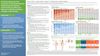
 This study demonstrated that litifilimab significantly reduced disease activity in cutaneous lupus erythematosus by Week 16, with improvements most notable in sunlight-exposed skin areas.
 16 citations
,
April 2015 in “Lasers in Surgery and Medicine”
16 citations
,
April 2015 in “Lasers in Surgery and Medicine” In this study, the researchers found that the effectiveness of a 1,550-nm fractional laser in promoting hair growth in mice depends on the specific combination of beam energy and density, with inappropriate settings potentially causing ulcers or hair follicle injury.
 5 citations
,
March 2004 in “Journal of The American Academy of Dermatology”
5 citations
,
March 2004 in “Journal of The American Academy of Dermatology” This presentation reviews common myths and practical treatment guidance for dandruff and scalp seborrheic dermatitis but does not provide new research findings.
 March 2023 in “Photodiagnosis and Photodynamic Therapy”
 This study found that vitamin D levels were lower in alopecia areata patients, with trichoscopic features like broken hairs and black dots more prevalent in cases with vitamin D deficiency.
 January 2014 in “Pathology”
 The document concludes that understanding nail anatomy is key for diagnosing nail diseases, early signs of nail melanoma may allow for less aggressive treatment, and specific genetic mutations are important in thyroid cancer prognosis and treatment.
 March 2007 in “The FASEB Journal”
 This observational study reports a striking correlation between the use of henna hair dye and a specific pattern of hair loss, termed "hennapecia," but calls for experimental research to determine causality.
 March 2004 in “Journal of The American Academy of Dermatology”
 This study found that patients with systemic lupus erythematosus and diffuse hair loss showed non-scarring alopecia without inflammation and a decrease in total hair follicles.
 March 2004 in “Journal of The American Academy of Dermatology”
 This study found that the vehicle of hydrocortisone impacts its absorption and therapeutic effectiveness, as demonstrated by efficacy tests using UV-erythema and vasoconstriction models.
 March 2004 in “Journal of The American Academy of Dermatology”
 This report describes a unique case of dyschromatosis universalis in a 10-year-old Haitian male, notable for the presence of a silvery sheen to his scalp hairs and eyelashes, which may represent a variation of the condition.
 October 1982 in “American Journal of Nursing”
 Wound healing is a complex process involving different cells and stages, leading to scar tissue formation and strength increase over time.
 March 2024 in “Facial plastic surgery clinics of North America”
 This chapter reviews treatment options for androgenetic alopecia, noting FDA-approved finasteride and minoxidil for stabilizing or improving scalp coverage, positive off-label results with platelet-rich plasma, and effectiveness of hair transplantation using healthy follicular units.
113 citations
,
May 2007 in “Journal of the American Academy of Dermatology” This study suggests that tetracycline may be more effective for treating lichen planopilaris than previously thought, alongside topical high-potency and intralesional corticosteroids.
73 citations
,
August 2019 in “Cell Proliferation” This review explores the interactions between the skin, peripheral nervous system, and immune system and reports no new results; the authors highlight the importance of understanding these connections for various skin conditions.