 January 2024 in “Wiadomości Lekarskie”
 This study reports that Abelson Interactor 1 (ABI1) regulates androgen receptor transcription in prostate cancer, identifying it as a potential target for new therapies addressing treatment resistance.
 July 2023 in “British journal of dermatology/British journal of dermatology, Supplement”
 This study found that the E6 gene, but not E7, was responsible for HPV8-induced expansion of keratinocyte stem cells in hair follicle junctional zones in mice.
June 2023 in “Skin Health and Disease” This editorial highlights recent progress in understanding chronic inflammatory skin diseases, leading to new treatments like JAK inhibitors for eczema and psoriasis, while emphasizing the journal's call for research on skin biology and aging.
 January 2023 in “Methods in molecular biology”
 This article reviews methods for examining the localization and activity of ROP GTPase, cortical microtubule organization, and F-actin dynamics in plant cell models, but reports no new experimental results.
 December 2022 in “bioRxiv (Cold Spring Harbor Laboratory)”
 This study found that inducing miR-205 reduces actin contractility and stiffness in hair follicle stem cells and progenitors, stimulating hair regeneration in both young and old mice.
 October 2022 in “Dermatology practical & conceptual”
 Scalp skin condition LEDS has similar features to Zoon's balanitis, a mucosal skin disorder.
 October 2021 in “Journal of Investigative Dermatology”
 This study found that fibroblasts from mature skin showed significantly reduced mechanical force production compared to young skin fibroblasts, suggesting age-related changes in cellular mechanical properties.
 September 2021 in “bioRxiv (Cold Spring Harbor Laboratory)”
 This study found that enteroendocrine cells play a key role in coordinating stem cell migration towards wounds in the Drosophila intestinal epithelium, aiding tissue repair through non-canonical Wnt signaling.

This article discusses tretinoin, noting its approved use for acne and photoaging and its broader application in treating various dermatological conditions, but reports no new clinical findings.
 February 2020 in “International Journal of Research in Dermatology”
 This study emphasizes that erosive pustular dermatosis of the scalp is an underrecognized condition, and increased awareness and diagnosis can improve patient outcomes by preventing further scalp damage.

A 70-year-old man with skin cancer on both sides of his forehead was treated with surgery and cryotherapy, highlighting the need for early detection and prevention.
December 2018 in “Zenodo (CERN European Organization for Nuclear Research)” This study observed that Biofield Energy Treated William’s Medium E increased telogen follicle formation in vibrissae hair follicle culture cells, suggesting potential hair growth promotion.
 August 2018 in “Journal of The American Academy of Dermatology”
 The study concluded that a new method can effectively assess scalp sun damage in balding men, which increases with age and sun exposure.
 June 2018 in “Reactions Weekly”
 A 65-year-old man developed a serious skin cancer linked to a drug he was taking for a fungal infection after a bone marrow transplant.
April 2018 in “Blackwell's Five‐Minute Veterinary Consult Clinical Companion” This chapter reviews the characteristics, diagnosis, and management of preneoplastic and paraneoplastic syndromes in small animals but does not present new clinical findings.
 January 2018 in “Elsevier eBooks”
 Topical imiquimod is as effective as 5-fluorouracil for treating actinic keratosis, with about a 5% risk of it turning into squamous cell carcinoma.
 September 2017 in “Journal of Investigative Dermatology Symposium Proceedings”
 This study reports two cases where lichen planus developed only in depigmented areas of vitiligo, supporting possible theories of trauma or photodamage triggering this occurrence.
 September 2016 in “British Journal of Dermatology”
 Doctors need more training in skin cancer screening, a new treatment is effective for a skin condition, better diagnosis methods for skin cancer are available, hair loss in women may be linked to hormones and cholesterol, certain skin care products might cause hair loss, babies' skin gets weaker after birth, and a gene mutation might be linked to eczema.
 April 2016 in “JAMA Dermatology”
 This commentary highlights the importance of additional sun protection for individuals with alopecia, noting that common headwear like baseball caps may provide insufficient photoprotection for the scalp.
 April 2015 in “Reactions Weekly”
 Some elderly men had healing problems after using imiquimod and diclofenac for skin conditions on their scalps.
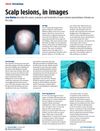 January 2015 in “Independent Nurse”
 Different scalp conditions can lead to hair loss or tumors, with treatments varying from creams to surgery; early detection is crucial.
 January 2014 in “CyberLeninK (CyberLeninka)”
 This article reviews office treatments for common cosmetic issues, including management techniques for benign lesions and procedures for acne scarring and hair loss, but reports no new clinical results.
 April 2010 in “Reactions Weekly”
 A woman's hair loss was likely caused by a cream used for skin treatment and improved after she stopped using it.
May 2007 in “Hair transplant forum international” This abstract suggests that sun damage may thin scalp tissue, potentially affecting hair transplant outcomes due to increased risk of necrosis or poor growth.
 September 2006 in “Dermatologic Surgery”
 This study reported that squamous cell carcinomas of the scalp can be extraordinarily aggressive, potentially metastasizing and causing death, highlighting the need for early diagnosis and careful treatment approaches.
January 2005 in “Digest of the World Core Medical Journals” In this case report, three patients with erosive pustulosis of the scalp showed significant improvement after treatment with oral zinc gluconate and topical steroids.
 July 2003 in “Journal of Cutaneous Medicine and Surgery”
 Some medications can improve skin conditions, while lifestyle factors like smoking and drinking may worsen them; treatments like monoclonal antibodies and imiquimod cream show promise for certain skin diseases.
 July 2002 in “Hair transplant forum international”
 This article suggests expanding the practice of scalp surgery to include general scalp procedures, emphasizing the importance of understanding unique anatomical and surgical principles of the scalp.
January 1995 in “Seoul National University Open Repository (Seoul National University)” This study found that skin sulfhydryl oxidase plays a role in keratinization and may contribute to skin's protective functions, with its expression influenced by irritants and differentiation modifiers.
This article reports a case where a man's hair regrew after treating actinic keratosis with fluorouracil, suggesting a possible unexpected effect of the treatment.