15 citations
,
February 2000 in “Journal of Cutaneous Pathology” This study suggests that the anchorage of the arrector pili muscle to the extracellular matrix is likely mediated by α5β1 integrin, with α1β1 integrin involved in muscle cell-cell adhesion.
 July 2012 in “European journal of cancer”
 This study demonstrated that switching aE-catenin to aT-catenin in murine skin substantially rescued hyperproliferative and pre-cancerous conditions, but led to partial baldness, indicating potential functional discrepancies.
 14 citations
,
March 2014 in “Journal of The American Academy of Dermatology”
14 citations
,
March 2014 in “Journal of The American Academy of Dermatology” In this study, symmetrical acrokeratoderma was observed to frequently occur alongside ichthyosis vulgaris, with no specific therapy available for the condition.
April 2019 in “Journal of Investigative Dermatology”  January 1983 in “Elsevier eBooks”
 This article reviews the discovery and various physiological effects of cyproterone acetate, reporting its established indications for several androgen-driven conditions but providing no new clinical data.
July 2024 in “Journal of Investigative Dermatology” This study found that in mice with alopecia areata, CD8+ T cells showed clonal expansion and specific regulatory networks, which might help identify new therapeutic targets for patients not responding to JAK inhibitors.
 95 citations
,
November 2016 in “Journal of The American Academy of Dermatology”
95 citations
,
November 2016 in “Journal of The American Academy of Dermatology” This article reviews primary cicatricial alopecias, focusing on lymphocytic forms such as chronic cutaneous lupus erythematosus, according to a classification by the North American Hair Research Society, and reports no new clinical results.
January 2025 in “Dermatology Online Journal” The man's hair loss and skin papules were diagnosed as atrichia with papular lesions, not alopecia areata universalis.
May 2025 in “The Journal of Dermatology” This article includes visual documentation of eyebrow morphology during a disease course, but reports no new research findings.
 7 citations
,
January 2018 in “Neurodegenerative Diseases”
7 citations
,
January 2018 in “Neurodegenerative Diseases” This study identified a new clinical variant of adult adrenomyeloneuropathy characterized by hypoplasia and agenesis of the corpus callosum, associated with a novel ABCD1 gene mutation.
June 1985 in “Journal of the American Academy of Dermatology”  July 2024 in “JAAD Case Reports”
 This study reports two cases of central serous chorioretinopathy developing after intralesional corticosteroid injections to the scalp for alopecia areata, suggesting a potential association that warrants cautious use and monitoring for ocular complications.
38 citations
,
April 2016 in “The Journal of Pathology” This study found that mice lacking alkaline ceramidase 1 with elevated skin ceramide levels showed disrupted skin homeostasis, including altered hair follicle structures, increased water loss, and a hypermetabolism phenotype.
September 2026 in “Apollo Medicine” In this case report, researchers observed that a 35-year-old male with alopecia universalis achieved full regrowth of scalp, eyebrow, and facial hair with oral upadacitinib treatment after previous therapies failed to provide lasting relief.
 September 2024 in “Skin Appendage Disorders”
 This case report describes a 21-year-old woman with circumscribed alopecia areata incognita, who experienced a sustained positive response to treatment with oral tofacitinib after conventional treatments frequently failed to provide lasting effects.
 33 citations
,
December 2005 in “Archives of dermatology”
33 citations
,
December 2005 in “Archives of dermatology” This study presents case reports of four patients with alopecia areata or alopecia universalis, highlighting varied responses to treatments like prednisone, intralesional triamcinolone, and squaric acid dibutyl ester.
1 citations
,
November 2018 in “immuneACCESS” This study found that in alopecia areata, treatment with the oral JAK-inhibitor tofacitinib decreased clonally expanded CD8⁺ T cells in the scalp, but many expanded clones did not completely disappear, potentially leading to relapse after stopping treatment.
2 citations
,
November 1955 in “Archives of dermatology” In this report of a pediatric alopecia case, cortisone and ACTH gel treatments did not result in significant nail improvement, but there was considerable scalp hair regrowth.
 May 2026 in “BMC Medicine”
 This study found that ACOD1 deficiency in dermal papilla cells promotes mitochondrial dysfunction and contributes to cellular senescence in androgenetic alopecia, suggesting ACOD1 as a potential therapeutic target and 4-octyl itaconate as a promising treatment option for AGA.
 September 2025 in “Journal of Surfactants and Detergents”
 In this study, shampoos containing sodium lauroyl methylaminopropionate showed superior coacervate formation and lubrication on wet hair, outperforming other amino acid surfactants and suggesting potential for creating low-irritation, high-performance hair products.
February 2023 in “Research Square (Research Square)” In this study, autologous cellular micrografts significantly improved hair parameters in androgenic alopecia patients, showing promise as an effective treatment without dangerous side effects.
43 citations
,
November 2009 in “Archives of dermatology” This study found that alefacept showed no significant improvement in treating severe alopecia areata compared to placebo over a 24-week period.
 14 citations
,
November 2011 in “Journal of The American Academy of Dermatology”
14 citations
,
November 2011 in “Journal of The American Academy of Dermatology” This discussion highlights that alopecia areata incognita is challenging to diagnose and treat, with systemic corticosteroids potentially leading to remission when local treatments fail.
 December 2022 in “Curēus”
 This case report describes a 5-year-old girl with atrichia with papular lesions, whose diagnosis was confirmed through genetic testing identifying mutations in the hairless gene.
 14 citations
,
January 2015 in “Acta dermato-venereologica”
14 citations
,
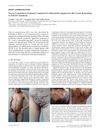
January 2015 in “Acta dermato-venereologica” Acitretin significantly reduced inflammatory attacks in a woman with Naevus Comedonicus Syndrome but caused side effects.
 33 citations
,
January 2009 in “Contraception”
33 citations
,
January 2009 in “Contraception” This review summarizes the use of chlormadinone acetate for hormone replacement therapy and contraception, highlighting its anti-androgenic effects, contraceptive efficacy, and clinical tolerability, without offering new clinical results.
39 citations
,
January 1980 in “Dermatology” In this study, cyproterone acetate with ethinyl estradiol effectively treated acne, hirsutism, and alopecia in women, with the highest success in acne and rare side effects similar to estrogen contraceptives.
December 2017 in “Journal of the Hellenic Veterinary Medical Society” This article reviews canine acrai lick dermatitis, detailing its multifactorial causes and treatments, but does not present new experimental results.
 October 2023 in “Applied materials today”
 In this study, researchers developed a novel TA-encapsulated microneedle applicator that successfully promoted hair growth and reduced inflammation in a C3H/HeJ mouse model of alopecia areata, potentially offering an improved alternative to existing treatments.
69 citations
,
May 2002 in “Journal of Investigative Dermatology” This study suggests that congenital atrichia with papular lesions may be more common than previously thought and proposes diagnostic criteria including the observation of hypopigmented whitish streaks on the scalp.