 March 2025 in “OncoTargets and Therapy”
 This study found that in circulating tumor cells from non-invasive liquid biopsies, the GG genotype of the CYP3A5 A6986G affects longer disease-free survival in DLBCL patients, highlighting the significance of circulating biomarkers for prognostic evaluation.
 February 2025 in “Physician s Journal of Medicine”
 In this review, researchers highlighted that COVID-19 can cause various skin manifestations like maculopapular rashes and "COVID toes," which often precede or appear without respiratory symptoms, suggesting their potential for early detection and prognostic evaluation, especially in severe cases.
In this review, researchers evaluated 111 studies on the biological activities and phytochemical components of the plant Tridax procumbens, emphasizing its ethnobotanical potential and the need for more research to understand its therapeutic benefits, especially in its native tropical regions.
In this case report, a 25-year-old female with Mixed Connective Tissue Disease presented unusual symptoms in a specific geographical region, prompting clinicians to approach diagnosis and management with caution due to potential severe complications such as pulmonary hypertension and renal crisis.
 July 2024 in “Open Repository of the University of Porto (University of Porto)”
 Dutasteride is more effective than finasteride for hair growth, and pregabalin effectively treats neuropathic pain.
 July 2024 in “International Journal of Pharmaceutical Sciences and Medicine”
 This review highlights that Nyctanthes arbor-tristis contains numerous phytochemicals and has traditional uses for various conditions. It also reports pharmacological activities, suggesting potential benefits for diabetes, cancer, inflammation, and more.
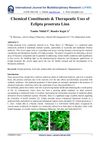 January 2024 in “International Journal For Multidisciplinary Research”
 This review examines existing studies on Eclipta prostrata, highlighting its diverse bioactive compounds and potential therapeutic benefits in traditional medicine, and underscores the need for further research to fully develop its medicinal promise.

This monograph reviews the historical and contemporary use of pomegranate in medicine, detailing its chemical components and applications across various medical fields including oncology, dentistry, and urology.
 December 2023 in “Journal of Science Innovations and Nature of Earth”
 In this animal study on albino rats, researchers reported that Tribulus terrestris extract significantly reduced liver damage markers caused by cyproterone acetate, suggesting a protective effect on liver function against this drug's hepatotoxicity.
 December 2023 in “Bulletin of the Medical Institute of Continuing Education”
 In this study, a hair serum containing Angelica Dahurica extract applied daily for six months was reported to reduce hair loss and improve hair growth and quality in 15 volunteers with androgenic alopecia.
 December 2023 in “Revista de la Facultad de Ciencias Médicas (Quito)”
 This case report describes a 15-year-old female whose initial systemic lupus erythematosus manifestations were fever and rash appearing separately, illustrating diagnostic challenges between SLE and infection.
 November 2023 in “International journal of Ayurveda and pharma research”
 This study prepared and evaluated a polyherbal hair oil using plant-based ingredients, finding that it met standard parameters and effectively addressed hair problems such as growth and dandruff, with FDA approval for clinical use.
 November 2023 in “Klìtinna ta organna transplantologìâ”
 This study reviews the regenerative potential and clinical applications of exosomes derived from mesenchymal stem cells in conditions like COVID-19, alopecia, skin aging, and osteoarthritis, highlighting their role as a promising tool in regenerative medicine.
 June 2023 in “Journal of Ayurvedic and herbal medicine”
 This review article highlights the potential health benefits and pharmaceutical components of pumpkin seeds, which contain proteins, antioxidants, and essential nutrients, and discusses their traditional medicinal uses and emerging applications in the food industry.
 December 2022 in “International Journal of Advanced Research in Science Communication and Technology”
 This review highlights that while traditional cancer treatments like chemotherapy and radiation therapy come with significant side effects, plant-based medicines offer promising anticancer properties with fewer adverse effects, as endorsed by the World Health Organization.
 April 2022 in “Research Square (Research Square)”
 This study found that long COVID symptoms vary over time, with pulmonary symptoms improving the most, while hair loss showed the poorest treatment outcomes and several factors like smoking slowed recovery.
 January 2022 in “Journal Of Biotechnology And Crop Science”
 This review explores the pharmacological effects of Glycyrrhiza glabra, or liquorice, highlighting its antioxidant, anti-inflammatory, antimicrobial, and antiviral properties, but reports no new experimental results.
 April 2021 in “Advances in Cosmetic Surgery”
 Hair restoration can be achieved through non-surgical treatments like minoxidil, antiandrogens, phototherapy, and PRP procedures, or through surgical methods like hair transplantation. Continued treatment is needed to maintain results, and full results are visible after 12-18 months.
 November 2020 in “Journal of Pharmaceutical Sciences”
 This study suggests a decision tree using in vitro metabolic clearance to identify early drug candidates likely to experience nonlinear pharmacokinetics due to intestinal CYP3A-related metabolism.
 January 2020 in “Research Portal Denmark”
 This study concludes that anti-androgenic chemicals causing short anogenital distance in male fetuses also induce a feminized transcriptional profile in the perineum, implicating Wnt and estrogen signaling in the process.
 May 2019 in “Pakistan Journal of Pharmaceutical Sciences”
 This case report presented a female with PCOS treated with metformin who developed hyperuricemia, migraine, neurological and joint pain, and rheumatic fever, later showing a delayed hypersensitivity reaction to benzathine benzyl penicillin treatment.
 January 2019 in “Springer eBooks”
 This review discusses drugs and mechanisms possibly responsible for chemical- and drug-induced hair loss but presents no new research findings.
 July 2017 in “Clin-Alert”
 Different medications can cause serious side effects in some people.
 November 2015 in “Clin-Alert”
 Some medications and supplements can cause serious side effects, including hair loss, heart rhythm problems, liver injury, and other health issues.
 October 2015 in “Elsevier eBooks”
 Aldesleukin can treat certain cancers and increase HIV patient CD4+ counts but often causes severe side effects.
 September 2014 in “Springer eBooks”
 This review discusses the evaluation and management of breast pain, or mastalgia, highlighting non-pharmacologic therapies and the limited role of surgical interventions, but reports no new clinical findings.
 June 2013 in “D-Scholarship@Pitt (University of Pittsburgh)”
 This article discusses the development of an interactive workbook by OCCAM to help cancer patients communicate their use of complementary and alternative medicine with healthcare providers and reports no clinical results.
 August 2012 in “Pharmaceutical Medicine”
 The document concludes that various medications and treatments can have significant, sometimes adverse, effects on health outcomes.
 December 2011 in “The Diabetes Educator”
 This article describes how a new blood glucose management service at the NIH Clinical Center improved safety and patient outcomes for hospitalized patients with diabetes.
 March 2002 in “Clin-Alert”
 In 2002, various drugs caused serious side effects, including vitamin B12 deficiency, heart issues, blindness, hypersexuality, allergic reactions, blood clotting problems, pupil dilation, capillary leak syndrome, muscle breakdown, hepatitis, skin reactions, and lupus.