3 citations
,
September 2021 in “EClinicalMedicine” In this study, ALRV5XR treatment significantly increased terminal hair density in men with androgenetic alopecia after 24 weeks, while also decreasing vellus hair density, and was well tolerated without adverse events, suggesting its potential efficacy over standard therapies.
2 citations
,
September 2022 in “Annals of Oncology” This study observed that MIRV improved gastrointestinal symptoms and other quality of life measures in patients with platinum-resistant ovarian cancer compared to chemotherapy.

This section presents 70 multiple choice questions designed for haematology specialist trainees, covering complex clinical cases and their likely diagnoses, adverse events, and management advice.
5 citations
,
January 2012 in “JBI Library of Systematic Reviews” This review discusses the fermented wheat germ extract Avemar as a potential adjunctive therapy in cancer treatment, noting promising laboratory results, but reports limited human trial evidence for its clinical effectiveness.
 1 citations
,
September 2007 in “European journal of paediatric neurology”
1 citations
,
September 2007 in “European journal of paediatric neurology” Low dose valproic acid treatment caused hair loss in a young patient.
 6 citations
,
April 2013 in “Current Dermatology Reports”
6 citations
,
April 2013 in “Current Dermatology Reports” This review discusses the cutaneous side effects associated with vemurafenib and ipilimumab in metastatic melanoma treatment and emphasizes the importance of dermatologists in managing these skin eruptions; it reports no new clinical results.
 March 2026 in “SHILAP Revista de lepidopterología”
 In this case report, a 30-year-old woman with myasthenia gravis developed vitiligo and alopecia universalis during long-term rituximab therapy, suggesting a rare association between the drug and these immune-mediated skin conditions, highlighting the potential benefit of early intervention with baricitinib.
January 2008 in “Summit (Simon Fraser University)” This article describes viDA Therapeutics Inc.'s focus on developing new drugs for age-related conditions using their proprietary granzyme-based approach but reports no clinical outcomes, primarily discussing their funding and business strategy.
 2 citations
,
January 2020 in “Acta dermatovenerologica Alpina, Pannonica et Adriatica (Tiskana izd.)”
2 citations
,
January 2020 in “Acta dermatovenerologica Alpina, Pannonica et Adriatica (Tiskana izd.)” This article presents two cases of anagen effluvium following oral albendazole use and summarizes previously reported cases, suggesting this side effect may occur with this drug.
 3 citations
,
August 2020 in “Cutaneous and Ocular Toxicology”
3 citations
,
August 2020 in “Cutaneous and Ocular Toxicology” This study demonstrated that adenosine triphosphate may prevent vandetanib-induced skin toxicity in rats, suggesting potential for further research in other animal models and humans.
 6 citations
,
April 2013 in “International Journal of Dermatology”
6 citations
,
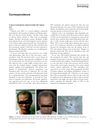
April 2013 in “International Journal of Dermatology” This correspondence article discusses a case of androgenetic alopecia treated with valproic acid but does not present new clinical findings.
 February 1961 in “The Lancet”
 Some new drugs show potential for treating blood cancers but have serious side effects and need more research.
 1 citations
,
April 2019 in “Journal of Investigative Dermatology”
1 citations
,
April 2019 in “Journal of Investigative Dermatology” This study concluded that the topical gel VB1953 reduced inflammatory and non-inflammatory acne lesions and resistant bacteria in patients with clindamycin-resistant acne, showing promise as an effective treatment.
60 citations
,
August 2022 in “ESMO Open” This review discusses managing common and notable adverse events associated with the antibody-drug conjugate trastuzumab deruxtecan in patients with HER2-positive unresectable/metastatic breast cancer and reports no new clinical results.
 2 citations
,
March 2012 in “JAMA”
2 citations
,
March 2012 in “JAMA” Early surgery reduces seizure risk in drug-resistant epilepsy; testosterone to DHT conversion doesn't affect muscle anabolism; veterans with PTSD likely to have riskier opioid use; bevacizumab helps in hereditary bleeding disorder.
 1 citations
,
September 2023 in “Meditsinskiy sovet = Medical Council”
1 citations
,
September 2023 in “Meditsinskiy sovet = Medical Council” In this study involving children with alopecia areata, researchers found that adding narrowband UVB 311 nm therapy to standard treatment significantly improved hair regrowth in those with coexisting atopic dermatitis compared to those without the condition.
107 citations
,
March 2014 in “BoneKEy Reports” This abstract reviews hereditary vitamin D-resistant rickets, a rare genetic condition causing severe early childhood rickets, and reports no new results; effective treatment typically requires high doses of calcium to address hypocalcemia and secondary hyperparathyroidism.
188 citations
,
October 2014 in “Thyroid” This study found that dabrafenib was well tolerated and led to durable responses in patients with BRAF-mutant differentiated thyroid carcinoma, with a median progression-free survival of 11.3 months.
 44 citations
,
September 2015 in “Annals of Oncology”
44 citations
,
September 2015 in “Annals of Oncology” This study reported that targeted anticancer therapies are associated with an increased risk of alopecia compared to placebo, although the risk was lower compared to chemotherapy.
September 2022 in “European Journal of Dermatology” This study identified a novel pathogenic splice-site variant of the LAMB3 gene in patients with junctional epidermolysis bullosa, highlighting the importance of gene sequencing for diagnosis.
January 2023 in “Figshare” This study reported that postmenopausal patients with advanced breast cancer prioritize quality of life, overall survival, and progression-free survival over therapy-related side effects when considering cancer treatment decisions.
 65 citations
,
February 2015 in “Neuro-Oncology”
65 citations
,
February 2015 in “Neuro-Oncology” In this study, four children with recurrent atypical teratoid rhabdoid tumors experienced disease stabilization or regression after treatment with alisertib, suggesting its potential role in future trials for this condition.
50 citations
,
February 2007 in “The Journal of Pathology” This study found a rare germline mutation in the Birt–Hogg–Dubé gene in a Japanese patient with renal cell carcinoma, suggesting distinct biological features and challenging current renal tumor classifications.
January 2024 in “Wiadomości Lekarskie” This pilot clinical study introduces DEC cells as a novel therapy for Duchenne muscular dystrophy, confirming safety and efficacy in seven patients up to 24 months post-treatment.
 9 citations
,
April 2024 in “Cureus”
9 citations
,
April 2024 in “Cureus” This study outlines the features and diagnosis of Vogt-Koyanagi-Harada disease, highlighting its association with specific genes, its prevalence among pigmented races, and treatment with systemic steroids and immunosuppressants.
 28 citations
,
July 2017 in “Expert Review of Anticancer Therapy”
28 citations
,
July 2017 in “Expert Review of Anticancer Therapy” This study found that CDK4/6 inhibitors in hormone-positive metastatic breast cancer were linked to increased risks of fatigue, alopecia, and stomatitis compared to placebo.
This study found that VDAC2 promotes apoptosis in secondary hair follicle stem cells of Albas cashmere goats by activating the P53 signaling pathway, with knockdown of VDAC2 reducing apoptosis and a P53 inhibitor partially rescuing VDAC2-induced apoptosis.
 September 2009 in “European journal of paediatric neurology”
 Biotin supplements did not significantly reduce hair loss in rats on valproic acid.
 June 2011 in “Oncology times”
 This article covers discussions from the Society of Urologic Oncology Annual Meeting outlining that new therapies, such as Provenge, Prostvac, and denosumab, are making the treatment of advanced prostate cancer more complex but may offer extended survival benefits.
 January 2016 in “대한피부과학회지”
 This case report describes two patients experiencing a bortezomib-induced skin eruption as multiple plaques on the trunk, with the lesions resolving spontaneously in about a week.