January 2025 in “Repository of Digital Objects for Teaching Research and Culture (University of Valencia)” This research highlights the potential of non-coding RNAs as biomarkers and therapeutic targets in dermatology, while experimental studies on a unique GVM case suggest CCM2L may modulate disease severity, advancing understanding of genetic mechanisms in rare skin disorders.
 3 citations
,
March 2010 in “Dermatologica Sinica”
3 citations
,
March 2010 in “Dermatologica Sinica” This study reports the first case of atrichia with papular lesions in a Taiwanese family without a detectable mutation in the HR gene.
 July 2024 in “Egyptian Journal of Medical Human Genetics”
 In this case-control study, the researchers found no significant association between IL-4 VNTR intron 3 and TNF-α (rs1799964) gene polymorphisms and alopecia areata susceptibility among the Egyptian population.
 7 citations
,
March 2022 in “Scientific reports”
7 citations
,
March 2022 in “Scientific reports” In this study, researchers found that pigs with genetically disrupted ANTXR1 were resistant to Senecavirus A infection, showing no clinical symptoms, and provided a model for human GAPO syndrome, while confirming ANTXR1 as a receptor for the virus.
30 citations
,
January 2013 in “Human Mutation” This study identified a homozygous frameshift mutation in the HOXC13 gene associated with pure hair and nail ectodermal dysplasia in a consanguineous Syrian family, suggesting crucial roles for HOXC13 in hair and nail development.
 5 citations
,
December 2017 in “The Journal of Dermatology”
5 citations
,
December 2017 in “The Journal of Dermatology” This report describes a unique case of Schöpf–Schulz–Passarge syndrome in a Taiwanese man linked to a previously unreported homozygous WNT 10A mutation, underscoring its role in ectodermal dysplasia.
 28 citations
,
August 2014 in “Journal of Assisted Reproduction and Genetics”
28 citations
,
August 2014 in “Journal of Assisted Reproduction and Genetics” This study found that the VEGF +405G/C polymorphism may be an inheritable risk factor for polycystic ovary syndrome in south Indian women.
 May 2024 in “Animal genetics”
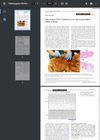
 The researchers investigated a Maine Coon cat with suspected classical Ehlers-Danlos Syndrome and discovered a heterozygous deletion in the COL5A1 gene, underscoring the value of whole-genome sequencing for precise veterinary diagnostics.
18 citations
,
January 2015 in “Experimental Dermatology” This study reports new monilethrix cases in Venezuela, the Netherlands, Belgium, and France, expanding the known mutational spectrum of the disorder with novel mutations in KRT81, KRT83, and KRT86 genes.
4 citations
,
December 2021 in “Journal of clinical laboratory analysis” This study identified a splicing-site deletion in the DCAF17 gene associated with Woodhouse-Sakati syndrome in a large consanguineous pedigree, leading to typical phenotypic features.
14 citations
,
February 1991 in “FEBS Letters” This study found that introducing rat ornithine transcarbamylase gene into spf-ash mice improved liver and intestinal enzyme activity and normalized some metabolic indicators.
This study found that mutations in the PADI3 gene, which is important for hair shaft formation, may contribute to central centrifugal cicatricial alopecia among patients.
January 2018 in “bioRxiv (Cold Spring Harbor Laboratory)” This study found that the mutant hairless rhino bald protein in mice interacts with the vitamin D receptor but cannot repress its transactivation and shows abnormal cellular localization.
 1 citations
,
May 2023 in “Frontiers in endocrinology”
1 citations
,
May 2023 in “Frontiers in endocrinology” The researchers reported that the novel MBTPS2 variant p.Glu172Asp found in a male proband is likely pathogenic, consistent with osteogenesis imperfecta symptoms and molecular signatures, including disrupted fatty acid metabolism and collagen production.
 January 2012 in “Journal of Investigative Dermatology”
 Some Greek melanoma patients have gene mutations linked to increased cancer risk, a new color feature helps diagnose melanoma, the incidence of a skin condition in the Netherlands is rare, and a gene possibly affects male-pattern baldness.
74 citations
,
October 2012 in “The American Journal of Human Genetics” This study found that loss-of-function mutations in the HOXC13 gene cause autosomal-recessive pure hair and nail ectodermal dysplasia, emphasizing its role in hair and nail development.
This study found that GNAQQ209L expression in mouse melanocytes led to reduced survival in the interfollicular epidermis due to paracrine signaling, while GNAQQ209L boosted survival in a different microenvironment.
15 citations
,
June 2019 in “Biochemical Journal” This study identified a heterozygous de novo mutation in the ODC1 gene causing a new disorder characterized by overgrowth and developmental delay, and suggests that DFMO treatment may help manage elevated ODC activity and putrescine levels.
 10 citations
,
November 2017 in “Journal of Investigative Dermatology”
10 citations
,
November 2017 in “Journal of Investigative Dermatology” In this study, researchers identified a novel homozygous variant in the FAM83G gene responsible for autosomal recessively inherited palmoplantar keratoderma with curly hair in a consanguineous Pakistani family, suggesting FAM83G plays a crucial role in skin and hair homeostasis.
3 citations
,
December 2013 in “Balkan Journal of Medical Genetics” This case report highlights the use of microarray analysis to identify cryptic chromosomal rearrangements in a young woman with intellectual disability and multiple congenital anomalies.
 6 citations
,
August 2020 in “JCRPE”
6 citations
,
August 2020 in “JCRPE” This report presents a case of familial male-limited precocious puberty with a novel LHCGR gene mutation, where a boy responded well to treatment with bicalutamide and anastrozole.
 May 2025 in “The FASEB Journal”
 This study concluded that TNFRSF1B is a potential pathogenic factor in androgenetic alopecia, suggesting it as a novel therapeutic target.
412 citations
,
January 1998 in “Science” This study identified a missense mutation in the human hairless gene associated with a rare form of recessively inherited alopecia universalis, pinpointed on chromosome 8p12.
12 citations
,
January 2000 in “Biochemical and Biophysical Research Communications” This study characterized the intron-exon organization of human keratin 15 and keratin 19 genes to aid future mutation detection analyses related to potential genetic disorders of keratinization.
 February 2024 in “BMC genomics”
 This study identified a gene variant in the TRPV3 gene that may explain the suri alpaca phenotype, characterized by longer and less crimped fleece, suggesting this variant's involvement in the development of these hair characteristics compared to the huacaya phenotype.
140 citations
,
October 2008 in “Nature Genetics” 5 citations
,
January 2011 in “Archives de Pédiatrie” This study illustrates the severe neonatal clinical presentation of Netherton syndrome, which can be fatal despite intensive care, highlighting a specific homozygous mutation (c.1431-12G > A) associated with lethal cases.
March 2026 in “Experimental Dermatology” This study developed an in vitro model using NTERT keratinocytes expressing AEC-related TP63 mutations, which replicated skin defects observed in AEC patients and offers a valuable tool for understanding the disorder and developing new treatments.
11 citations
,
February 1982 in “Mutation Research/Fundamental and Molecular Mechanisms of Mutagenesis” This study reports that treatment with X-rays or procarbazine induced dose-dependent mutations in melanocytes in mouse hair follicles, showing similar mutation rates to previous methods.
This study suggests that androgen receptor CAG polymorphisms may not significantly influence androgenetic alopecia susceptibility in Korean men.