 April 2018 in “Journal of Investigative Dermatology”
 This study found that the loss of transcription factor Ovol2 in epidermal and hair follicle stem cells leads to migration defects, which are partially improved by deleting the EMT-inducing Zeb1.
 30 citations
,
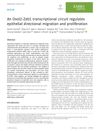
November 2018 in “EMBO Reports”
30 citations
,
November 2018 in “EMBO Reports” This study found that the Ovol2-Zeb1 regulatory circuit is crucial for controlling directional migration and proliferation in epithelial cells, facilitating skin regeneration and repair in mice.
This study found that the Piezo1 ion channel reduces the efficiency of keratinocyte migration, and its inhibition in mice accelerates wound healing.
 11 citations
,
May 2018 in “Philosophical Transactions of the Royal Society B”
11 citations
,
May 2018 in “Philosophical Transactions of the Royal Society B” This review covers recent developments in materials for in vitro and in vivo stem cell manipulation, highlighting innovative substrate properties but does not report new experimental results.
57 citations
,
April 2009 in “Differentiation” This study demonstrates that SDF-1/CXCL12 and CXCR4 signaling play a crucial role in directing the migration and positioning of melanoblasts in mouse hair follicle formation.