 13 citations
,
March 2018 in “Pediatric Dermatology”
13 citations
,
March 2018 in “Pediatric Dermatology” This review describes the clinical characteristics and confirms the diagnosis of short anagen syndrome in the largest reported series to date, comparing it to loose anagen syndrome.
1 citations
,
January 2018 in “Indian dermatology online journal” This case report presents a 14-year-old girl with both type I diabetes and monilethrix, detailing her symptoms and treatment with topical minoxidil, while exploring a possible genetic link between the conditions.
 145 citations
,
November 2017 in “Journal of The European Academy of Dermatology and Venereology”
145 citations
,
November 2017 in “Journal of The European Academy of Dermatology and Venereology” This guideline review by the European Dermatology Forum evaluates current treatments for androgenetic alopecia but reports no new research findings, aiming to assist dermatologists in selecting safe and effective therapies.
 6 citations
,
July 2017 in “Case Reports”
6 citations
,
July 2017 in “Case Reports” This case study describes a 15-year-old girl with progressive hair thinning and reduced hair density at the frontal scalp, with a family history of alopecia.
 40 citations
,
July 2017 in “Frontiers in Medicine”
40 citations
,
July 2017 in “Frontiers in Medicine” This review highlights that in children, hair loss can be attributed to diverse conditions like alopecia areata and tinea capitis, and stresses the importance of a holistic approach to diagnosis and management, including psychosocial support due to limited effective treatments.
 62 citations
,
October 2016 in “Dermatologic Therapy”
62 citations
,
October 2016 in “Dermatologic Therapy” This study found that platelet-rich plasma was more effective for treating alopecia areata than topical 5% minoxidil, leading to earlier hair regrowth and reduction in hair abnormalities.
 47 citations
,
April 2016 in “Lasers in Surgery and Medicine”
47 citations
,
April 2016 in “Lasers in Surgery and Medicine” This review found that low-level laser therapy appears promising in improving hair regrowth and patient satisfaction in androgenetic alopecia, though results should be interpreted cautiously.
 69 citations
,
July 2015 in “Pharmacotherapy”
69 citations
,
July 2015 in “Pharmacotherapy” This study found that low-dose finasteride use in young men was associated with higher reporting of persistent sexual dysfunction, with some cases linked to suicidal ideation.
 13 citations
,
November 2014 in “Pediatric emergency care”
13 citations
,
November 2014 in “Pediatric emergency care” This study reports that the ingestion of a small amount of topical minoxidil by a child resulted in significant intoxication, suggesting the need for enhanced child-resistant packaging.
 51 citations
,
January 2014 in “Pediatric Clinics of North America”
51 citations
,
January 2014 in “Pediatric Clinics of North America” This article examines various types of childhood alopecia and highlights the importance of identifying chronic conditions or those linked to underlying medical issues, but reports no new results.
 4 citations
,
January 2014 in “International Journal of Trichology”
4 citations
,
January 2014 in “International Journal of Trichology” This report presents a 12-year-old male with symptoms indicative of Marie-Unna type hereditary hypotrichosis, characterized by a specific pattern of hair loss evolving with age.
 17 citations
,
October 2013 in “F1000Research”
17 citations
,
October 2013 in “F1000Research” This case report details a 2-year-old boy who developed generalized hypertrichosis after using 5% minoxidil foam for alopecia areata, highlighting the importance of caution and proper administration instructions for young children.
 67 citations
,
January 2013 in “Indian Journal of Dermatology, Venereology and Leprology”
67 citations
,
January 2013 in “Indian Journal of Dermatology, Venereology and Leprology” This review discusses telogen effluvium, a common type of hair loss, focusing on differentiation from other conditions and potential causes, but presents no new research findings.
 6 citations
,
August 2012 in “The Journal of Pediatrics”
6 citations
,
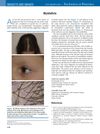
August 2012 in “The Journal of Pediatrics” This case report describes a 12-year-old girl diagnosed with monilethrix, characterized by fragile, beaded hair shafts, with no effective treatment currently available.
 245 citations
,
March 2012 in “Journal of The American Academy of Dermatology”
245 citations
,
March 2012 in “Journal of The American Academy of Dermatology” This review discusses the dermoscopic features of common hair and scalp disorders and reports no new clinical results, aiming to assist dermatologists in diagnosing conditions like tinea capitis and alopecia areata.
 5 citations
,
September 2011 in “Pediatric Dermatology”
5 citations
,
September 2011 in “Pediatric Dermatology” This case report describes androgenetic alopecia in two young siblings, highlighting its occurrence in children and suggesting a possible familial pattern given their mother's similar condition.
12 citations
,
March 2011 in “Pediatric dermatology” This report describes a new case of Marie-Unna hereditary hypotrichosis in an 18-year-old girl, marking the first occurrence in a previously unaffected family.
 53 citations
,
March 2010 in “British Journal of Dermatology”
53 citations
,
March 2010 in “British Journal of Dermatology” This study found that androgenetic alopecia is the leading cause of hair loss in adolescents and may indicate endocrine disorders, emphasizing the need for accurate diagnosis.
 26 citations
,
April 2009 in “Australasian Journal of Dermatology”
26 citations
,
April 2009 in “Australasian Journal of Dermatology” In this study, a 9-year-old girl with female pattern hair loss showed clinical improvement and hair regrowth after six months of daily oral spironolactone.
 1540 citations
,
October 2008 in “Fertility and Sterility”
1540 citations
,
October 2008 in “Fertility and Sterility” This review discusses the definition of polycystic ovary syndrome proposed by the AE-PCOS Society Task Force, emphasizing hyperandrogenism, ovarian dysfunction, and excluding related disorders, while noting potential variations needing more research.
 29 citations
,
August 2008 in “Current Opinion in Pediatrics”
29 citations
,
August 2008 in “Current Opinion in Pediatrics” This review discusses the most common types of alopecia in adolescents and emphasizes the importance of psychosocial support, but reports no new clinical findings.
 18 citations
,
March 2008 in “British Journal of Dermatology”
18 citations
,
March 2008 in “British Journal of Dermatology” This study found that finasteride 1 mg daily decreased 5alpha-dihydrotestosterone levels and improved hair growth in younger men with androgenetic alopecia, with higher initial hormone levels predicting better response.
 142 citations
,
August 2007 in “Journal of The American Academy of Dermatology”
142 citations
,
August 2007 in “Journal of The American Academy of Dermatology” This study found that a new 5% minoxidil foam formulation significantly increased hair counts and improved hair loss condition in men with androgenetic alopecia over 16 weeks compared to placebo.
 58 citations
,
January 2007 in “Dermatology”
58 citations
,
January 2007 in “Dermatology” Minoxidil use in children may cause heart issues.
 35 citations
,
October 2006 in “Journal of Dermatology”
35 citations
,
October 2006 in “Journal of Dermatology” This study outlines the clinical features of androgenetic alopecia in Korean adolescents, finding milder symptoms compared to adults and a high occurrence of family history, with normal hormone levels.
 72 citations
,
March 2005 in “British Journal of Dermatology”
72 citations
,
March 2005 in “British Journal of Dermatology” In this case series, researchers observed androgenetic alopecia in 20 prepubertal children with a strong genetic predisposition, despite the condition typically not occurring before puberty.
 179 citations
,
March 2005 in “British Journal of Dermatology”
179 citations
,
March 2005 in “British Journal of Dermatology” This study found that 88% of women with female pattern hair loss who received oral antiandrogens saw no progression or improvement in their condition.