Isotretinoin-Based Treatment in Patients with Acne: Main Physiological and Psychological Effects
December 2025
in “
International Journal of Research in Dermatology
”
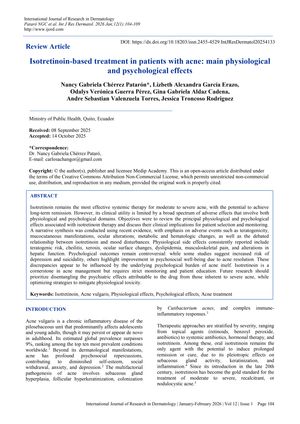
Studysummary This study reviewed isotretinoin's effectiveness in treating moderate to severe acne and discussed the need to balance its robust treatment benefits with careful monitoring due to significant physiological and psychological side effects. Our plain-language summary of this paper — not a Tressless recommendation.
Isotretinoin is highly effective for treating moderate to severe acne, offering potential long-term remission, but its use is limited by significant adverse effects. Physiological side effects include teratogenic risk, cheilitis, xerosis, ocular changes, dyslipidemia, musculoskeletal pain, and hepatic function alterations. The psychological impact is debated, with some studies indicating increased depression and suicidality, while others report improved psychosocial well-being due to acne resolution. These mixed findings may be influenced by the psychological burden of acne itself. Isotretinoin remains essential in acne management, necessitating careful monitoring and patient education. Future research should focus on distinguishing the psychiatric effects of the drug from those related to severe acne and improving strategies to reduce physiological toxicity.