 148 citations
,
March 2022 in “The New England Journal of Medicine”
148 citations
,
March 2022 in “The New England Journal of Medicine” In two phase 3 trials, this study found that oral baricitinib significantly improved hair regrowth compared to placebo in adults with severe alopecia areata after 36 weeks, though longer trials are needed to ascertain its long-term efficacy and safety.
18 citations
,
October 2019 in “European Journal of Dermatology” This article reviews treatment options for pityriasis rubra pilaris but reports no new clinical findings, often noting treatments as unsuccessful.
 12 citations
,
August 2019 in “Dermatitis”
12 citations
,
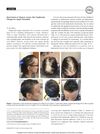
August 2019 in “Dermatitis” This case report describes a 42-year-old woman with atopic dermatitis, whose alopecia areata reactivated rapidly after starting dupilumab, possibly indicating an unrecognized adverse effect in AD patients.
 26 citations
,
July 2019 in “JAAD Case Reports”
26 citations
,
July 2019 in “JAAD Case Reports” This study reports two cases of hair loss outcomes in patients using dupilumab for atopic dermatitis, with one showing improvement in alopecia universalis and another experiencing worsening of alopecia totalis.
 49 citations
,
December 2018 in “Journal of Investigational Allergology and Clinical Immunology”
49 citations
,
December 2018 in “Journal of Investigational Allergology and Clinical Immunology” Dupilumab may cause hair loss in some patients with severe atopic dermatitis.
63 citations
,
July 2018 in “The journal of investigative dermatology/Journal of investigative dermatology” In this review, the researchers reported that JAK inhibitors, originally approved by the FDA for other uses, have shown effectiveness in reversing hair loss in patients with moderate to severe alopecia areata, based on current preclinical and clinical studies.
 53 citations
,
January 2018 in “JAAD case reports”
53 citations
,
January 2018 in “JAAD case reports” This report describes the case of a patient who developed alopecia areata within five weeks of starting treatment for atopic dermatitis with dupilumab.
 290 citations
,
December 2017 in “Journal of The American Academy of Dermatology”
290 citations
,
December 2017 in “Journal of The American Academy of Dermatology” This article reviews the epidemiology, clinical evaluation, and pathogenesis of alopecia areata and highlights recent advancements, but it does not report new clinical findings.
 176 citations
,
August 2015 in “The journal of allergy and clinical immunology/Journal of allergy and clinical immunology/The journal of allergy and clinical immunology”
176 citations
,
August 2015 in “The journal of allergy and clinical immunology/Journal of allergy and clinical immunology/The journal of allergy and clinical immunology” This study identified a distinct cytokine activation signature in alopecia areata, involving TH2, TH1, IL-23, and IL-9/TH9 pathways, suggesting potential targeting strategies similar to those in psoriasis and atopic dermatitis.
701 citations
,
August 2014 in “Nature medicine” This study found that JAK inhibitors promote hair regrowth in both mice and human alopecia areata cases by blocking key immune pathways involved in disease development.
 178 citations
,
December 2011 in “Journal of Dermatological Case Reports”
178 citations
,
December 2011 in “Journal of Dermatological Case Reports” This review discusses the application of trichoscopy in diagnosing various hair and scalp diseases and reports no new clinical results; the authors emphasize its role as a non-invasive diagnostic tool.
717 citations
,
June 2010 in “Nature” This study identified key genetic regions associated with alopecia areata, highlighting both acquired and innate immune involvement, with a novel link to the upregulation of ULBP ligands in autoimmune disease.