1 citations
,
September 2022 in “International Journal of Trichology”
1 citations
,
September 2022 in “International Journal of Trichology” In this case report, a young adult male with resistant alopecia areata showed nearly 90% hair regrowth after 3 months of treatment with tofacitinib, alongside biotin supplementation, without any side effects observed.
 7 citations
,
March 2021 in “Journal of the American Academy of Dermatology”
7 citations
,
March 2021 in “Journal of the American Academy of Dermatology” This study observed that some children and young adults with alopecia areata experienced flares during long-term tofacitinib treatment, despite initial successful hair regrowth.
 11 citations
,
February 2021 in “Journal of Cosmetic Dermatology”
11 citations
,
February 2021 in “Journal of Cosmetic Dermatology” This retrospective pilot study found that oral tofacitinib was more effective in treating alopecia areata than alopecia universalis, but relapses were common after treatment cessation.
13 citations
,
January 2020 in “Acta Dermato Venereologica” Ruxolitinib treatment led to unexpected hair regrowth in a patient with alopecia universalis.
 37 citations
,
September 2018 in “Journal of the American Academy of Dermatology”
37 citations
,
September 2018 in “Journal of the American Academy of Dermatology” This letter reports a series of cases where the use of ruxolitinib at a lower dose than previously studied led to hair regrowth in patients with severe alopecia areata.
 4 citations
,
July 2018 in “PubMed”
4 citations
,
July 2018 in “PubMed” This study reports significant hair regrowth in 11 patients with severe alopecia areata following longstanding treatment with oral tofacitinib and also highlights successful treatment using topical tofacitinib cream in one case.
 130 citations
,
February 2018 in “Journal of Investigative Dermatology”
130 citations
,
February 2018 in “Journal of Investigative Dermatology” This study found that tofacitinib led to ≥50% hair regrowth in eight out of twelve patients with moderate to severe alopecia areata, suggesting a potential benefit for using JAK inhibitors in treating this condition.
 24 citations
,
January 2018 in “International Journal of Trichology”
24 citations
,
January 2018 in “International Journal of Trichology” This study found that oral tofacitinib was effective in promoting hair regrowth in patients with alopecia universalis, although further controlled studies are recommended to confirm its safety and efficacy.
 16 citations
,
January 2017 in “Acta dermatovenerologica Alpina, Pannonica et Adriatica (Tiskana izd.)”
16 citations
,
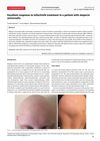
January 2017 in “Acta dermatovenerologica Alpina, Pannonica et Adriatica (Tiskana izd.)” This case study reports that a 23-year-old woman with alopecia universalis experienced complete hair regrowth after six months of treatment with tofacitinib, a JAK-3 inhibitor.
 196 citations
,
September 2016 in “JCI insight”
196 citations
,
September 2016 in “JCI insight” This study explored the effectiveness of the oral JAK1/2 inhibitor ruxolitinib in treating patients with moderate-to-severe alopecia areata, building on prior success with JAK inhibitors in mice, but results are not reported in this abstract.