My dad 61y/o healed from full bald to full head of hair 1/15/2024
A user's 61-year-old father regained a full head of hair after four years on dutasteride for his prostate and five months of weight loss and exercise. The user decided to switch from finasteride to dutasteride and continue exercising, inspired by his father's results.
View this post in the Community →
Similar Community Posts Join
6 / 6 results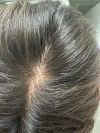
community Early thinning – finasteride 2 weeks in, should I add minoxidil or switch to dut?
The user is experiencing early hair thinning and is currently using finasteride and ketoconazole shampoo. They are considering adding minoxidil or switching to dutasteride for stronger DHT suppression, while also checking for iron deficiency.

community 25M: Hair Thinning Despite 2 Years of Oral Minoxidil & DHT Blocker Use
A 25-year-old is experiencing hair thinning despite using oral minoxidil, finasteride, and dutasteride, and is considering adding topical minoxidil. They also have seborrheic dermatitis and are advised to try ketoconazole shampoo or cream and possibly CBD with MCT oil.
community My case study: DHT serum levels unresponsive to higher topical fin dosages.
The user has been using liposomal topical finasteride since late 2022, progressively increasing the dose, but DHT serum levels remain largely unchanged. Despite using finasteride, minoxidil, microneedling, and ketoconazole, hair condition has neither improved nor worsened.
community If you had to abandon DHT blockers, what’s next?
Users discuss alternatives to DHT blockers for hair loss, suggesting minoxidil, microneedling, natural DHT blockers, and scalp massages. Some explore RU58841, ketoconazole, hair transplants, and hair systems due to side effects from finasteride and dutasteride.
community 23 years old, finasteride, dustasteride and minoxidil, what do I do wrong?
A 23-year-old is struggling with hair loss despite using minoxidil, finasteride, and dutasteride, and is considering increasing the dutasteride dosage. They are advised to try ketoconazole or salicylic acid shampoo for an oily scalp and consider microneedling.
community I aggregated hundreds of hair loss experiences. Here’s what actually shows up.
Finasteride and minoxidil are commonly used for hair loss, with RU58841 and microneedling also showing effectiveness. Oral minoxidil and dutasteride are noted for their impact, while side effects and alternative treatments like ketoconazole and natural DHT blockers are discussed.
Related Research
6 / 6 resultsresearch Addressing Androgenetic Alopecia-A Complex Disorder-with a Multilateral Treatment Strategy
This review discusses recent advancements in understanding the pathophysiology of androgenetic alopecia and highlights the potential for multilateral topical therapies to improve treatment efficacy with fewer side effects; it reports no new clinical results.
research An Update on Hair Restoration
This review discusses techniques for harvesting follicular units, medical treatments for androgenetic alopecia, and potential future advancements in hair restoration therapy, but it reports no new clinical results.
research Managing patterned hair loss – a hair raising task!
This review summarizes existing knowledge on diffuse and patterned alopecia, emphasizing recent advancements in treatment beyond FDA-approved options, but it reports no new clinical findings.
research Androgenetic, Diffuse and Senescent Alopecia in Men: Practical Evaluation and Management
This review discusses the evaluation and management of male baldness and related conditions, but reports no new clinical results.
research Pilot Study of 15 Patients Receiving a New Treatment Regimen for Androgenic Alopecia: The Effects of Atopy on AGA
This pilot study found that a novel regimen including NuH Hair led to significant hair growth in male patients with androgenic alopecia, regardless of atopy status, with quicker results when additional treatment components were used.
research Treat androgenetic alopecia with antiandrogens, as well as other pharmacological and non-pharmacological interventions
This review discusses current treatment options for androgenetic alopecia, noting that most lack robust evidence for efficacy and safety, highlighting the need for more comprehensive studies.