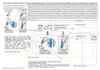
September 2017 in “The journal of investigative dermatology/Journal of investigative dermatology” In this study, the reconstructed skin epidermal model derived from hair follicles showed gene expression and enzyme functionality consistent with native human skin, suggesting its viability for studying skin metabolism and potential toxicity of dermo-cosmetic ingredients.
38 citations
,
June 2018 in “Archives of Toxicology” This review suggests that skin may largely protect itself from CYP-generated reactive metabolites due to higher conjugating enzyme activities, while highlighting limitations in modeling human skin metabolism experimentally.
1 citations
,
August 2020 This study found that Croton membranaceus root extract induced CYP1A2 and GSTM1 enzymes but inhibited CYP3A4 and CYP2D6 in rat livers, suggesting caution in its use with other drugs.
February 2026 in “Toxicology Letters” This study used an in silico/in vitro approach to identify potential inhibitors of the enzyme SRD5A2, finding that the androgen receptor modulator MK-0773 is a moderate inhibitor, although it does not act as a covalent inhibitor like finasteride.
48 citations
,
July 1996 in “Human & Experimental Toxicology” Human enzymes can detoxify harmful substances but might also increase their cancer risk.