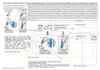
June 2026 in “Immunity Inflammation and Disease” In this study, researchers observed that dandruff involves altered keratinocyte activity and a low-grade inflammatory response characterized by increased interleukin-17-producing T-cells and CCL17 levels, but without significant changes in immune cell populations or skin barrier lipids.
April 2023 in “Journal of Investigative Dermatology” In this study, researchers found that the protein eIF4E is crucial for keratinocyte proliferation in psoriasis, suggesting it as a potential treatment target for the condition.
February 2024 in “International journal of molecular sciences” This study reviews current evidence on the role of ILC3s in the skin, highlighting their potential involvement in responding to microbiome changes such as those associated with acne and suggesting gaps in understanding their mechanisms.
90 citations
,
September 2020 in “Journal of Investigative Dermatology” This study found that increasing the levels of specific microRNAs from the miR-17∼92 cluster improved wound healing in mice by reducing inflammation, suggesting a potential therapeutic approach for chronic wounds.
57 citations
,
March 2021 in “International Journal of Molecular Sciences” This study found that type 2 immunity may play a role in the development of alopecia areata in patients with extrinsic atopic dermatitis, indicating different immunological states compared to non-atopic patients.