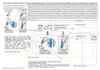
This study found that bovine slick mutations may enhance heat stress responses in mice but do not lead to the expected hair phenotype changes.
In a controlled study, researchers observed that lambs exposed to colder temperatures had increased wool growth, thicker skin, altered physiological traits, and activated specific molecular pathways, highlighting potential targets for enhancing cold tolerance, welfare, and productivity in sheep breeds.
November 2020 in “Journal of animal science/Journal of animal science ... and ASAS reference compendium” This study identified several genetic variants associated with cattle hair coat length, which may help breed more heat-tolerant animals by facilitating efficient heat loss.
2 citations
,
June 2024 in “Frontiers in Plant Science” This study found that RALF peptides, through liquid-liquid phase separation, form condensates with pectin and other proteins, playing a pivotal role in plant development and stress response regulation.
February 2024 in “BMC genomics” This study identified a gene variant in the TRPV3 gene that may explain the suri alpaca phenotype, characterized by longer and less crimped fleece, suggesting this variant's involvement in the development of these hair characteristics compared to the huacaya phenotype.