 April 2015 in “Reactions Weekly”
 Some elderly men had healing problems after using imiquimod and diclofenac for skin conditions on their scalps.
 January 2016 in “Springer eBooks”
 This review discusses medications used in dermatology, detailing their side effects and interactions, and reports no new clinical results.
 October 2014 in “Aktuelle Dermatologie”
 This study reports that elderly men with baldness and comorbid conditions experienced persistent scalp erosions following topical treatment with imiquimod or diclofenac, suggesting alternative therapies should be considered for this group.

This study reported that clascoterone cream reduced inflammatory and noninflammatory acne lesions in a trial with 1440 white males and non-pregnant females, showing it was well tolerated in these participants.
 3 citations
,
March 2019 in “Journal of Pigmentary Disorders”
3 citations
,
March 2019 in “Journal of Pigmentary Disorders” This presentation highlighted future directions in acne care, emphasizing the roles of topical and oral antibiotics, as well as skin microbiome studies. It also described how clascoterone targets androgen receptors in hair follicles and sebaceous glands to reduce sebum production.
 15 citations
,
May 1966 in “The Journal of Urology”
15 citations
,
May 1966 in “The Journal of Urology” This case report discusses an instance of cystitis caused by the chemotherapy drug Cytoxan, with no new findings reported.
 June 2026 in “International Journal of Innovative Technologies in Social Science”
 This source describes clascoterone, a new topical treatment for acne vulgaris that blocks androgen receptors to reduce sebaceous gland activity and inflammation, offering a lower risk of systemic side effects compared to oral treatments.
27 citations
,
October 2020 in “Drugs” This article reviews the development milestones of clascoterone up to its first approval for treating acne vulgaris, reporting no new clinical results for androgenetic alopecia.
 39 citations
,
October 2014 in “Schweizerische medizinische Wochenschrift”
39 citations
,
October 2014 in “Schweizerische medizinische Wochenschrift” This study found that while cyclophosphamide remains effective for severe autoimmune conditions, it is associated with gastrointestinal side effects, infections, some cases of irreversible amenorrhoea, and a higher risk of malignancies, emphasizing the need for long-term monitoring.
 11 citations
,
November 2020 in “bioRxiv (Cold Spring Harbor Laboratory)”
11 citations
,
November 2020 in “bioRxiv (Cold Spring Harbor Laboratory)” This study observed that early treatment with azithromycin and either nitazoxanide, ivermectin, or hydroxychloroquine in COVID-19 patients may reduce viral shedding, symptom duration, and respiratory complications compared to untreated patients.
 1 citations
,
October 2018 in “Infectious diseases in clinical practice”
1 citations
,
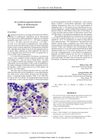
October 2018 in “Infectious diseases in clinical practice” This case report documents what may be the second reported instance of azithromycin-induced agranulocytosis, highlighted by a sudden drop to zero in absolute neutrophil count in a 67-year-old man.
This abstract lists numerous dermatological side effects and reactions associated with various medications but reports no new research findings.
4 citations
,
July 2022 in “Clinical Cosmetic and Investigational Dermatology” This review discusses the clinical trials of clascoterone 1% cream for acne vulgaris and reports no new results; the authors highlight its novel role as a topical antiandrogen.
 August 2019 in “Reactions Weekly”
 Daclizumab may cause psoriasis-like skin problems in multiple sclerosis patients.
 16 citations
,
November 2020 in “Research Square (Research Square)”
16 citations
,
November 2020 in “Research Square (Research Square)” In this study, early treatment with nitazoxanide, ivermectin, or hydroxychloroquine, combined with azithromycin, was associated with reduced hospitalizations, respiratory complications, and deaths in early-stage COVID-19 patients compared to untreated controls.
 September 2024 in “Revista Científica de Salud BIOSANA”
 This systematic review explored the potential of cetirizine, an anti-inflammatory antihistamine, as a complementary treatment for androgenetic alopecia, reporting that it might help prevent hair follicle miniaturization by reducing inflammation and modulating immune activity, without notable side effects.
 October 2025 in “Archives of Clinical Toxicology”
 This commentary highlights that cetirizine, a widely-used antihistamine, remains effective for various emerging allergic conditions, and new formulations and combination therapies may enhance its effectiveness while being generally well-tolerated.
6 citations
,
July 2025 in “Cancer Medicine” This study reported that ZSYY001, a nanoparticle formulation of polymeric micellar paclitaxel, showed promising antitumor activity and was safe and well-tolerated in preclinical models and a phase I trial, without acute hypersensitivity reactions at doses up to 390 mg/m².
 21 citations
,
September 2010 in “Archives of Dermatology”
21 citations
,
September 2010 in “Archives of Dermatology” This document provides a legal disclaimer and offers no research findings.
April 2026 in “Therapeutic Advances in Drug Safety” This study developed a new clustering model to improve detection of drug-induced cognitive disorder risk signals, finding that it identified drugs with moderate risk signals, like Carbidopa/Levodopa, missed by traditional methods, enhancing clinical assessment comprehensiveness.
 March 2025 in “Pediatric Rheumatology”
 This study found that clinicians frequently prefer cyclophosphamide over rituximab for induction therapy of childhood-onset systemic lupus erythematosus and ANCA-associated vasculitis, following a high-dose regimen recommended by the NIH.
7 citations
,
December 2022 in “Skin Appendage Disorders” This study found that among anti-TNF-α agents, certolizumab is the least likely to cause paradoxical reactions such as psoriatic alopecia and appears to be an effective and safe option for managing psoriasis and PsA while minimizing these risks.
 9 citations
,
April 2021 in “Expert opinion on pharmacotherapy”
9 citations
,
April 2021 in “Expert opinion on pharmacotherapy” This review highlights that clascoterone, a newly FDA-approved topical androgen antagonist, effectively reduces both non-inflammatory and inflammatory acne lesions with no systemic effects, making it a promising new option for acne treatment in both male and female patients.
13 citations
,
April 2019 in “International journal of molecular sciences” This article reviews the potential of Acyzol, a zinc-containing drug, to treat and prevent zinc deficiency conditions, but it reports no new clinical findings.
11 citations
,
July 2014 in “Clinical Rheumatology” This study found that Chinese female patients with systemic autoimmune diseases treated intravenously with cyclophosphamide were more likely to experience gastrointestinal discomfort, myelosuppression, and alopecia.
2 citations
,
October 2020 in “Journal of Pharmacy And Bioallied Sciences” This study reviewed existing literature on chloroquine and hydroxychloroquine's safety and efficacy in COVID-19 management, finding mixed clinical evidence and highlighting the need for more rigorous trials to determine their potential role in treatment.
 August 2009 in “Australian Prescriber”
 This article discusses dutasteride, a new drug for managing benign prostatic hyperplasia, and highlights the need for further experience to confirm its safety and efficacy.
 October 2024 in “Iraqi postgraduate medical journal”
 This study conducted at Baghdad Teaching Hospital found that topical applications of Ciprofloxacin and Clindamycin effectively reduced acne severity indices in patients with mild to moderate acne vulgaris over 12 weeks, with Ciprofloxacin showing a greater reduction in papules and pustules compared to Clindamycin.
51 citations
,
July 2003 in “Annals of the Rheumatic Diseases” This case study reports a successful use of co-trimoxazole in treating a 13-year-old girl with symptoms suggestive of autoimmune disorders and relapsing polychondritis.
5 citations
,
August 1998 in “PubMed” In this case study, intravenous cyclophosphamide pulse therapy effectively improved symptoms of steroid-resistant lupus cystitis and peritonitis, allowing for a reduction in steroid dosage.