 19 citations
,
April 2010 in “Journal of Dermatological Treatment”
19 citations
,
April 2010 in “Journal of Dermatological Treatment” This study found that partial follicular units extracted from the donor area can survive and regenerate new hairs at their original site and when transplanted, effectively creating two hair follicles from one.
1 citations
,
March 2022 in “Journal of biological chemistry/The Journal of biological chemistry” This study found that HIF-P4H-2 function in FoxD1-lineage cells is crucial for normal hair follicle development and homeostasis in mice, implicating disrupted HIF, TGF-β, and Notch signaling pathways in associated defects.
 December 2023 in “Facial Plastic Surgery”
 This review discusses the widespread appeal and misconceptions associated with follicular unit excision in hair restoration surgery and reports no new clinical results; it highlights the technique's challenges and necessity for skilled execution.
19 citations
,
April 2013 in “Drug Development and Industrial Pharmacy” This study highlights the significance of the hf pathway for the skin permeation of ionized and hydrophilic high molecular compounds, and the usefulness of hf-plugging in evaluating their skin permeability.
November 2025 in “Physics of Fluids” In this study, low-intensity ultrasound was investigated as a noninvasive method for promoting hair regrowth in androgenetic alopecia using C57BL/6 male mice, revealing that specific frequencies and intensities can safely enhance hair regrowth compared to controls by optimizing mechanical effects without causing unsafe cavitation.
 September 2017 in “Journal of Dermatology & Cosmetology”
 This study reports a case of frontal fibrosing alopecia associated with hepatitis C treatment involving interferon and ribavirin.
1 citations
,
January 2001 in “Acta Archaeologica Academiae Scientiarum Hungaricae” This review details the Follicular Unit Extraction technique for hair restoration, highlighting its advantages over traditional strip surgery, but includes no new clinical findings.
 September 2024 in “Cermin Dunia Kedokteran”
 This research discusses Fahr syndrome, highlighting its association with abnormal brain calcifications and varied clinical symptoms in young to middle-aged adults. Diagnosis involves specific criteria and CT scans, but no specific treatment exists; therapy focuses on managing symptoms and underlying conditions.
 4 citations
,
January 2012 in “International Society of Hair Restoration Surgery”
4 citations
,
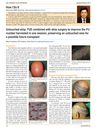
January 2012 in “International Society of Hair Restoration Surgery” This article discusses the importance of accepting both strip and FUE techniques for hair restoration, without asserting the superiority of one method over the other.
 July 2008 in “Journal of the Islamic Medical Association of North America”
 This conference abstract outlines topics discussed at the International Conference of the Islamic Medical Association of North America and reports no new results.
November 2025 in “Turkish Journal of Dermatology” This study found that both follicular unit transplantation (FUT) and follicular unit extraction (FUE) are safe and effective for female pattern hair loss, with FUE offering broader indications and higher patient satisfaction.
 January 2015 in “Hair transplant forum international”
 This snippet mentions an increase in women seeking surgical hair restoration and subsequently encountering more cases of frontal fibrosing alopecia, but the abstract doesn't contain results or conclusions.
 9 citations
,
January 2015 in “Current problems in dermatology”
9 citations
,
January 2015 in “Current problems in dermatology” This review discusses partial longitudinal-follicular unit transplantation (PL-FUT) for hair loss and notes its potential to multiply hair follicles while preserving donor areas, but reports no new clinical results.
 January 2014 in “Plastic Surgery”
 In this study, the authors describe a new technique using the Ventralex hernia patch for simultaneous umbilical hernia repair during abdominoplasty, observing its application in 11 female patients.
 1 citations
,
May 2021 in “International Journal of Dermatology”
1 citations
,
May 2021 in “International Journal of Dermatology” This article presents the surgical technique of long hair follicular unit excision (FUE) in hair transplantation and reports procedural and outcome data for 134 patients, without evaluating clinical outcomes.
5 citations
,
October 2022 in “Materials Research Express” This study found that zinc oxide and fucoidan-loaded chitosan nanofiber scaffolds may enhance wound healing and provide antibacterial protection against common surgical pathogens in vitro.
 1 citations
,
January 2021 in “Journal of biological chemistry/The Journal of biological chemistry”
1 citations
,
January 2021 in “Journal of biological chemistry/The Journal of biological chemistry” This study found that loss of the folliculin protein delays transferrin receptor recycling, leading to iron deficiency and suggesting a role in the mechanisms of Birt-Hogg-Dubé syndrome.
 17 citations
,
September 2010 in “Pediatric dermatology”
17 citations
,
September 2010 in “Pediatric dermatology” This report describes a case of widespread Porokeratotic eccrine and hair follicle nevus in a 15-year-old woman with keratitis-ichthyosis-deafness syndrome, involving both eccrine ostia and hair follicle infundibula.
1 citations
,
December 2024 in “Journal of Maxillofacial and Oral Surgery” FUE is better than FUT for mustache reconstruction in cleft lip patients.
November 2014 in “International Society of Hair Restoration Surgery” This announcement explains the Fellow designation for hair restoration surgeons meeting specific educational criteria, without reporting new research findings.
 15 citations
,
June 2006 in “Journal of Plastic Reconstructive and Aesthetic Surgery”
15 citations
,
June 2006 in “Journal of Plastic Reconstructive and Aesthetic Surgery” This study found that follicular unit transplantation using specific techniques may improve the natural appearance of transplanted hair in patients with male-pattern hair loss.
 August 2024 in “Journal of Renal Injury Prevention”
 This study describes a new method for assisting ureteral catheterization in challenging male patients, utilizing a Foley catheter mounted on a ureteroscope, which the authors found simple, effective, and promising where traditional methods fail.
7 citations
,
August 2023 in “Dermatologic Surgery” In this study, researchers reported that a new skin-responsive FU excision device consistently succeeded in all patients of African descent, showing a mean graft transection rate of less than 10%, with skin thickness and firmness identified as major factors affecting graft attrition rate.
 15 citations
,
September 2016 in “Hair transplant forum international”
15 citations
,
September 2016 in “Hair transplant forum international” This abstract reviews the evolution of hair restoration techniques, from 19th-century surgical scalp flaps to modern FUE and FUT methods, without providing new clinical findings.
11 citations
,
January 2025 in “Marine Drugs” This review highlights the need for standardized reporting on fucoidan extract properties to better understand the relationships between chemical structures and bioactivities, and to improve the quality and utility of fucoidan-related data.
 March 2024 in “Revista Argentina de de Cirugía Plástica Estética y Reparadora”
 In this study, researchers describe the FUE method of hair micrografting, which involves extracting and implanting follicular units using advanced tools, leading to more natural results, quicker recovery, and less damage to donor sites.
 January 2026 in “Frontiers in Pharmacology”
 This study demonstrated that SHFKO significantly accelerated healing in acute radiation-induced skin injuries, with mechanisms involving apoptosis inhibition, suppression of inflammation, and restoration of ROS balance, suggesting its potential as a novel multi-target therapy for radiodermatitis.
1 citations
,
July 2024 in “Australasian Journal of Ultrasound in Medicine” In this study, researchers reported that cutaneous ultrasound may be a valuable tool in diagnosing and assessing inflammatory activity in tinea capitis, potentially guiding treatment decisions, especially in severe cases not apparent through clinical symptoms alone.
April 2010 in “The FASEB Journal” This study found that knockout mice lacking intestinal hephaestin are smaller and anemic compared to wild-type, suggesting other mechanisms may compensate for iron absorption.
 March 2026 in “Berkala Ilmu Kesehatan Kulit dan Kelamin”
 In this observational study of medical students at the University of Muhammadiyah North Sumatra, no significant link was found between wearing headscarves and experiencing hair loss.