 2 citations
,
May 2022 in “Clinical, Cosmetic and Investigational Dermatology”
2 citations
,
May 2022 in “Clinical, Cosmetic and Investigational Dermatology” This study reports that quantitative trichoscopy, while noninvasive and convenient, provides less accurate hair density data compared to invasive histopathologic examination, which was demonstrated in a sample of adult Chinese individuals without alopecia.
 46 citations
,
April 2009 in “Journal of Dermatological Case Reports”
46 citations
,
April 2009 in “Journal of Dermatological Case Reports” This study established standard trichoscopy norms for adult white females, providing benchmarks for hair thickness, percentage of thin hairs, and pilosebaceous units with single hair across different scalp areas.
1 citations
,
June 2016 in “Medicina” This article reviews monilethrix, a rare genetic hair disorder causing brittle hair and alopecia, and emphasizes the need for clinical diagnosis and characteristic tricoscopic findings.
December 2025 in “Al-Azhar International Medical Journal /Al-Azhar International Medical Journal” This study compared the diagnostic effectiveness of Folliscope and Trichoscope in 100 men with androgenetic alopecia, concluding that using both methods enhances diagnostic accuracy by providing complementary insights—Trichoscope highlights patterns while Folliscope offers objective measurements.
17 citations
,
September 2009 in “British Journal of Dermatology” This study suggests that clinically apparent fragile hair in children is rarely linked to trichothiodystrophy, and the tiger-tail pattern is not wholly specific to this diagnosis.
April 2023 in “Dohuk medical journal” This review discusses the use of trichoscopy for diagnosing alopecia and reports no new clinical results, emphasizing its role in identifying vascular and follicular features.
 April 2026 in “Research Square”
 In this study, trichoscopic examination revealed that variations in hair diameter were more common in certain types of alopecia affecting the frontal scalp, suggesting the importance of evaluating the entire scalp for accurate diagnoses, although limitations include a single center design and small sample size.
 April 2017 in “Journal of Investigative Dermatology”
 In this study, deep phenotyping of 68 patients with XPD gene defects successfully separated individuals by clinical diagnosis and survival status, potentially improving diagnosis and prognosis for xeroderma pigmentosum and trichothiodystrophy.
 May 2022 in “Experimental dermatology”
 In this study, hair shafts from trichothiodystrophy patients with ERCC2 mutations revealed abnormal cuticle structures and protein imbalances compared to normal hair shafts.
 August 2017 in “Journal of evolution of medical and dental sciences”
 In this study, researchers evaluated trichoscopy in diagnosing non-scarring alopecia and found diagnostic value in observing diverse hair diameters in androgenetic alopecia, black dots and broken hairs in alopecia areata, and empty follicles in telogen effluvium, supporting trichoscopy's utility in differentiating alopecia types.
 January 2026 in “Forum Dermatologicum”
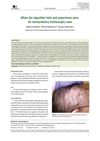
 This case study examined a 72-year-old woman with unique hair shaft constrictions consistent with monilethrix, despite features atypical for this condition, ultimately reaching a diagnosis that led to successful improvement using oral minoxidil and reduced hair trauma.
10 citations
,
August 2007 in “Journal der Deutschen Dermatologischen Gesellschaft” Individualized treatment plans are crucial for managing excessive hair growth.
December 2021 in “IP Indian journal of clinical and experimental dermatology” In this study, trichoscopy was identified as a useful non-invasive tool to aid in the diagnosis of female pattern hair loss, with peri pilar sign and hair diameter variability being common findings.
 April 2025 in “International Journal For Multidisciplinary Research”
 This study explores hypertrichosis, a condition of excessive hair growth, highlighting its classification, diagnostic methods, and potential treatments. The authors emphasize the importance of individualized approaches and further genetic research to enhance treatment options for this primarily cosmetic issue that can signal systemic diseases.
 January 2019 in “The Egyptian Journal of Hospital Medicine”
 In this study, researchers evaluated trichoscopic features in 500 Egyptian patients with patchy hair loss and found specific patterns, such as perifollicular scale with 90% sensitivity and 99.5% specificity, which effectively aid in diagnosing primary cicatricial alopecias.
 3 citations
,
December 1962 in “Australasian Journal of Dermatology”
3 citations
,
December 1962 in “Australasian Journal of Dermatology” The current state and future directions of the field that studies the connection between the mind and skin are discussed.
87 citations
,
August 1974 in “Journal of Investigative Dermatology”  14 citations
,
February 2017 in “Anais brasileiros de dermatologia/Anais Brasileiros de Dermatologia”
14 citations
,
February 2017 in “Anais brasileiros de dermatologia/Anais Brasileiros de Dermatologia” This case report described a 12-year-old girl initially misdiagnosed with alopecia areata who showed improvement in trichotillomania symptoms after treatment with psychotropic drugs and N-acetylcysteine, highlighting the need for more research to develop standardized treatment guidelines for this chronic condition.
35 citations
,
September 2011 in “The Journal of Dermatology” This article discusses the trichoscopic diagnosis of temporal triangular alopecia, but reports no new clinical results.
 26 citations
,
September 2016 in “International Journal of Dermatology”
26 citations
,
September 2016 in “International Journal of Dermatology” This study aimed to identify trichoscopic features that help differentiate between tinea capitis and alopecia areata in children, enhancing diagnosis and treatment decisions visually and non-invasively.
January 2026 in “Surgical & Cosmetic Dermatology”  April 2016 in “Journal of The American Academy of Dermatology”
 Different treatments are effective for hair loss conditions, but results vary by individual factors.
40 citations
,
November 1966 in “Archives of Dermatology” This study found that trichorrhexis nodosa, a cause of unexplained hair loss, is often linked to mechanical trauma rather than a metabolic defect.
 August 2021 in “Acta medica Philippina”
 This case study highlights how trichoscopy helped differentiate between diffuse alopecia areata and trichotillomania in an 11-year-old girl, demonstrating its importance in distinguishing hair disorders with similar presentations.
January 2008 in “International Journal of Trichology” This paper examines three case studies of hair disorders through the lens of analytical psychology, suggesting that psychological factors and symbolic meanings may contribute to their onset and persistence.
 May 2024 in “Actas dermo-sifiliográficas/Actas dermo-sifiliográficas”
 This review outlines current treatment strategies for trichotillomania, noting cognitive-behavioral therapy's success, while highlighting the promise and limitations of various pharmacological options.
1 citations
,
August 2023 in “Clinical Cosmetic and Investigational Dermatology” This study found that exclamation mark hairs are the only trichoscopic feature that can differentiate clinically suspicious SA from AA.
7 citations
,
November 1997 in “Pediatric Dermatology” This case report identifies an association between trichothiodystrophy and a urologic malformation with primary hypercalciuria, adding to the spectrum of TTD-related abnormalities.
 24 citations
,
March 2009 in “Journal of the European Academy of Dermatology and Venereology”
24 citations
,
March 2009 in “Journal of the European Academy of Dermatology and Venereology” This paper highlights trichodynia as a distinguishing symptom of telogen effluvium, but it does not present new clinical findings.
 8 citations
,
January 2020 in “International Journal of Trichology”
8 citations
,
January 2020 in “International Journal of Trichology” The authors concluded that trichoscopy is a valuable noninvasive tool for diagnosing and monitoring nonscarring alopecia, aiding in the identification of new hair signs in difficult cases.