 March 2021 in “CRC Press eBooks”
 This chapter reviews trichoscopic features of primary cicatricial alopecias, particularly lichen planopilaris and frontal fibrosing alopecia, and reports no new results.
7 citations
,
March 2020 in “Journal of the American Academy of Dermatology” This study observed that trichoscopic changes associated with EGFRI treatment include pili torti and asymmetric hyperpigmented fusiform widening, along with dermoscopic skin manifestations such as scale and branching vessels.
 February 2026 in “Frontiers in Medicine”
 This study found that oral minoxidil was associated with short-term improvements in clinical severity for androgenetic alopecia, whereas oral dutasteride did not show significant early clinical changes in the six-month follow-up.
3 citations
,
May 2024 in “Skin Appendage Disorders” This study observed that trichoscopy of long-lasting lesions in a chronic stage revealed specific features such as absence of follicular openings, cicatricial patches, and thick arborizing vessels.
 December 2025 in “IP Indian Journal of Clinical and Experimental Dermatology”
 Hair shaft disorders often indicate genetic or systemic issues and are managed by minimizing damage.
 November 2021 in “Austin therapeutics”
 This review discusses the impact of chemotherapy-induced alopecia on cancer patients, the current use of scalp cooling for prevention, and potential future treatments, but presents no new clinical results.
 40 citations
,
December 2014 in “Indian Journal of Dermatology”
40 citations
,
December 2014 in “Indian Journal of Dermatology” This study found that trichoscopy can effectively differentiate scalp psoriasis from seborrheic dermatitis by identifying specific trichoscopic patterns such as hidden hairs, signet ring vessels, and comma vessels.
 July 2025 in “Journal of the European Academy of Dermatology and Venereology”
 In this study, experts propose a diagnostic and treatment guideline for folliculitis decalvans, emphasizing the role of trichoscopy and introducing a therapeutic algorithm tailored to disease activity, which is significant for clinical management given the lack of specific clinical trials.
 January 2015 in “Hair therapy & transplantation”
 This review updates on various methods for hair and scalp examination, encompassing non-invasive, semi-invasive, and invasive techniques, and reports no new results.
 June 2024 in “Annals of Medicine and Surgery”
 This case report highlights the rare co-occurrence of Pili Annulati and Trichorrhexis Nodosa in a Syrian woman, underlining the need for further research into their relationship and treatment.
 January 2018 in “Journal of clinical and investigative dermatology”
 This study evaluated dermoscopic findings in patients with different types of primary cicatricial alopecias, suggesting trichoscopy may aid in differential diagnosis by revealing abnormalities in scalp structures.
1 citations
,
June 2016 in “Medicina” This article reviews monilethrix, a rare genetic hair disorder causing brittle hair and alopecia, and emphasizes the need for clinical diagnosis and characteristic tricoscopic findings.
 July 2026 in “Vestnik dermatologii i venerologii”
 Among women with androgenetic alopecia, this study observed that using Jet Peel™ with JetCare® serum led to significant trichoscopic changes, high satisfaction, and good safety after five weeks, suggesting it as a viable additional treatment option.
 July 2026 in “Pharmacological Reports”
 In this pilot study, topical latanoprost acid was observed to increase hair count and improve hair follicle structure in women with androgenetic alopecia, with no serious adverse events, suggesting potential for further investigation to confirm its efficacy and safety.
February 2025 in “Skin Research and Technology” This study highlights the potential of novel non-invasive testing techniques to enhance the diagnosis, treatment, and care of scalp hair diseases, urging future research to improve their accuracy and efficiency.
 February 2023 in “International Journal of Medical Arts”
 In this study, 75% of alopecia areata patients showed improvement after treatment with 35% trichloroacetic acid, leading the researchers to conclude it is a safe and effective option for treating this condition.
 September 2017 in “Journal of Investigative Dermatology”
 This study found that infrared thermography might be a useful non-invasive tool to help diagnose frontal fibrosing alopecia by identifying active phases of the disease.
 28 citations
,
August 2018 in “Dermatologic Clinics”
28 citations
,
August 2018 in “Dermatologic Clinics” This article discusses various aspects of trichoscopy for diagnosing hair and scalp disorders and reports no clinical results, offering guidance and highlighting pitfalls for better application of this tool by dermatologists.
 2 citations
,
July 2018 in “Elsevier eBooks”
2 citations
,
July 2018 in “Elsevier eBooks” This article discusses the uses and techniques of trichoscopy for hair and scalp disorders and reports no new clinical results.
 42 citations
,
June 2012 in “Clinical and Experimental Dermatology”
42 citations
,
June 2012 in “Clinical and Experimental Dermatology” This study found that 'black dots' seen under trichoscopy are not specific to alopecia areata and may occur in various other hair and scalp conditions.
 13 citations
,
October 2017 in “Anais Brasileiros de Dermatologia”
13 citations
,
October 2017 in “Anais Brasileiros de Dermatologia” This review highlights the occurrence of yellow dots, a trichoscopic finding, in several scalp conditions beyond alopecia areata and reports no new clinical results.
 6 citations
,
January 2015 in “Dermatology”
6 citations
,
January 2015 in “Dermatology” This review covers trichoscopy's role in diagnosing scalp disorders, emphasizing its potential to improve clinical accuracy, but it reports no new clinical results.
 15 citations
,
November 2016 in “Journal of The American Academy of Dermatology”
15 citations
,
November 2016 in “Journal of The American Academy of Dermatology” This article discusses the potential of trichoscopy in diagnosing and treating dissecting cellulitis of the scalp and emphasizes the need for early diagnosis to prevent progression but reports no new clinical results.
 1 citations
,
March 2014 in “Turkderm”
1 citations
,
March 2014 in “Turkderm” Trichoscopy helps tell different hair loss types apart using specific scalp and hair patterns.
 96 citations
,
January 2013 in “International Journal of Trichology”
96 citations
,
January 2013 in “International Journal of Trichology” This article reviews the use of trichoscopy for diagnosing various types of alopecia and reports no new clinical results; it is suggested as a non-invasive method for diagnosis and monitoring treatment responses.
 42 citations
,
October 2012 in “Dermatologic Clinics”
42 citations
,
October 2012 in “Dermatologic Clinics” This article reviews the use of trichoscopy for diagnosing common hair and scalp diseases and introduces a new classification for specific skin surface abnormalities, without presenting new clinical results.
 32 citations
,
January 2014 in “Dermatology Research and Practice”
32 citations
,
January 2014 in “Dermatology Research and Practice” This study found that trichoscopy can rapidly and noninvasively diagnose tinea capitis and alopecia areata in pediatric patients by identifying specific hair patterns associated with each condition.
 30 citations
,
March 2015 in “Journal of Dermatology”
30 citations
,
March 2015 in “Journal of Dermatology” This study found that certain trichoscopic features like white peripilar sign, yellow dots, and scalp pigmentation are positively correlated with the severity of androgenetic alopecia in Chinese patients.
 6 citations
,
January 2016 in “JAMA Dermatology”
6 citations
,
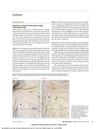
January 2016 in “JAMA Dermatology” This article discusses the presence of dirty dots as a normal trichoscopic finding in children, noting they are not observed in adults or other age groups, and reports no new results.
 4 citations
,
February 2020 in “Journal of Cosmetic Dermatology”
4 citations
,
February 2020 in “Journal of Cosmetic Dermatology” This study found that androgenetic alopecia was the most common cause of frontal hairline recession in Egyptian female patients, supporting the use of trichoscopy as a noninvasive diagnostic tool.