1 citations
,
August 2010 in “Journal of dermatology” This study found that photoepilation using intense pulsed light significantly reduced hair growth parameters, and phototrichograms may offer an objective method to evaluate its effectiveness.
 30 citations
,
April 2009 in “Dermatologic Surgery”
30 citations
,
April 2009 in “Dermatologic Surgery” This study found that miniaturization of hair is present in some women with androgenetic alopecia, but diagnosis may also be based on differences in hair shaft diameter between scalp regions.
September 2024 in “Journal of the American Academy of Dermatology” 35 citations
,
September 2003 in “Archives of dermatology” This study proposed that the tiger tail phenomenon in trichothiodystrophy hair is caused by regular undulations of hair fibers, altering the optical properties seen under polarized light.
 26 citations
,
September 2016 in “International Journal of Dermatology”
26 citations
,
September 2016 in “International Journal of Dermatology” This study aimed to identify trichoscopic features that help differentiate between tinea capitis and alopecia areata in children, enhancing diagnosis and treatment decisions visually and non-invasively.
 June 2026 in “Indian Journal of Dermatology Venereology and Leprology”
 In this study, researchers found significant associations between trichoscopic features and the severity of androgenetic alopecia in Korean participants, suggesting trichoscopy as a useful tool for early detection and monitoring by identifying indicators like vellus hairs and follicular unit changes.
 22 citations
,
May 2002 in “Skin Research and Technology”
22 citations
,
May 2002 in “Skin Research and Technology” This study found that in male androgenetic alopecia, the contrast enhanced phototrichogram technique was superior in detecting changes in hair density and thickness compared to other methods.
 March 2021 in “CRC Press eBooks”
 This review discusses the various trichoscopic features of androgenetic alopecia and alopecia areata, noting white dots in advanced cases as indicators of poor prognosis, but reports no new clinical results.
 1 citations
,
October 2022 in “Asian journal of medical sciences”
1 citations
,
October 2022 in “Asian journal of medical sciences” This study found trichoscopy to be a highly sensitive, non-invasive method for diagnosing tinea capitis in children, which could be valuable in resource-limited settings lacking mycological culture facilities.
January 2020 in “Revista Dermatológica Centro Uraga” This article describes how recognizing distinct trichoscopic features aids in diagnosing various dermatological conditions and hair loss, but it reports no new clinical findings.
 July 2023 in “Dermatology practical & conceptual”
 This study developed a support vector machine model using trichoscopic patterns to accurately classify androgenic alopecia severity, with an accuracy of 94.3% in training and 90.0% in test datasets.
 September 2016 in “Journal of The American Academy of Dermatology”
 This case study identified the condition as Monilethrix in a 17-year-old female, characterized by a beaded hair appearance and linked to a genetic cause.
In this hospital-based observational study involving 30 participants, researchers found no statistically significant difference in the force needed to pluck anagen versus telogen hair in the frontal and occipital scalp regions of women with female pattern hair loss.
 December 2023 in “International Journal of Medical Sciences And Clinical Research”
 This article discusses trichoscopy as a tool for differential diagnosis in female-type androgenetic alopecia and reports on three patient cases without providing new clinical results.
 1 citations
,
January 2016 in “Journal of cosmetology & trichology”
1 citations
,
January 2016 in “Journal of cosmetology & trichology” Trichoscopy helped diagnose and treat a child's fungal scalp infection by spotting specific hair shapes.
3 citations
,
January 2021 in “Medicinski arhiv” In this study, trichoscopic examination revealed that patients with androgenetic alopecia had significantly more yellow dots, pilosebaceous units with one hair, and increased perifollicular hyperpigmentation compared to healthy controls.
October 2021 in “Indian Journal of Plastic Surgery” This article reviews the use of trichoscopy for differentiating mimickers of patterned hair loss and assessing donor sites in hair transplant patients, without providing new clinical findings.
 June 2026 in “International Journal of Ayurvedic Medicine (Hyderabad)”
 This study reviewed trichoscopic images to assess hair loss, finding that ayurvedic signs (lakshanas) aligned with modern trichoscopic parameters, potentially aiding accurate diagnosis and management of hair conditions.
 13 citations
,
June 2012 in “Journal of Dermatological Case Reports”
13 citations
,
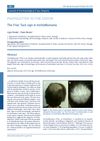
June 2012 in “Journal of Dermatological Case Reports” This report describes an 8-year-old male with trichotillomania, confirmed by trichoscopy showing characteristic hair damage and patterns.
January 2026 in “Surgical & Cosmetic Dermatology” 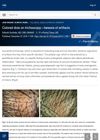 5 citations
,
December 2018 in “Journal of The American Academy of Dermatology”
5 citations
,
December 2018 in “Journal of The American Academy of Dermatology” This study highlights the importance of recognizing artifacts in trichoscopy, as certain cosmetic products can mimic signs of early androgenetic alopecia.
 March 2024 in “Journal of clinical medicine”
 This study examined trichoscopic findings in androgenetic alopecia, reporting that hair diameter variability, vellus hairs, and the peripilar sign are valuable indicators for diagnosing this condition.
 73 citations
,
March 2009 in “Seminars in Cutaneous Medicine and Surgery”
73 citations
,
March 2009 in “Seminars in Cutaneous Medicine and Surgery” This article reviews various diagnostic tools for hair disorders, describing methods ranging from invasive to noninvasive, but reports no new research findings or clinical results.
 February 2026 in “Dermatology Reports”
 In this case study, trichoscopy was found to be a valuable non-invasive tool for diagnosing dissecting cellulitis of the scalp, enabling early detection and intervention to prevent disease progression and reduce the need for invasive procedures.
1 citations
,
January 2016 in “Klinicheskaya dermatologiya i venerologiya” December 2020 in “Journal of Face Aesthetics” This study found that trichoscopy, a non-invasive diagnostic method, may effectively differentiate between types of focal alopecia in the parietal area in adult women, indicating specific trichoscopic features for conditions like alopecia areata, discoid lupus erythematosus, and lichen planopilaris.
 3 citations
,
October 1990 in “Journal of the American Academy of Dermatology”
3 citations
,
October 1990 in “Journal of the American Academy of Dermatology” This case report describes a patient with lichen nitidus whose lesions improved following treatment with oral astemizole and topical steroids, although spontaneous resolution remains a possibility.
 March 2004 in “Journal of The American Academy of Dermatology”
 This study found that the TrichoScan effectively measures hair growth changes, showing significant increases in hair counts and thickness in men with androgenetic alopecia after 6 months of using 5% minoxidil solution.
12 citations
,
January 2019 in “International Journal of Trichology” This study found that trichoscopy revealed significant differences in certain variables, such as the brown peripilar sign and white peripilar sign, which may aid in diagnosing early and late stages of androgenetic alopecia.
January 2022 in “Skin appendage disorders” In this study, the researchers found that trichoscopy can effectively visualize scalp micropigmentation, identified by homogenous, grey to black circular dots similar to closely cut hair, potentially reducing the need for invasive procedures.